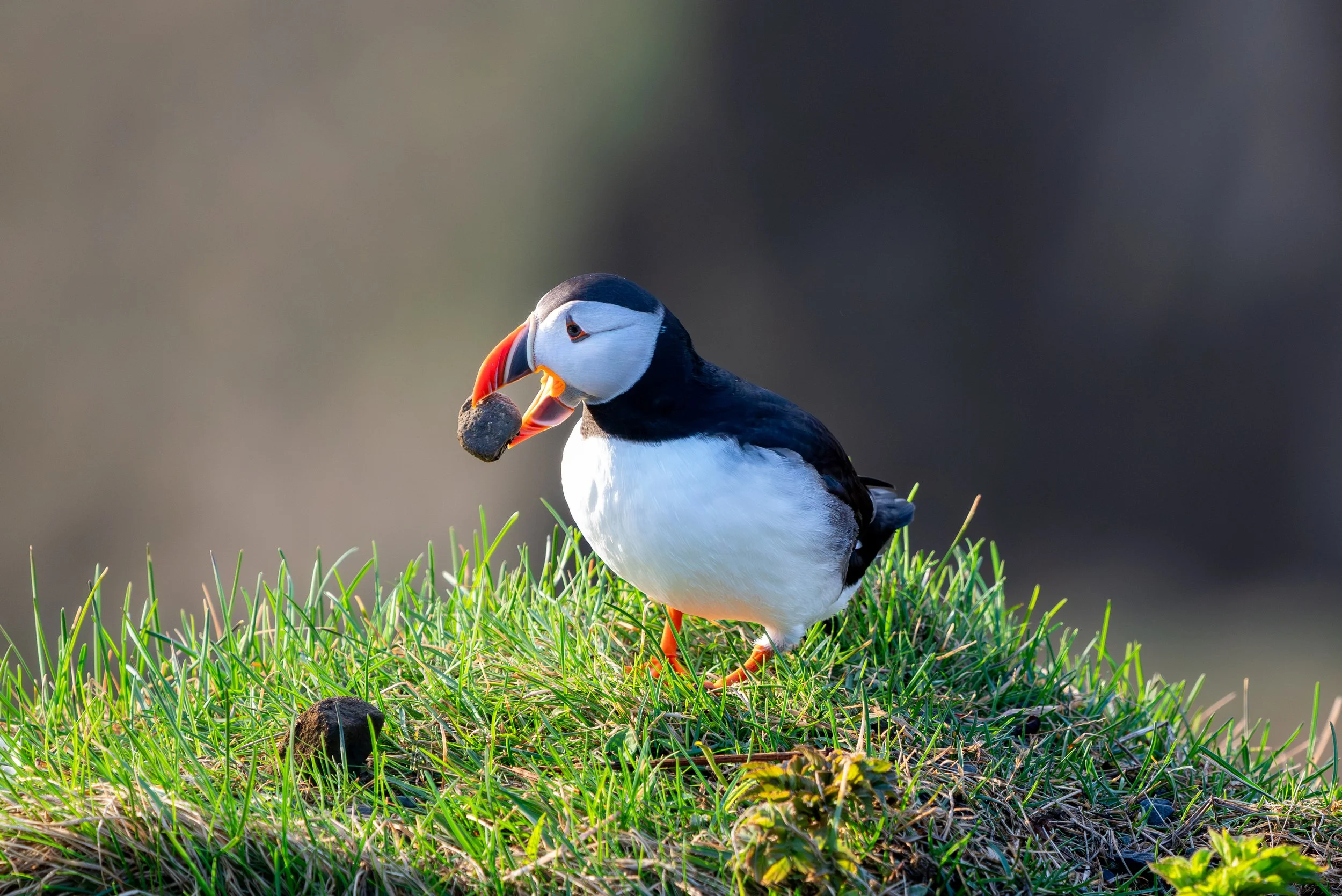
A shot of an Atlantic Puffin carefully picking up a pebble for its burrow. While they are famous for their fishing skills, puffins are also diligent home-improvers, often carrying rocks, grass, or feathers deep into their tunnels to create a soft, safe nesting site for their single "puffling." This candid moment captures the industrious and endearing nature of these clever seabirds.
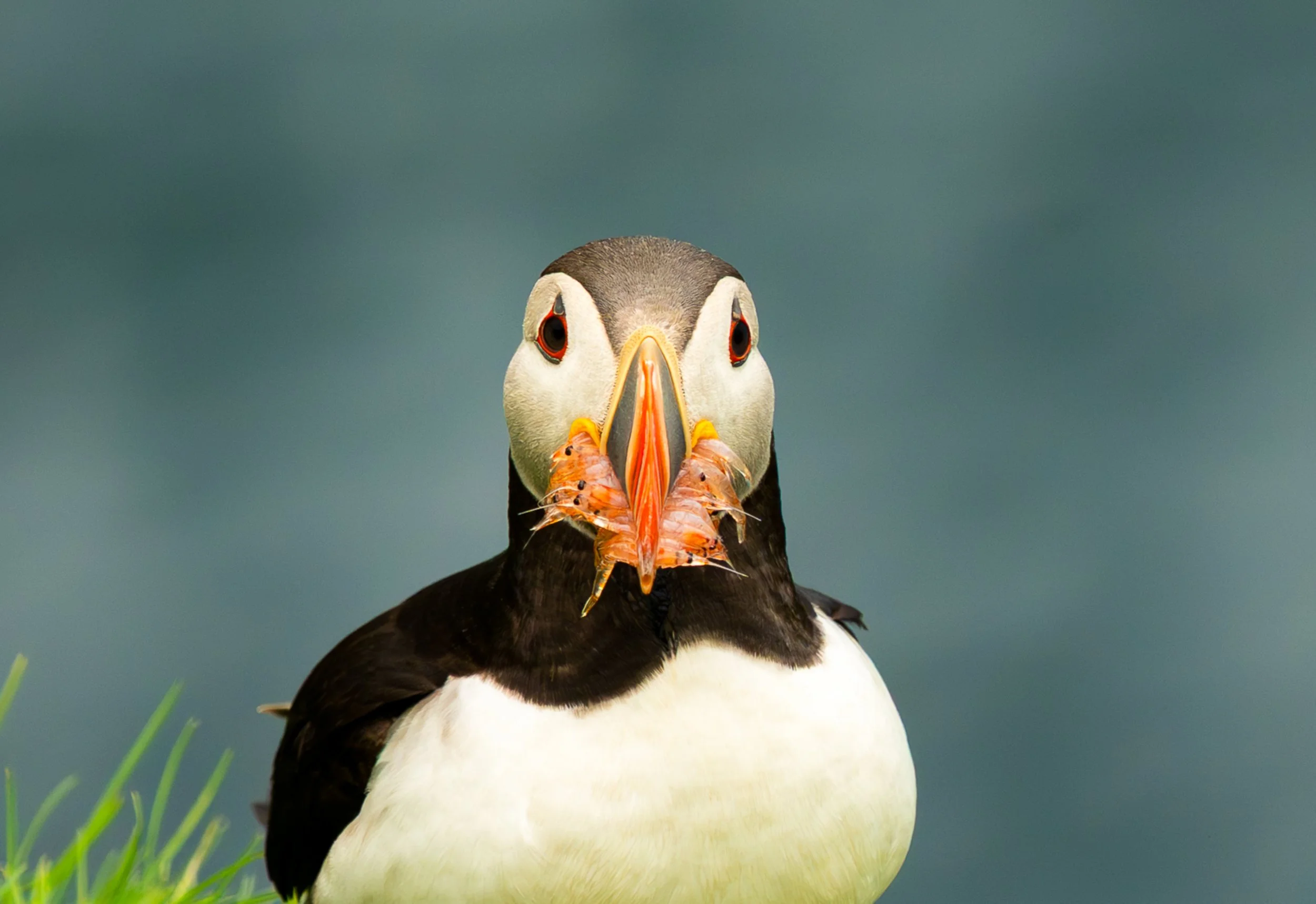
A direct, forward facing view of a puffin loaded with small fish. This perspective highlights the unique notched joints of their beaks, which allow it to stay clamped shut on fish while the puffin continues to hunt for more.
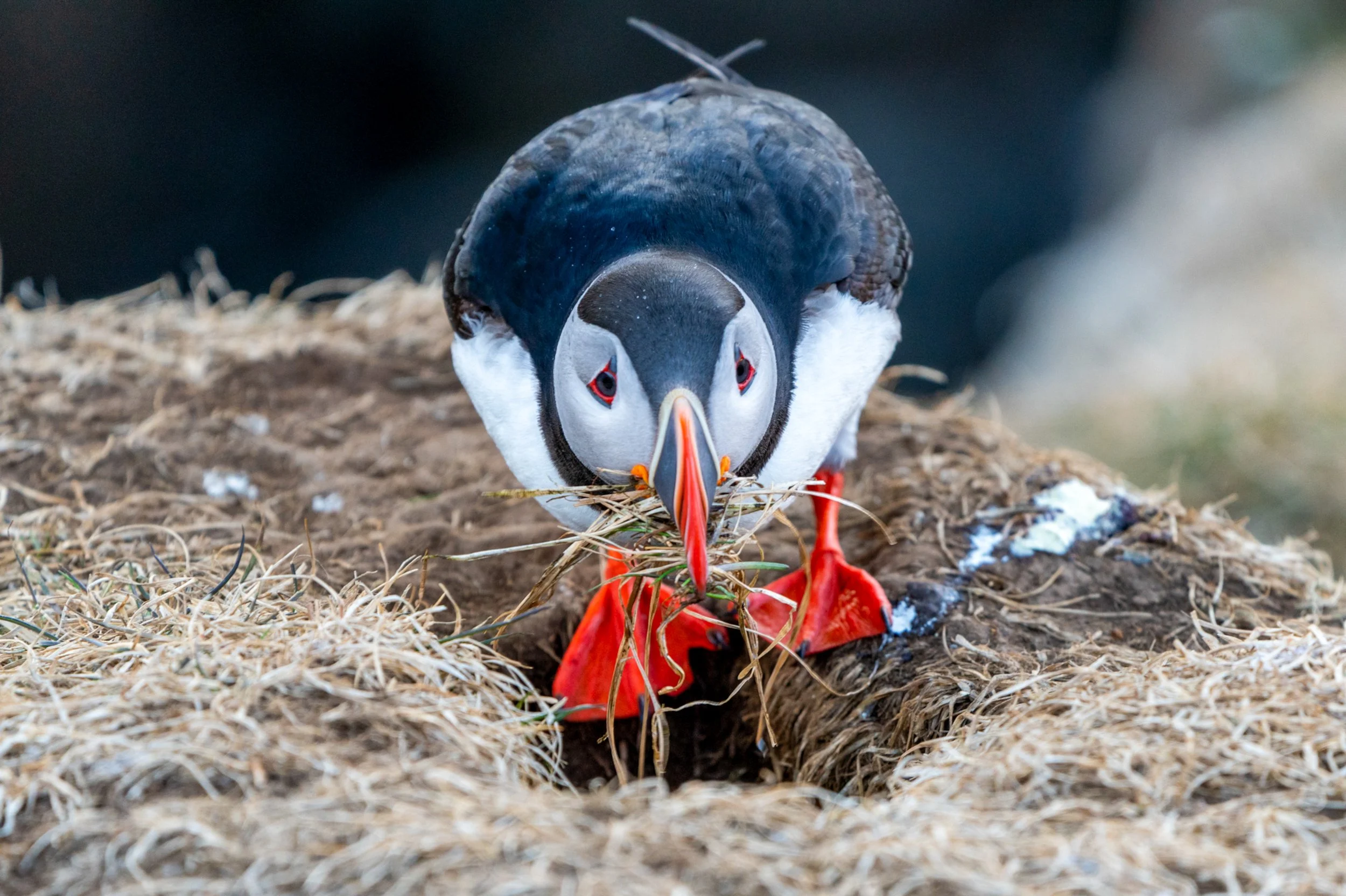
A puffin stands guard at the entrance of its burrow. These birds are expert excavators, using their beaks like pickaxes and their feet like shovels to dig tunnels up to three feet deep into the turf.
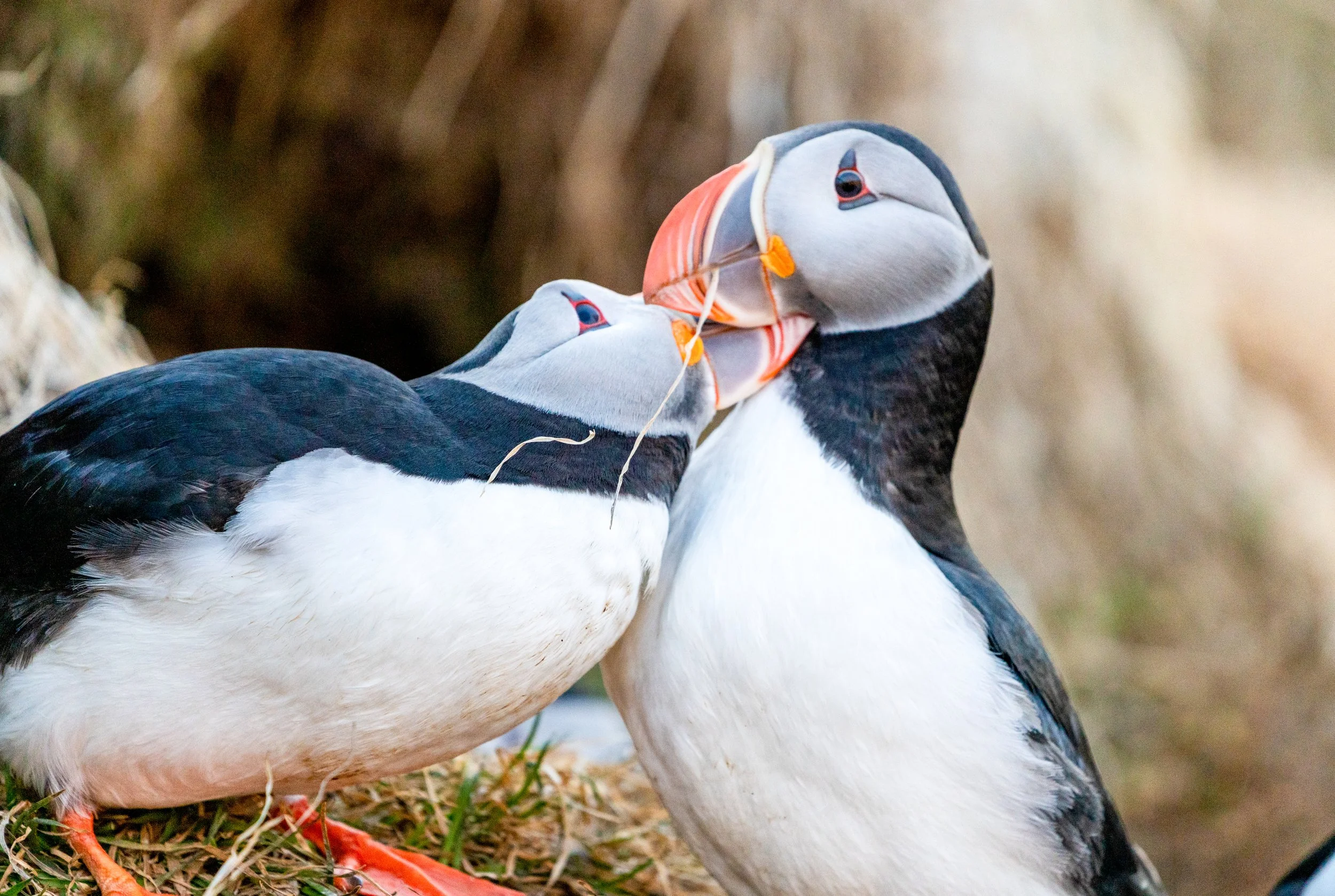
Two puffins engage in "billing," a heartwarming bonding ritual where mates rub their beaks together. Since puffins mate for life but spend their eight months at sea apart, this display is a vital way for the pair to reconnect at their nesting grounds each spring.
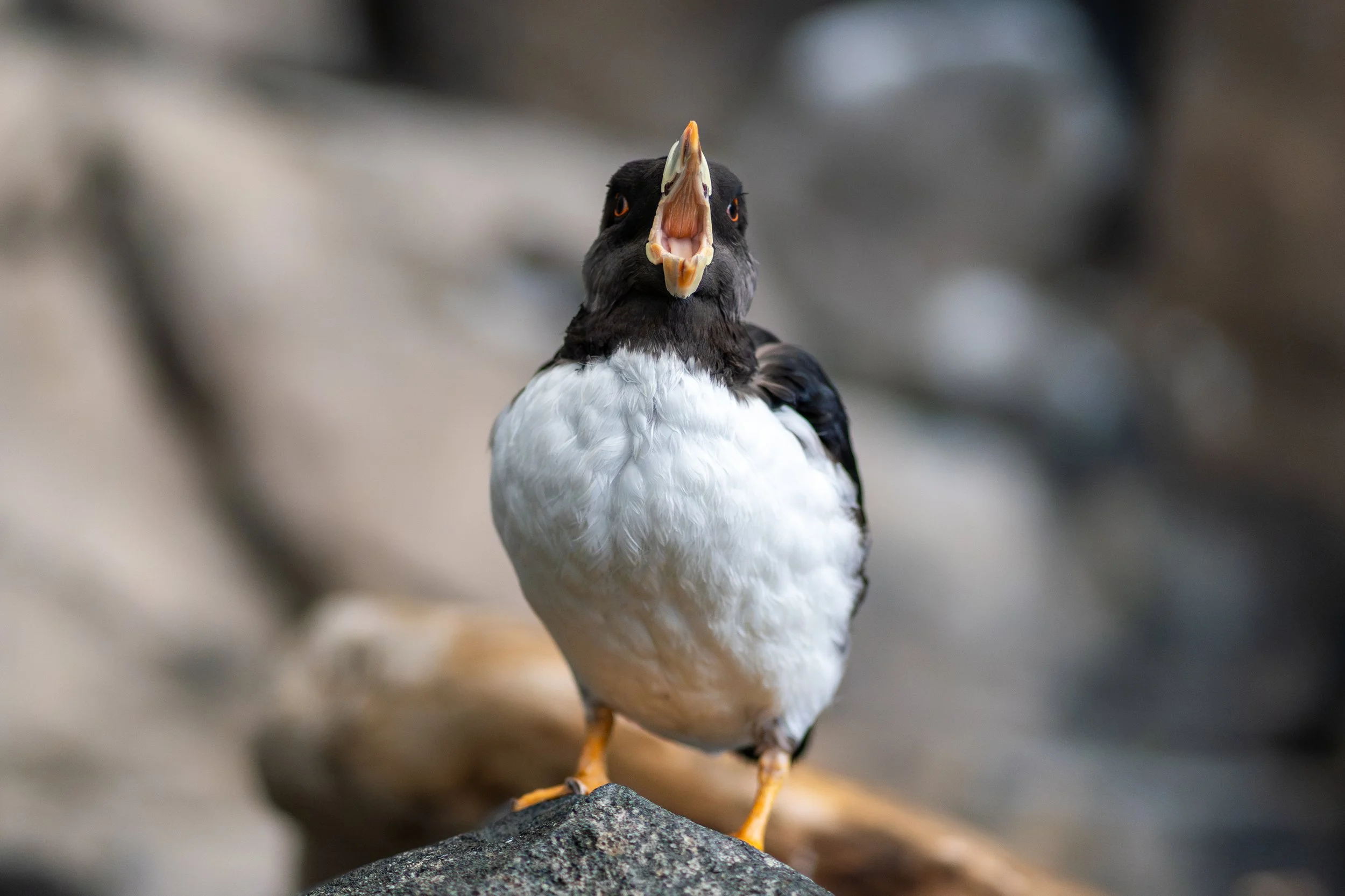
Captured mid-vocalization, this shot shows the vibrant yellow interior of the puffin’s mouth. While they are usually quiet at sea, their colonies on land are filled with low, growling calls that sound a bit like a muffled chainsaw.
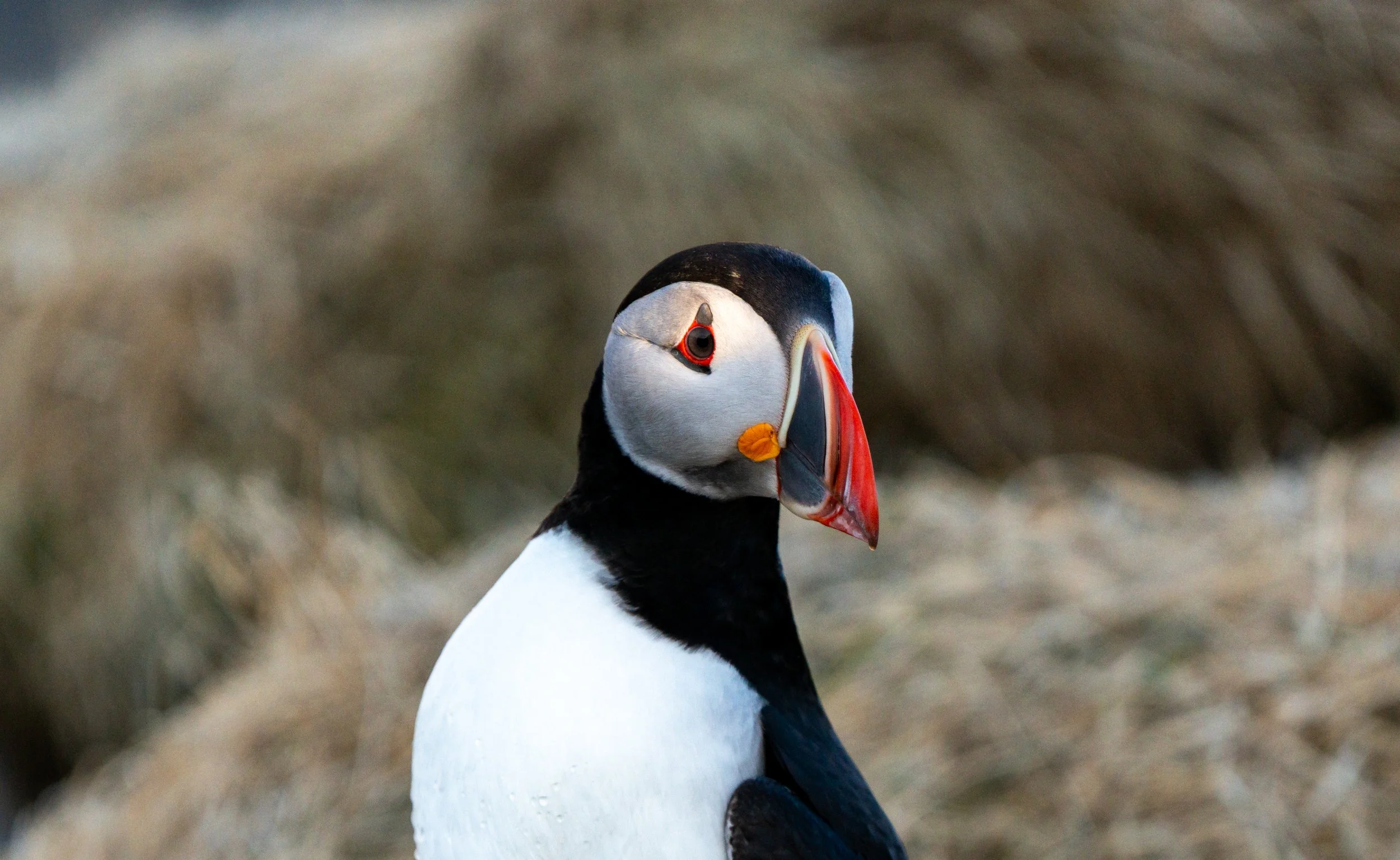
A side-profile showcasing the puffin’s technicolor summer bill. This iconic orange and yellow plating is actually seasonal; once the breeding season ends, the puffin sheds these outer layers, leaving behind a much smaller, duller beak for its time at sea.
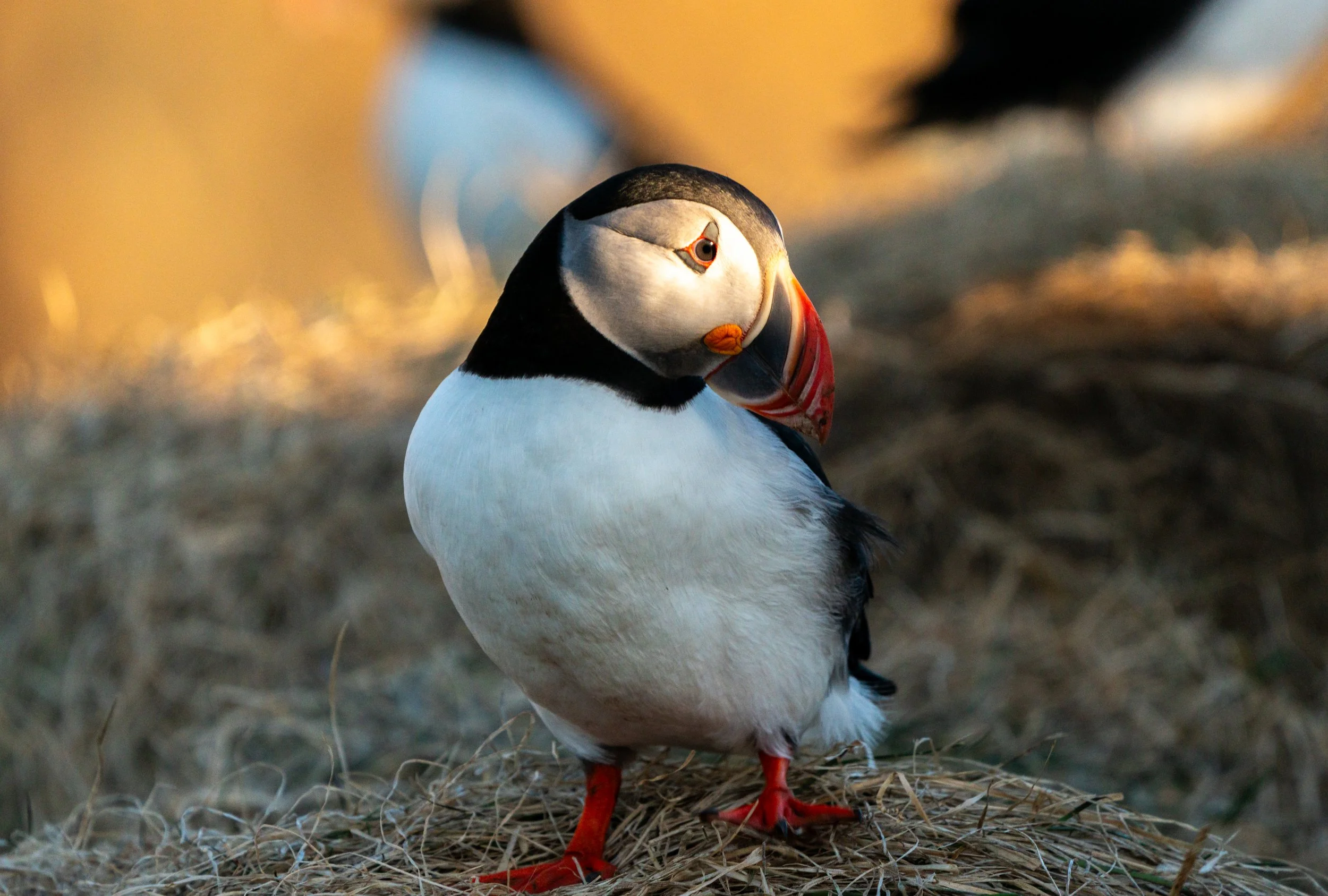
Soft, warm light catches the plumage of the puffin. Its scientific name, Fratercula, means "little brother," a nod to the black-and-white feathers that reminded early observers of the robes worn by friars.
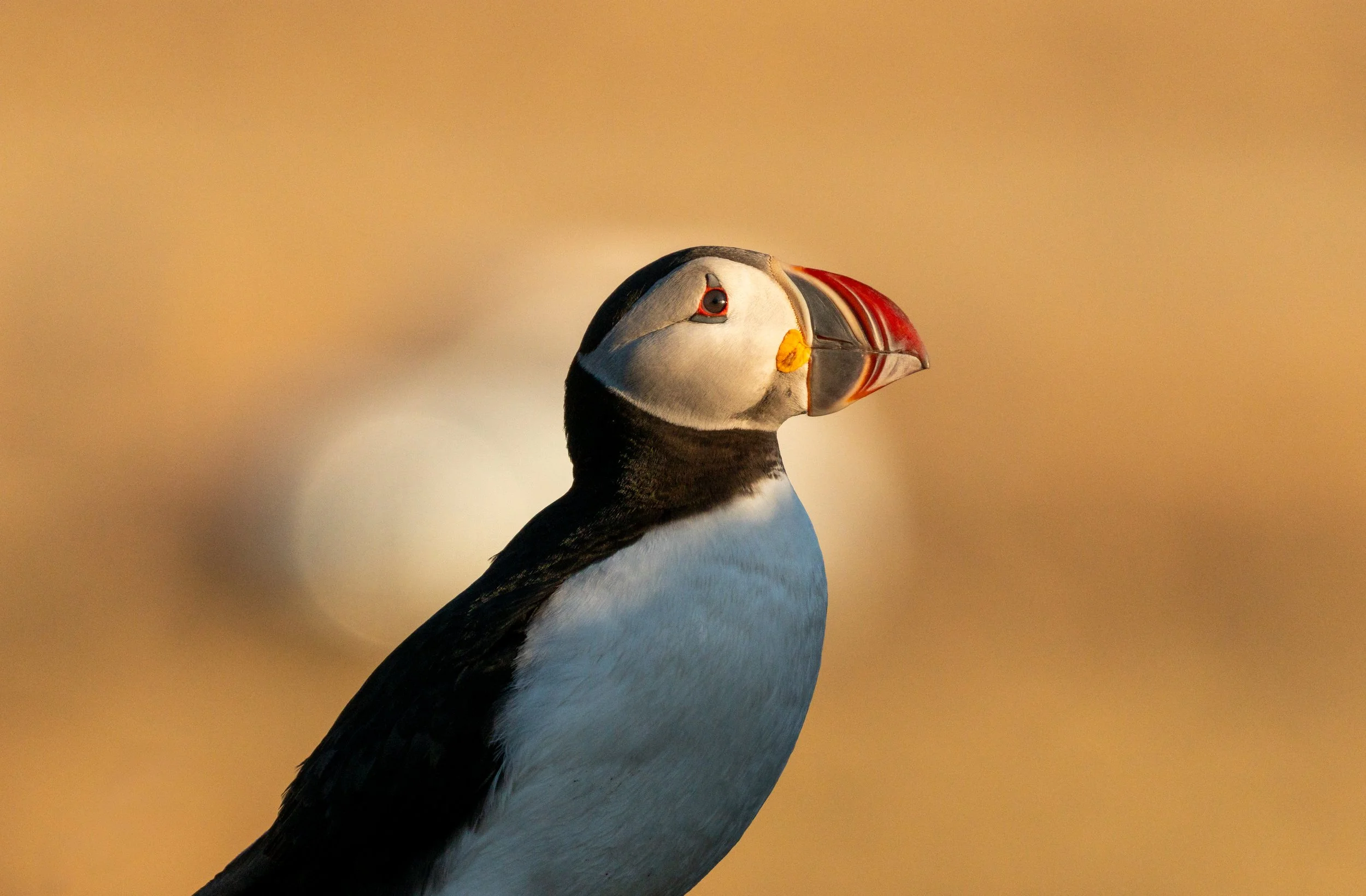
A tight portrait focusing on the puffin’s striking eye markings. The red and black fleshy "eye-liners" give them a perpetually surprised, theatrical look that contributes to their "Clown of the Sea" nickname.
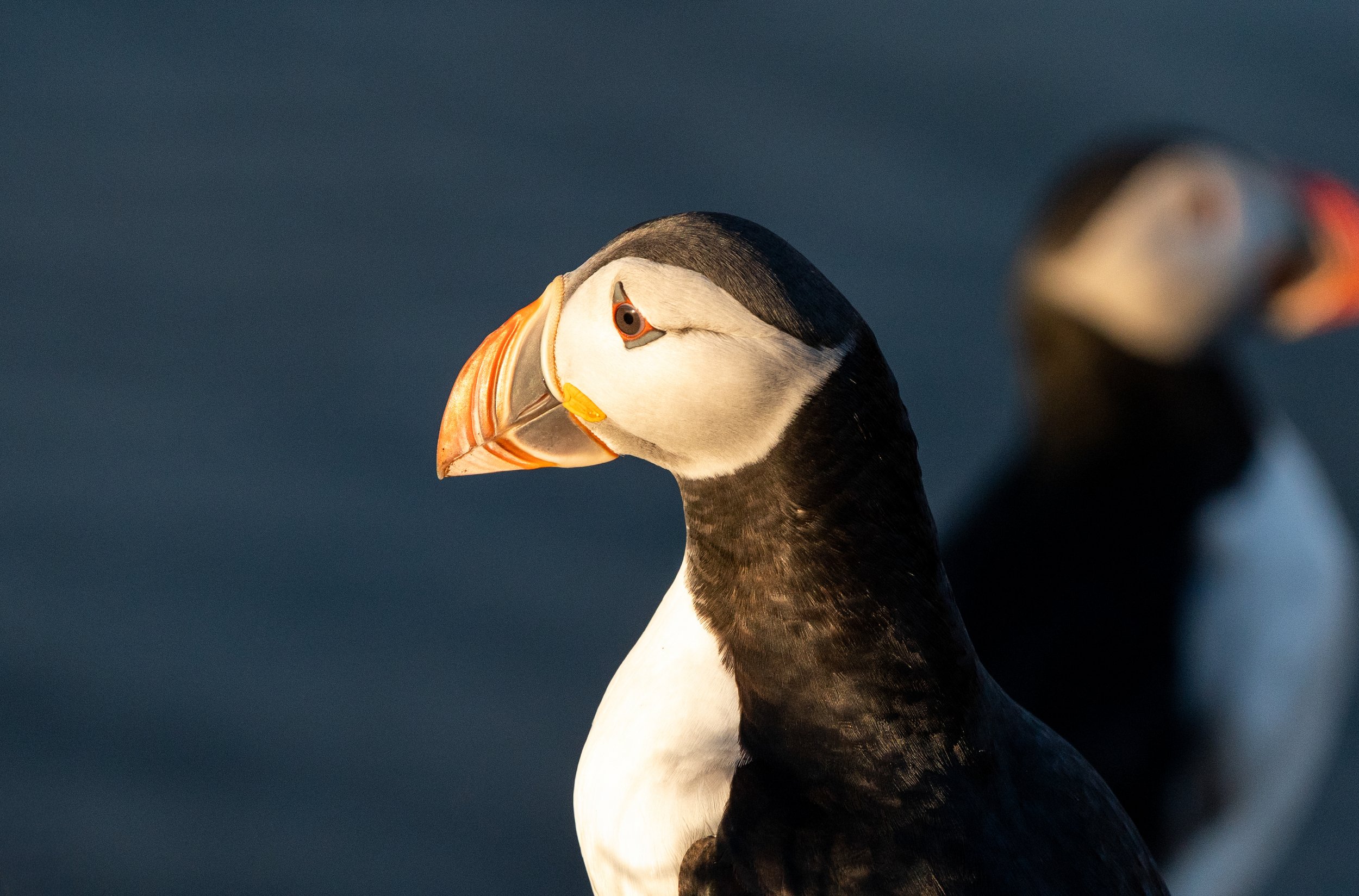
A clean, minimalist study of the puffin against a soft-focus background. This highlights their compact size—they stand only about ten inches tall, roughly the height of a standard paperback novel.
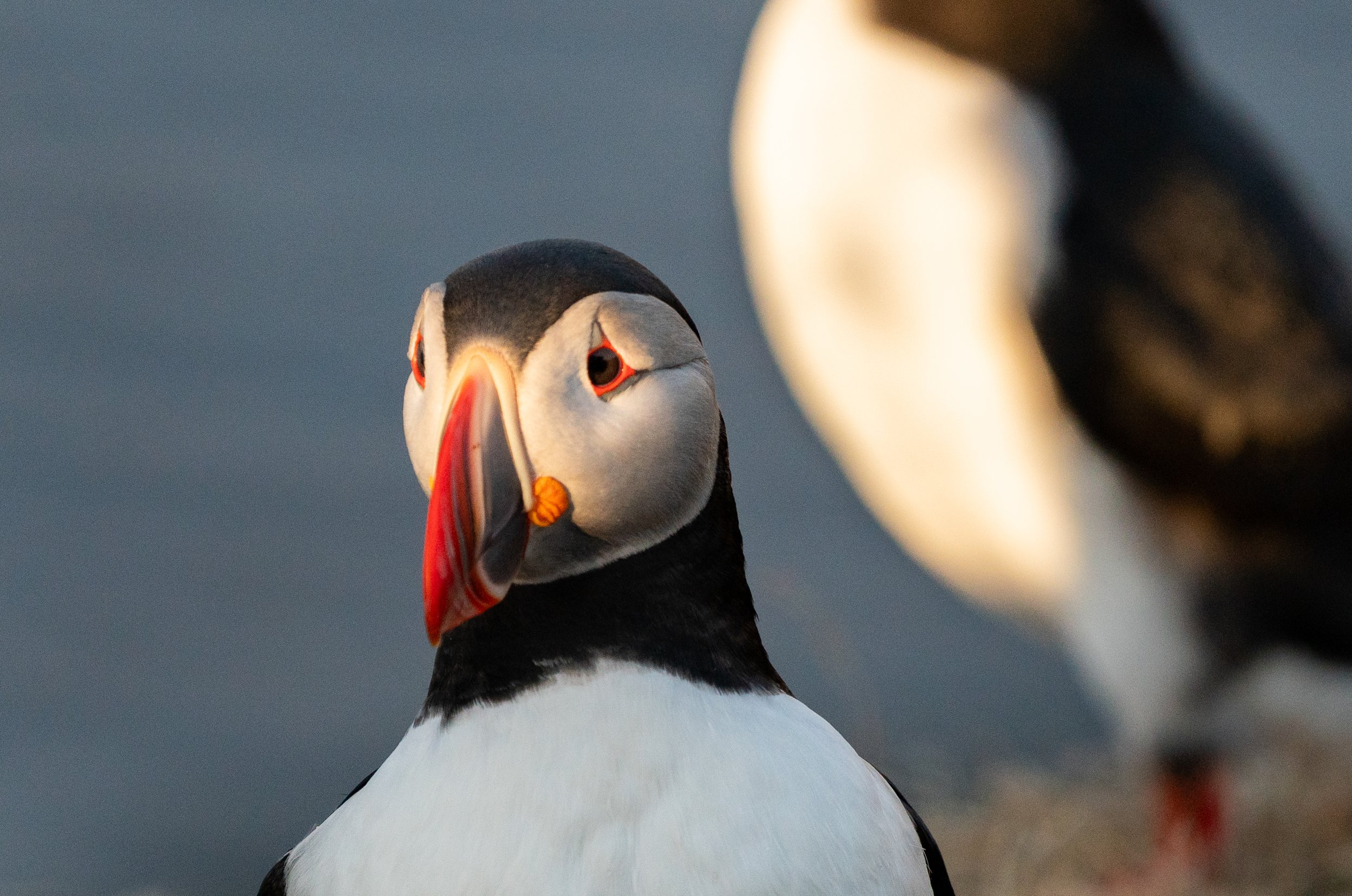
A portrait highlighting the puffin’s most striking feature: its soulful, "eyelined" eyes. This shot captures the incredible detail of their waterproof plumage, which is so dense it keeps their skin perfectly dry even during deep dives into the frigid Atlantic.
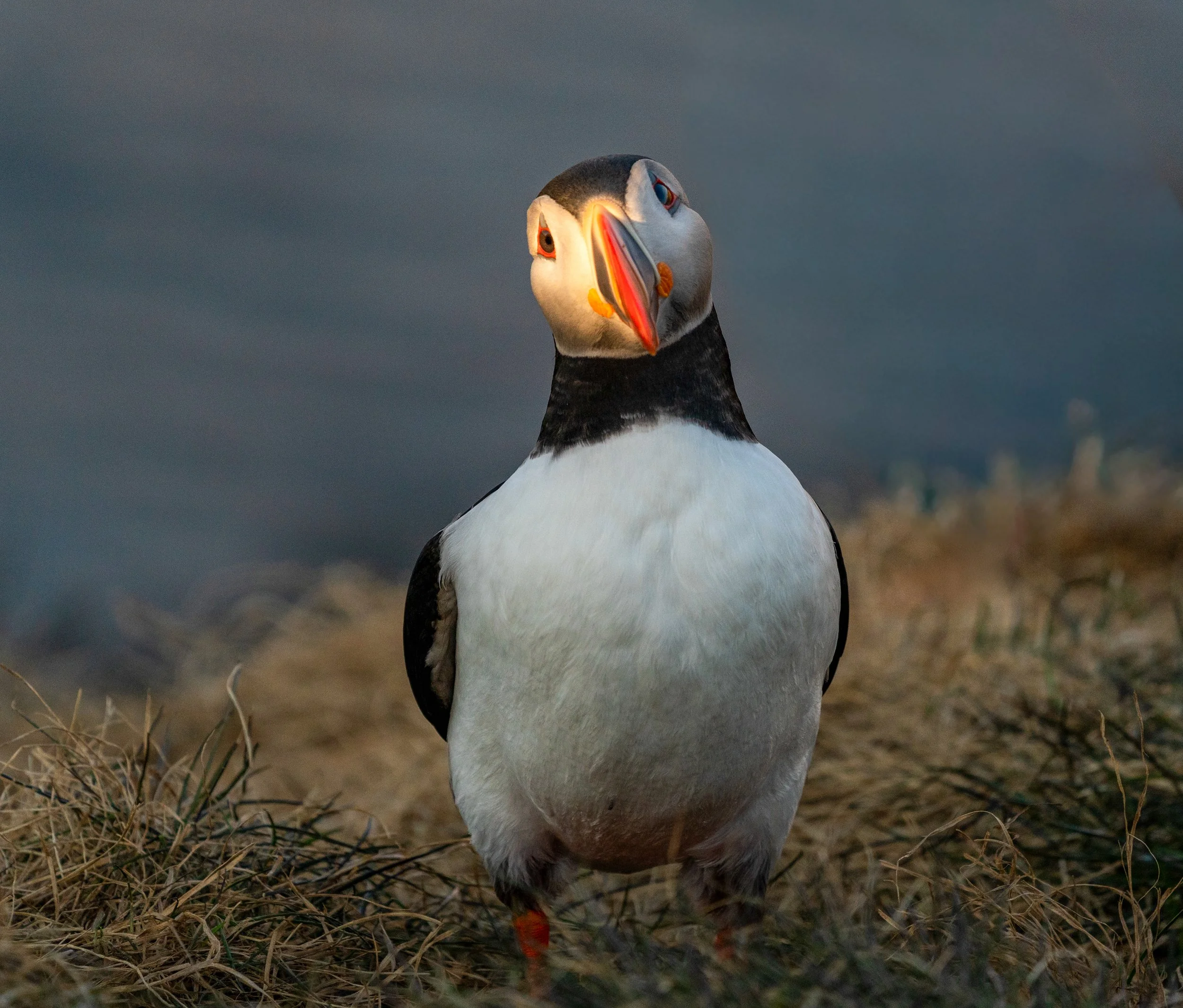
This puffin is captured in a charming, inquisitive pose, showcasing the expressive personality that makes them a favorite of photographers, like me. The head tilt is more than just cute; it helps them focus their eyes on potential threats or movements in the colony.
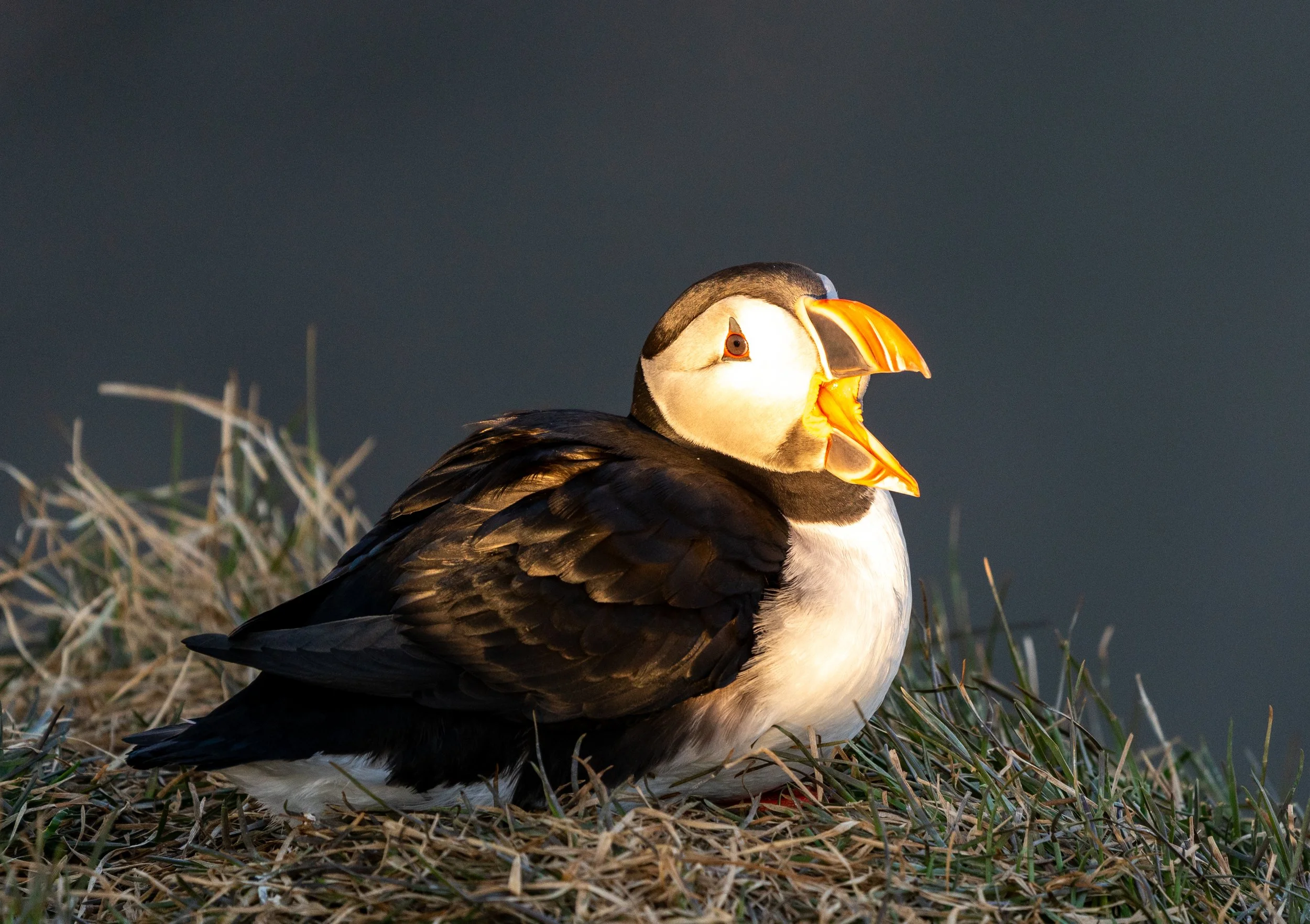
Bathed in the warm glow of the golden hour, this Atlantic Puffin is captured mid-call. While they are famously silent while at sea, puffins become quite "talkative" once they reach their breeding colonies, emitting low, rhythmic grunts. This wide-mouthed display is often a way of communicating with neighbors or defending the entrance to its nearby burrow.
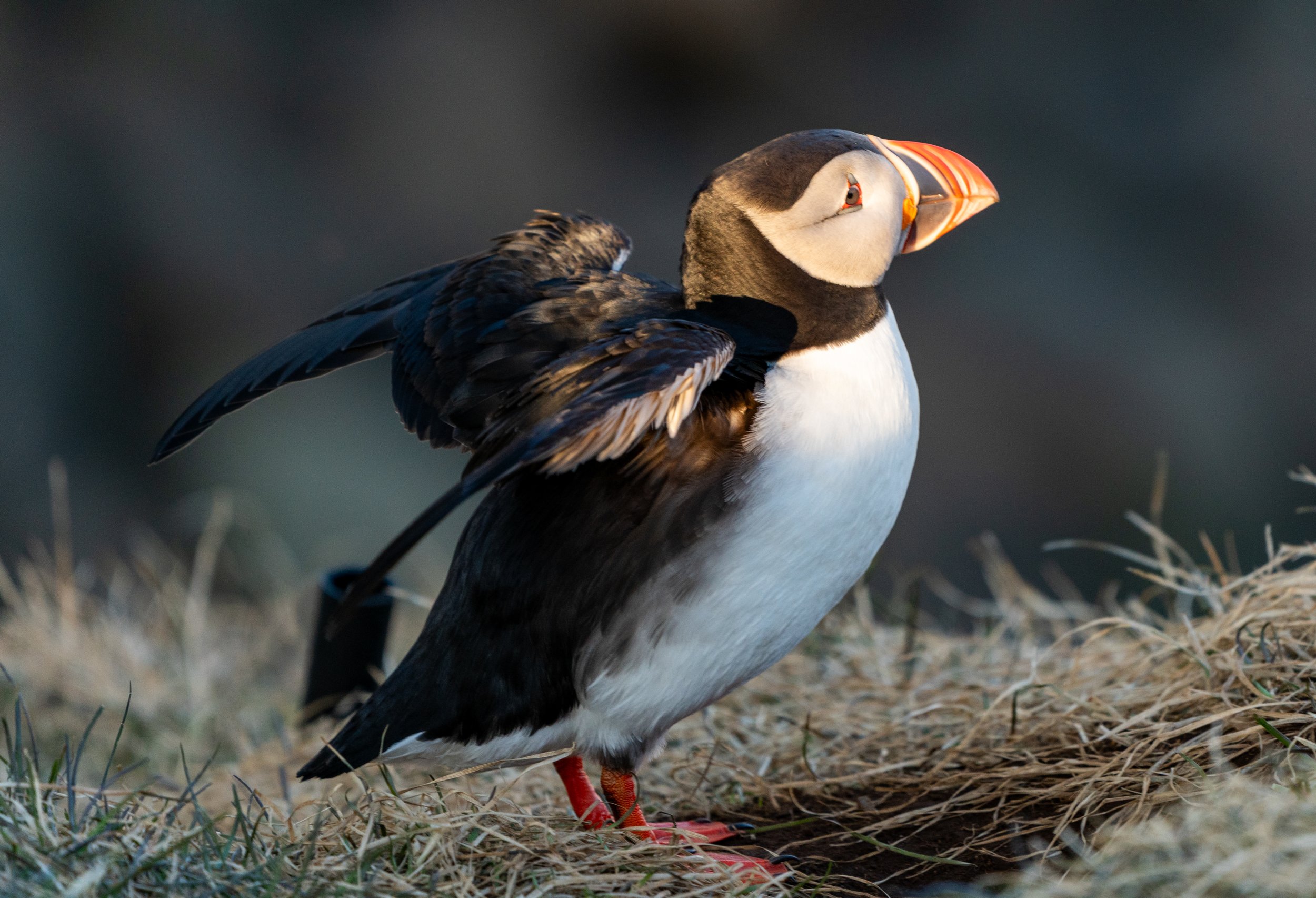
A puffin stretches its wings while perched on the grassy cliffside. With a wingspan of about 20 inches, these birds have to flap incredibly fast—up to 400 beats per minute—to stay airborne. This behavior, known as "comfort behavior," helps them realign their feathers and shake off the sea salt after a long stint on the water.
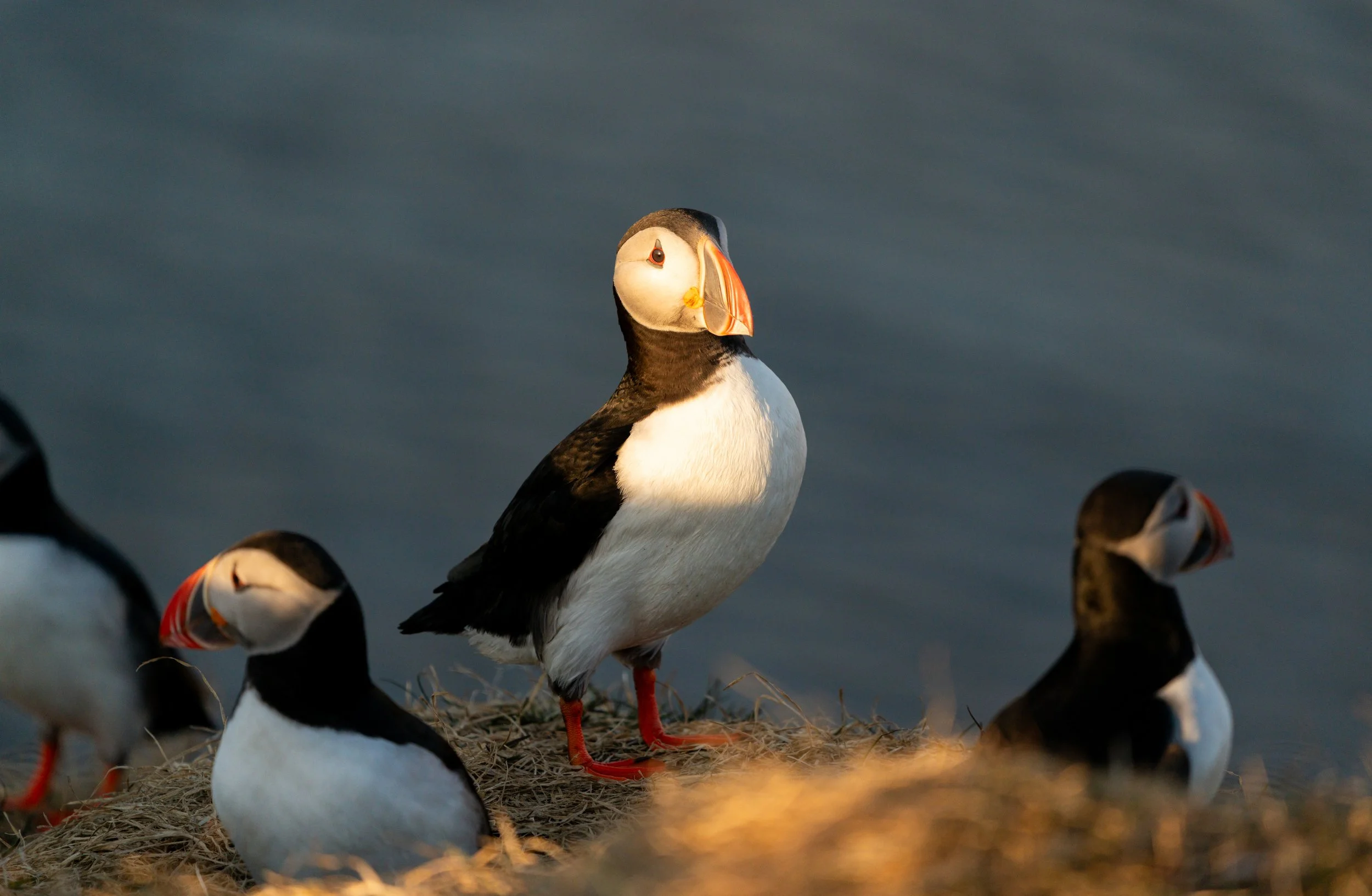
Standing tall against the coastal breeze, this puffin keeps a watchful eye over the nesting grounds. During the breeding season, puffins are highly social and rely on each other to spot incoming predatory gulls. This shot perfectly captures the contrast between their tuxedo-like plumage and the vibrant, rugged landscape they call home. 12. Social Interactions (Right)
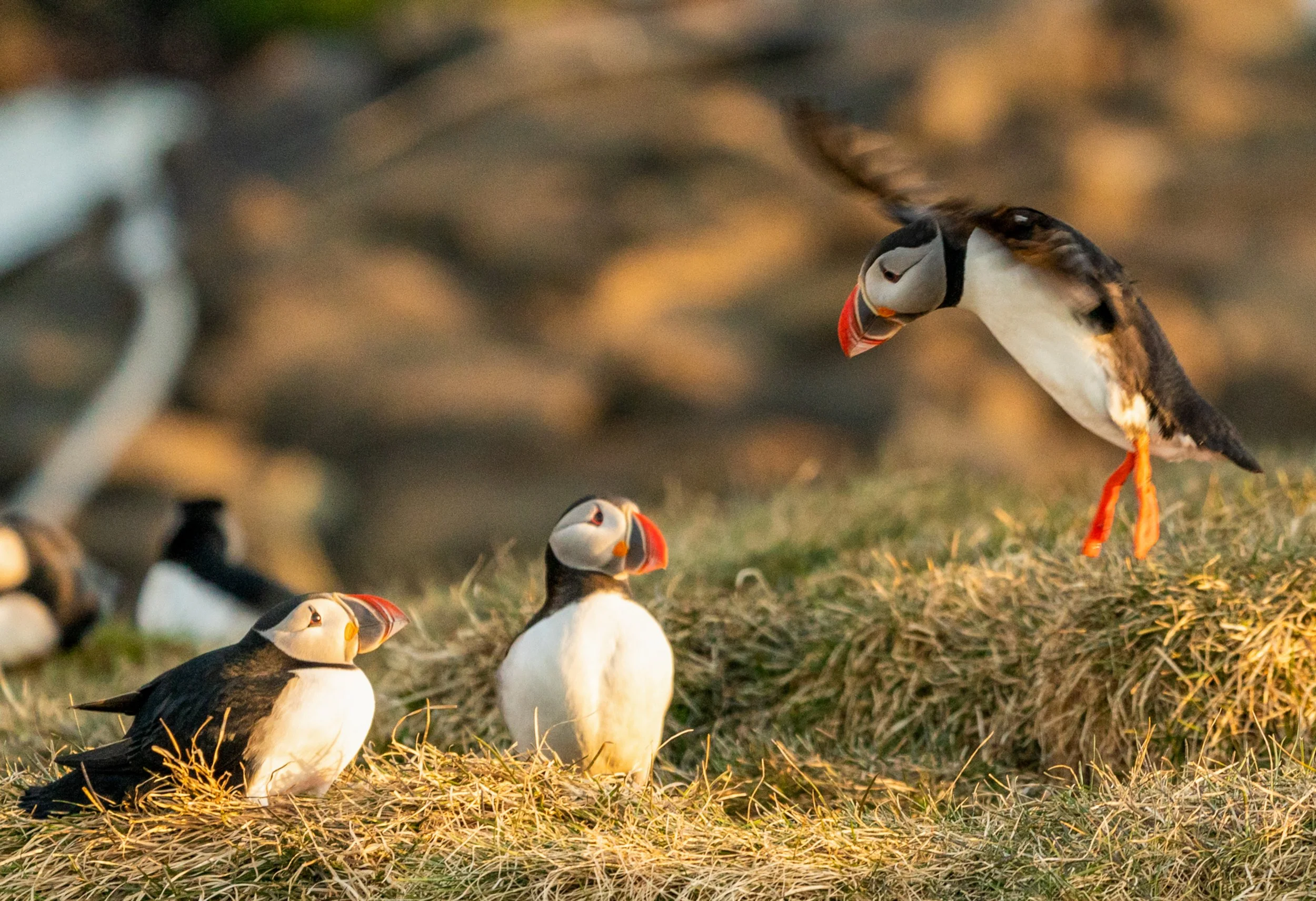
A glimpse into the busy social life of a puffin "parliament." This image captures multiple birds interacting on the cliffs, highlighting the communal nature of their nesting sites. Because puffins often return to the exact same burrow with the same mate year after year, these neighboring birds are often long-term acquaintances.
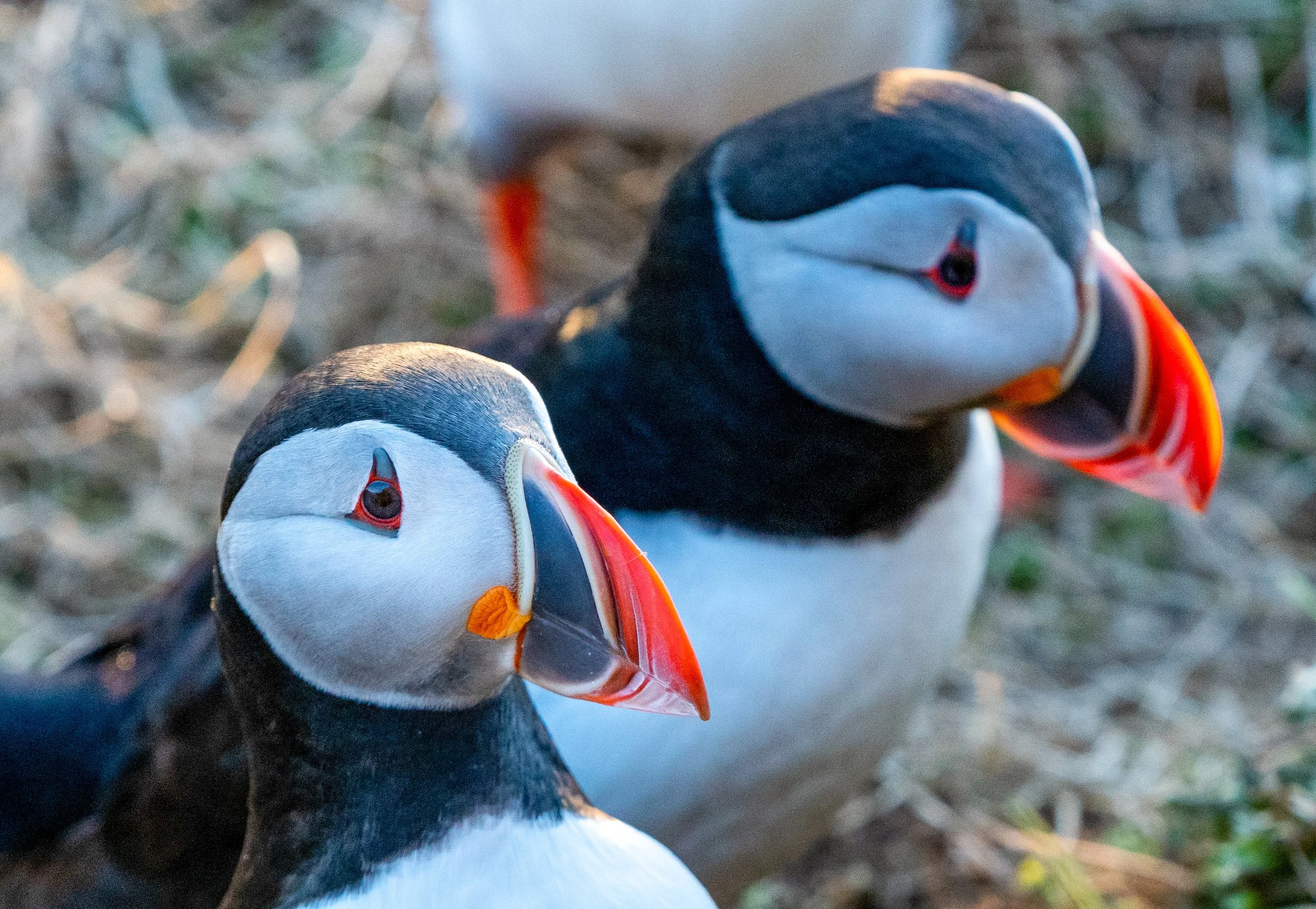
A dual portrait of two Atlantic Puffins. These birds often form long-term bonds, and seeing them together on the cliffs highlights their social nature. Notice the subtle differences in their beak patterns; like a human fingerprint, no two puffin bills are exactly alike, though they all share that iconic, vibrant orange and red summer "mask."
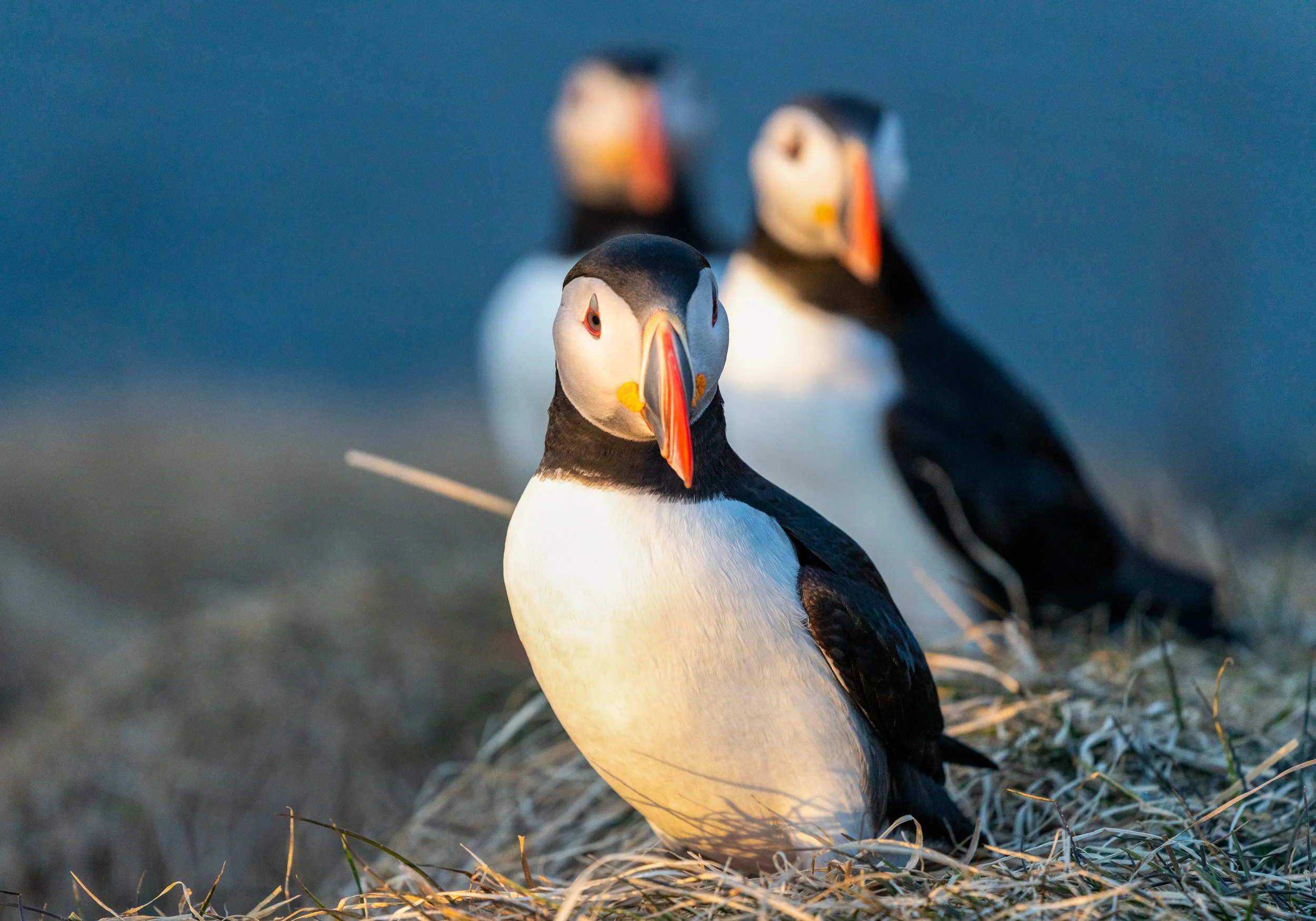
A gathering of puffins on the rocky slope. These social meetups serve a vital purpose—safety in numbers. While on land, they are vulnerable to larger predatory birds, so they stay close together to keep a collective eye on the sky. This shot captures the organized chaos of a bustling puffin colony during the height of the breeding season.
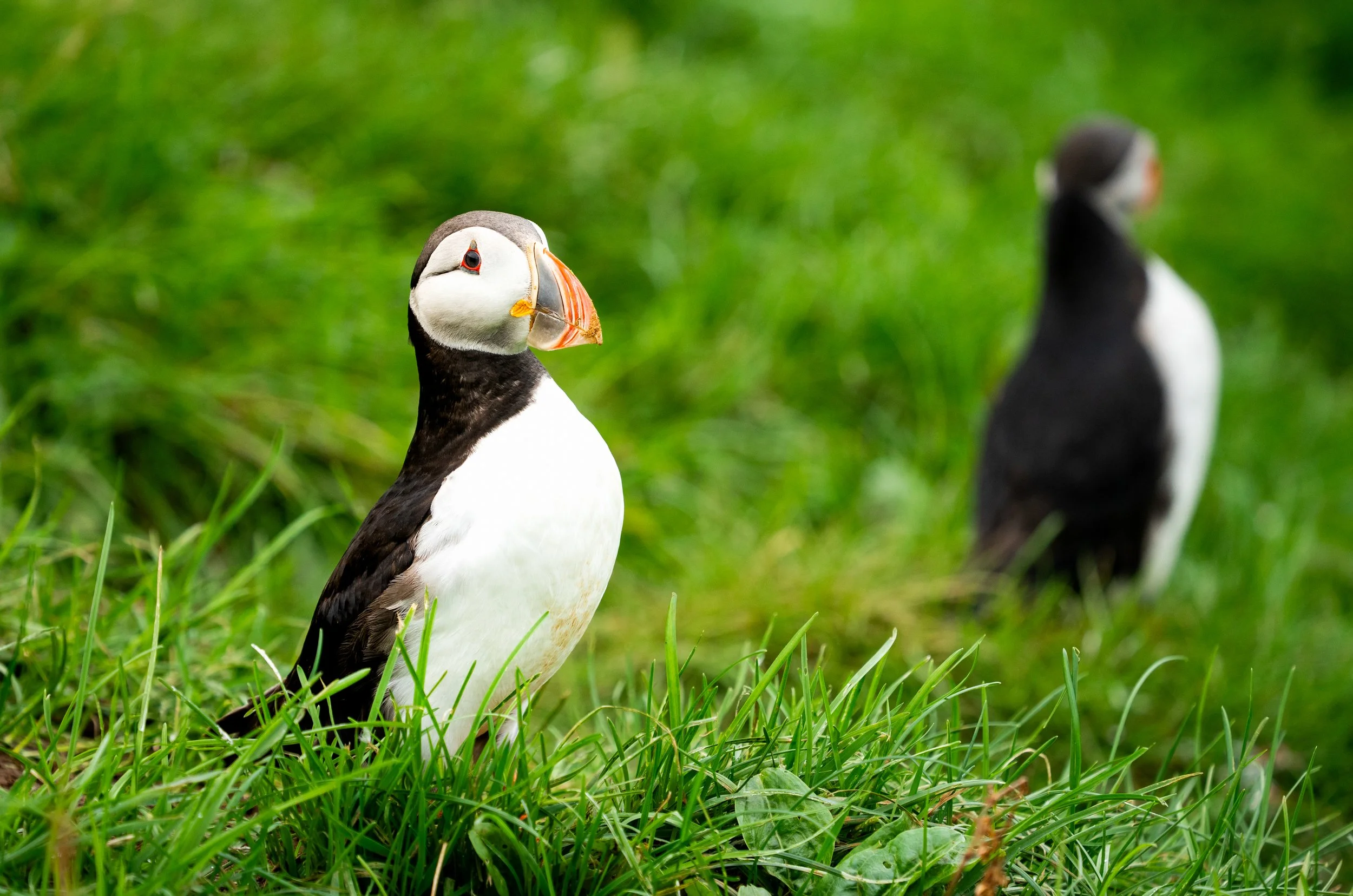
A puffin standing tall in the lush green grass. This composition emphasizes the bird’s "tuxedo" plumage, which acts as perfect camouflage while at sea: a black back to blend in with the dark water from above, and a white belly to blend with the bright sky for predators looking up from below. Here, it simply looks like a sophisticated sentinel guarding the island edge.
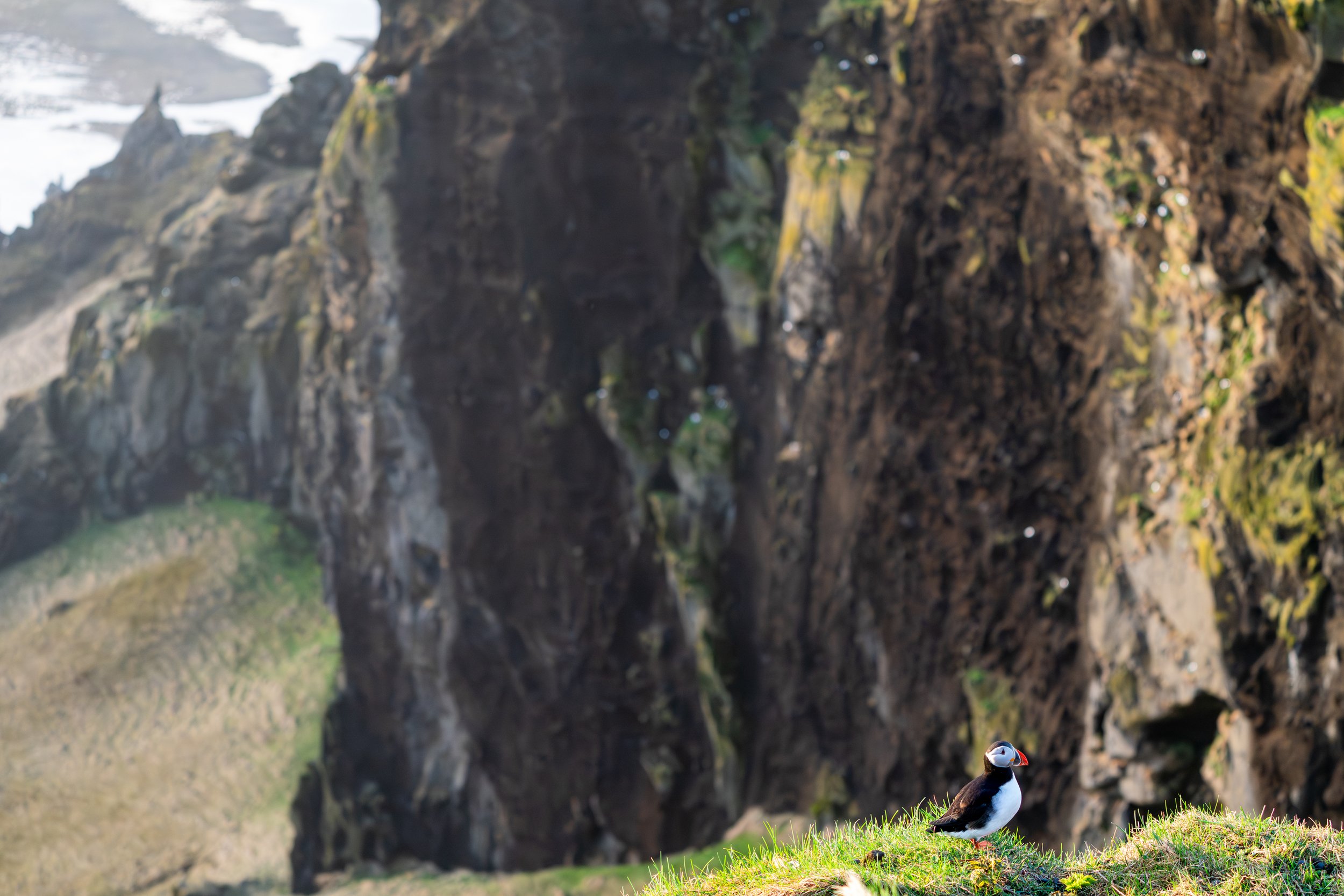
A shot showing a solitary Atlantic Puffin perched against a massive, sheer rock face. This image captures the scale of their nesting environment. Puffins choose these treacherous cliffs because the vertical drop provides an easy takeoff for their small wings and keeps their burrows safe from land-based predators like foxes.
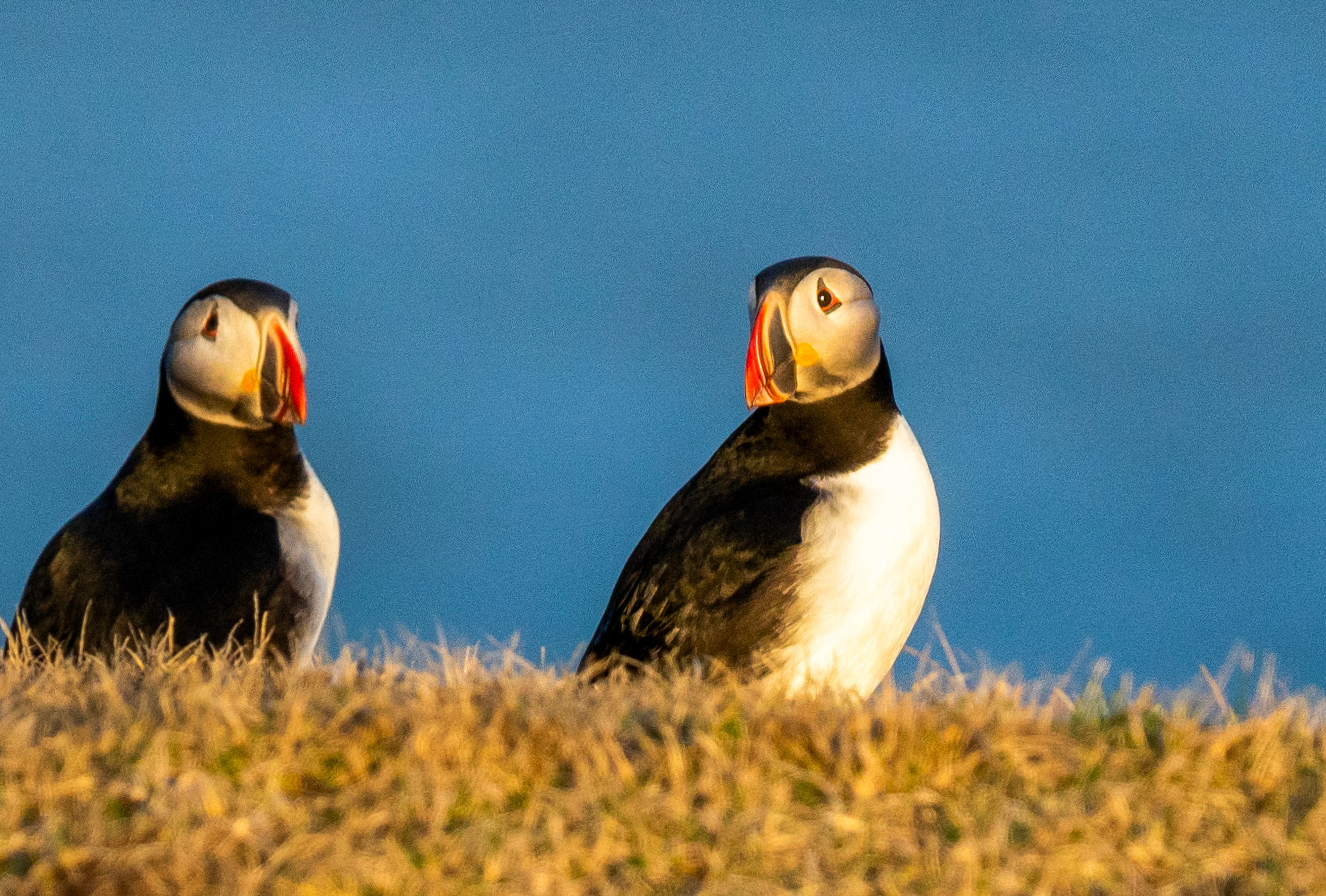
A moody, high-contrast portrait of a puffin against a darkening background. The lighting emphasizes the sharp orange of the bill and the clean white of the chest. This "tuxedo" look isn't just for show—it’s vital countershading. When they are swimming, the white belly makes them hard to see from below against the bright sky, while the black back hides them from predators looking down into the dark water.