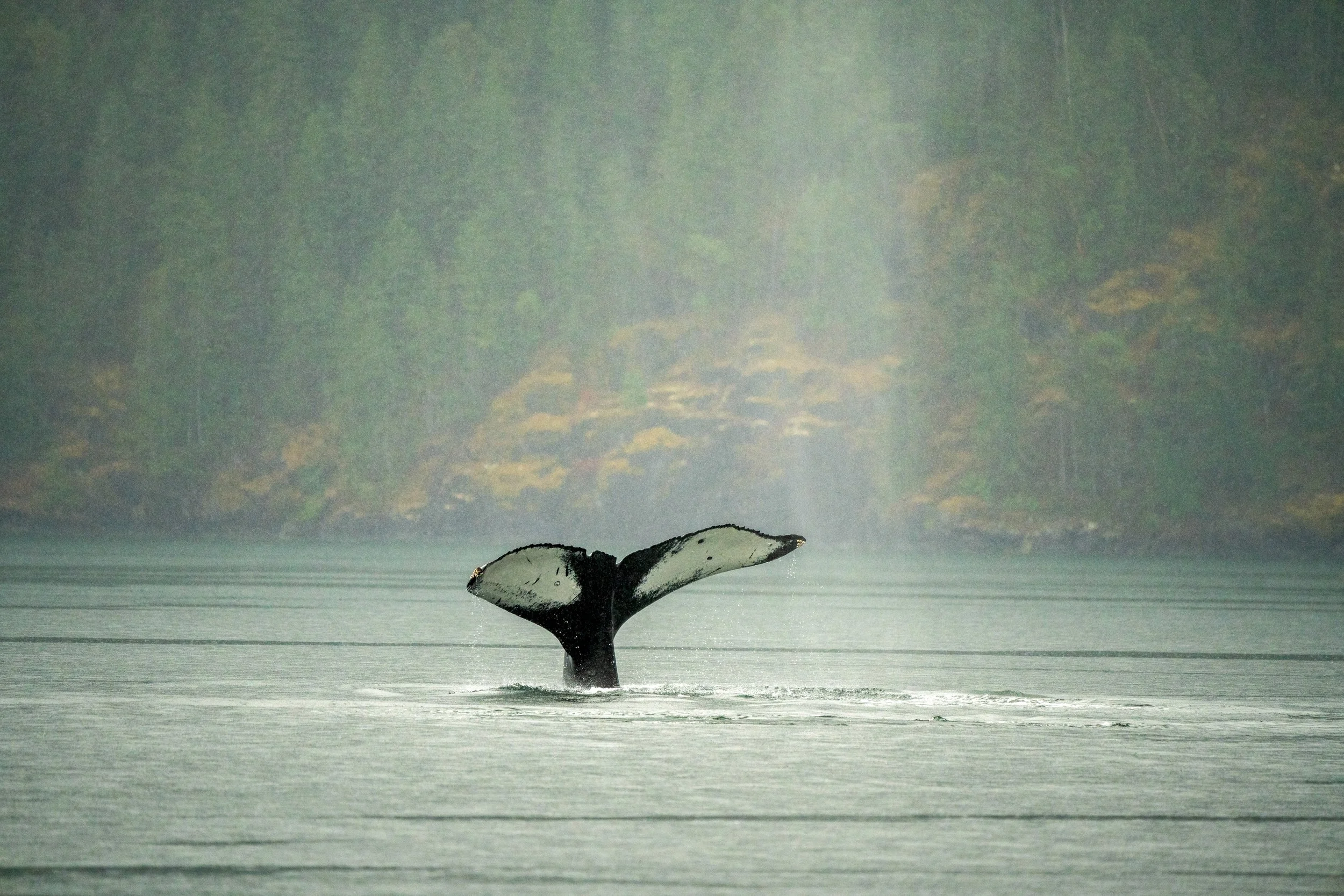
Humpback Fingerprint The underside of a Humpback Whale's tail, or fluke, is as unique as a human fingerprint. The distinct patterns of white and black pigment, along with the jagged trailing edges, allow researchers and photographers to identify and track individual whales as they migrate thousands of miles. This "tail-up" dive signals a deep descent into the ocean depths to feed on krill and small schooling fish.
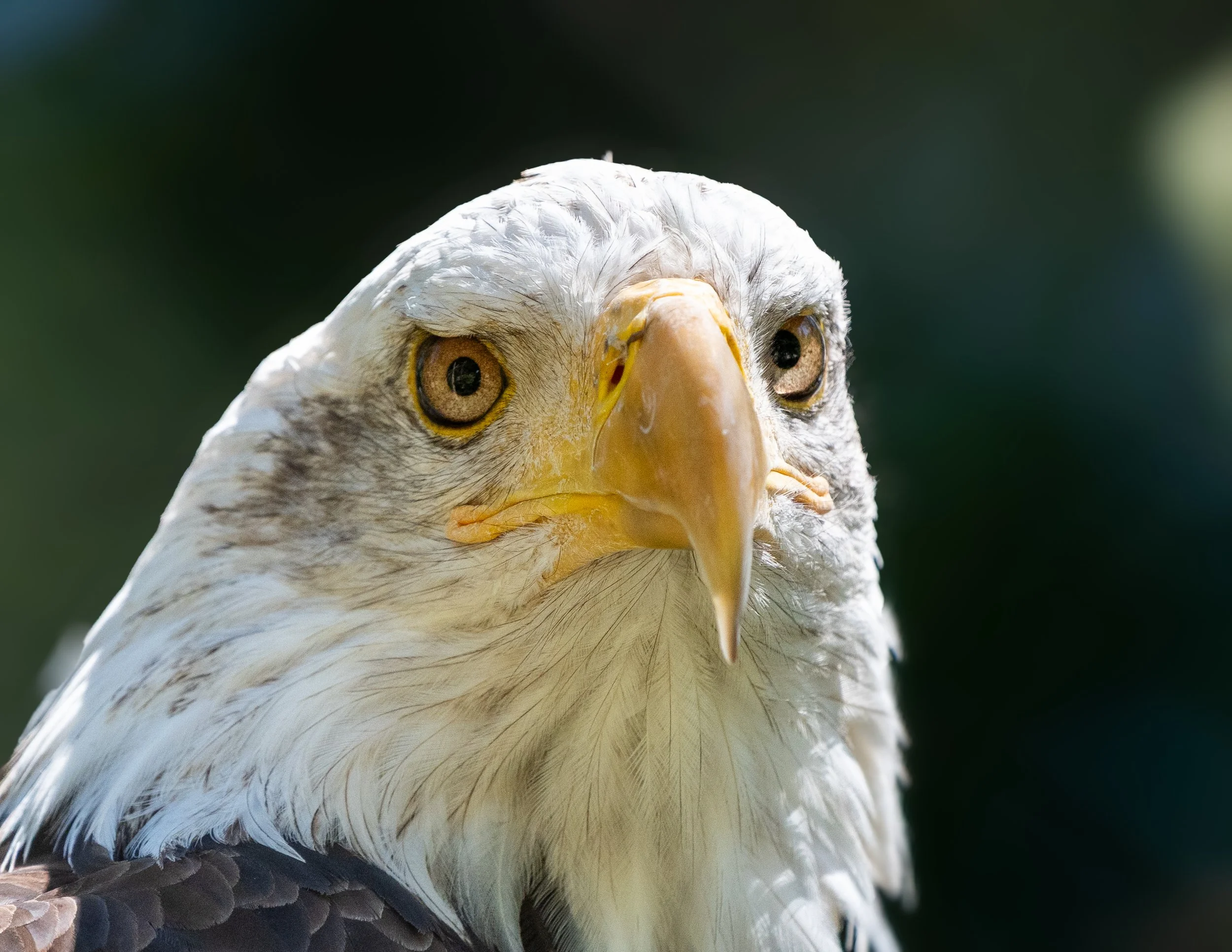
Bald Eagle A symbol of resilience and strength. This close-up captures the piercing gaze and intricate feathering of the American Bald Eagle, a species that has made a remarkable recovery across North America.
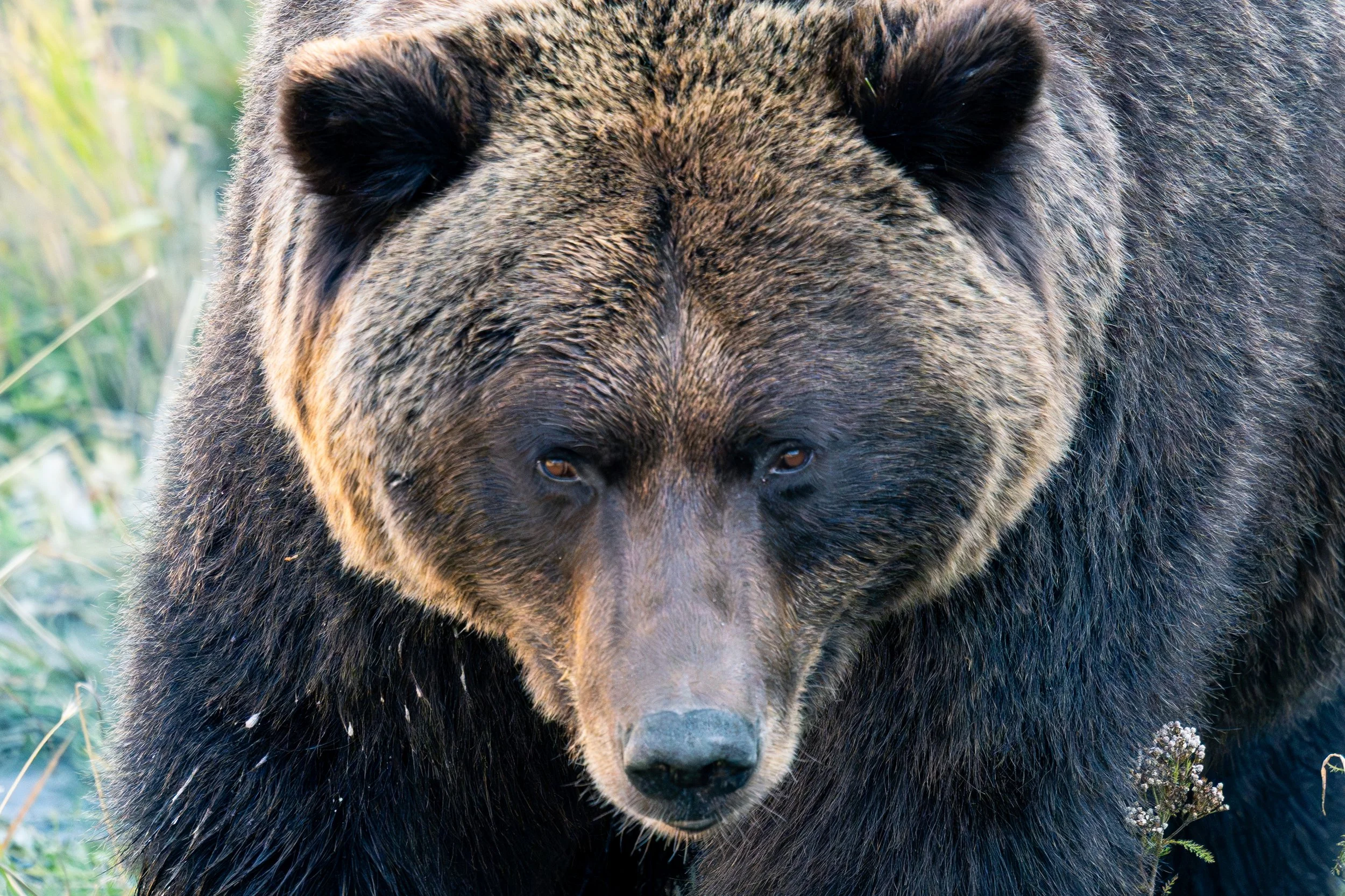
Grizzly Bear Portrait A massive bear in the final stretch of autumn. This photo captures the bear's search for calorie-dense meals to sustain her through the winter.
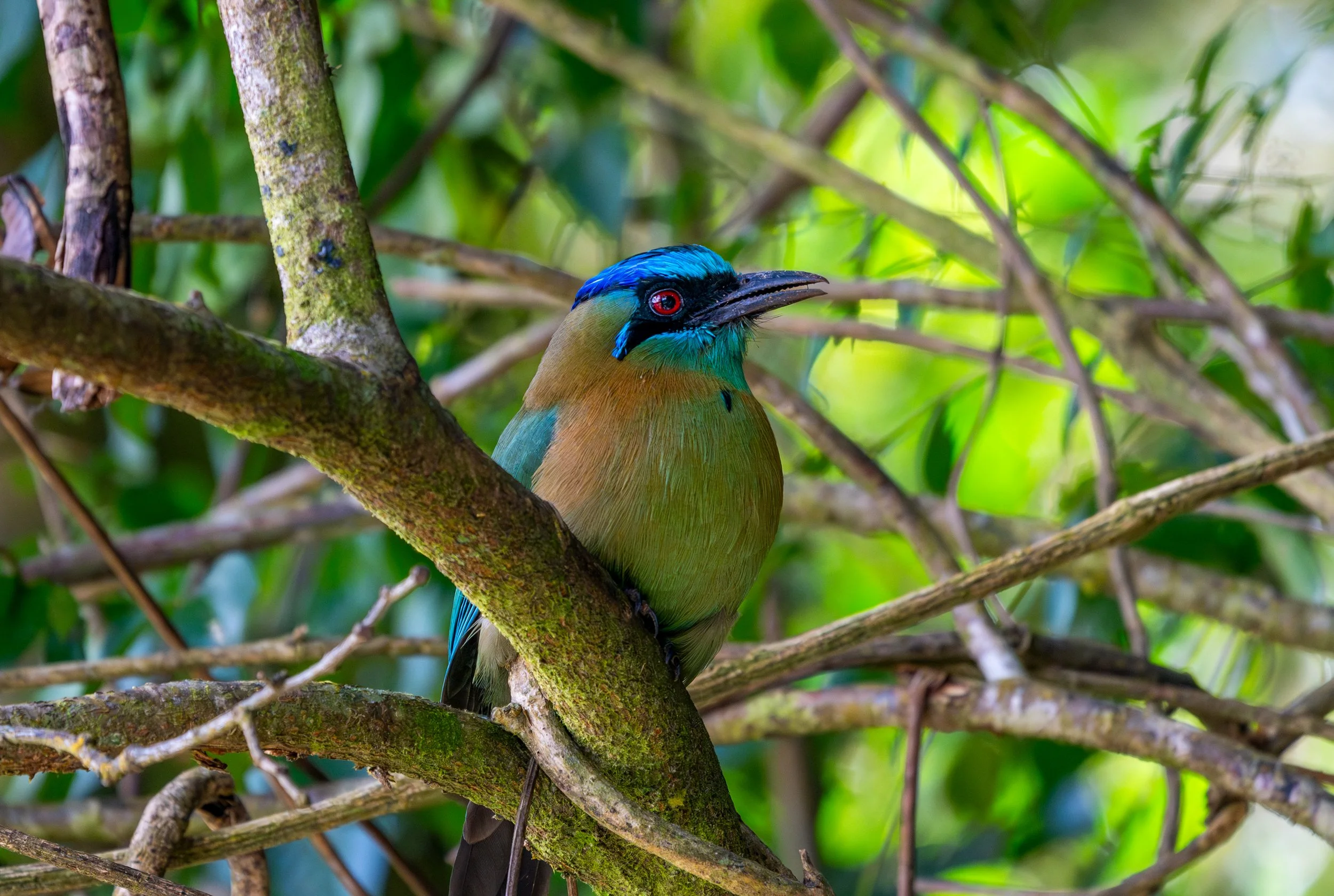
The Lesson's Motmot Famous for it's brilliant turquoise brow, the Motmot is the crown jewel of the Central American Jungle.
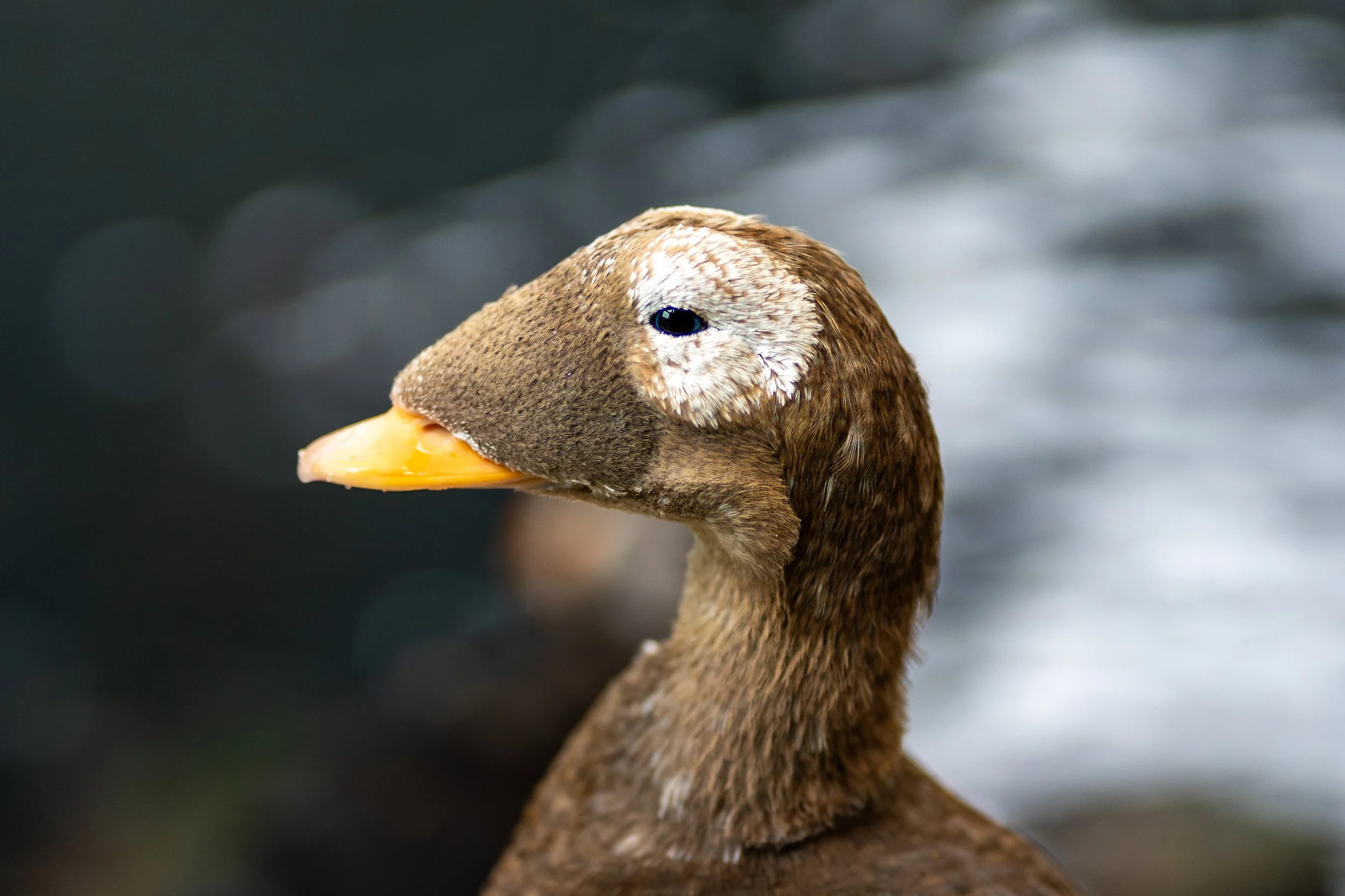
Spectacled Eider A true specialist of the Arctic, the Spectacled Eider is named for the distinctive, circular patches of feathers around its eyes that resemble a pair of goggles. This portrait captures a rare look at one of the most unique waterfowl species in the world, often found braving the remote, icy waters off the coast of Alaska.
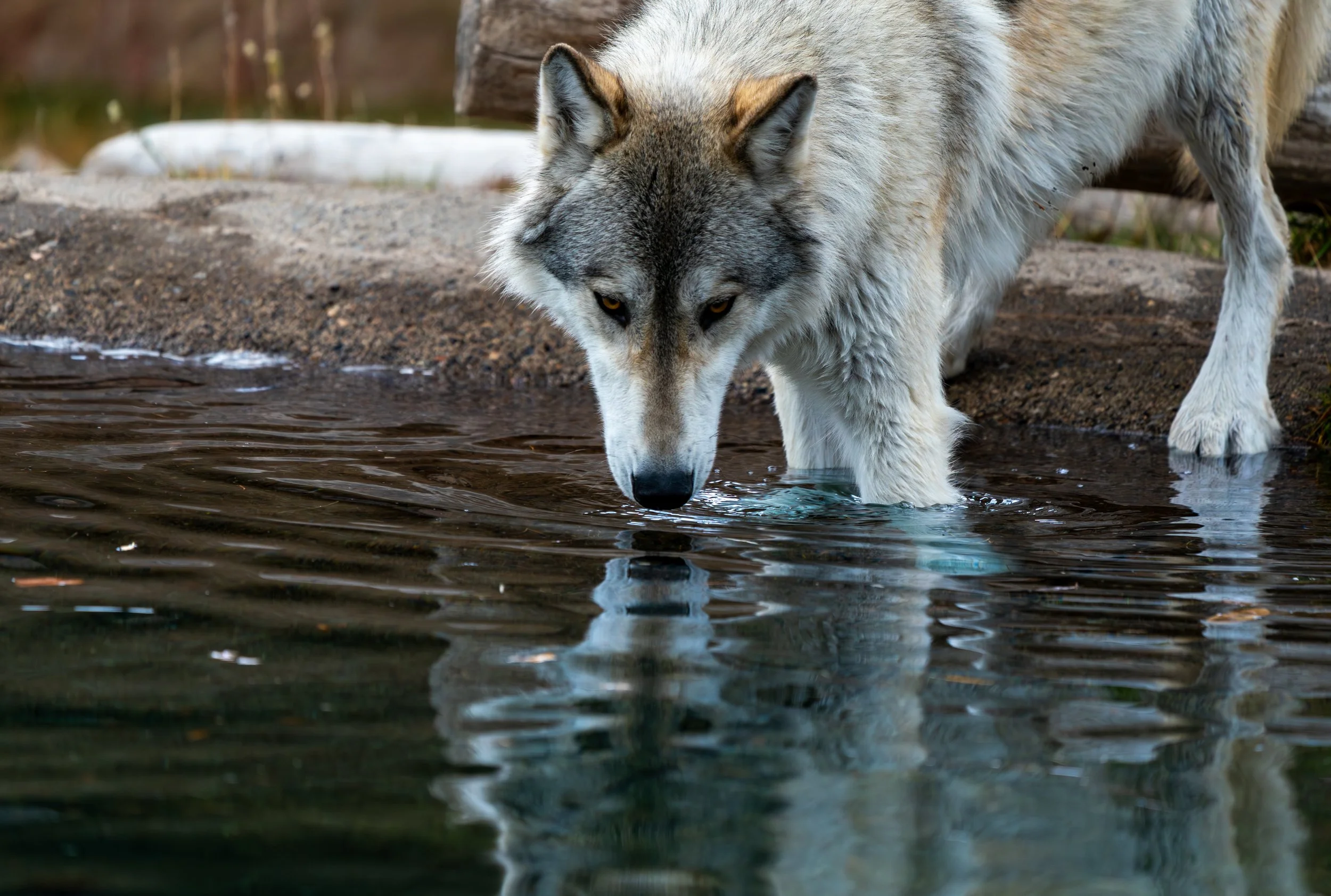
Grey Wolf Wolves can survive temperatures as low as and have specialized blood vessels in their legs that keep their paws warm, preventing heat loss.
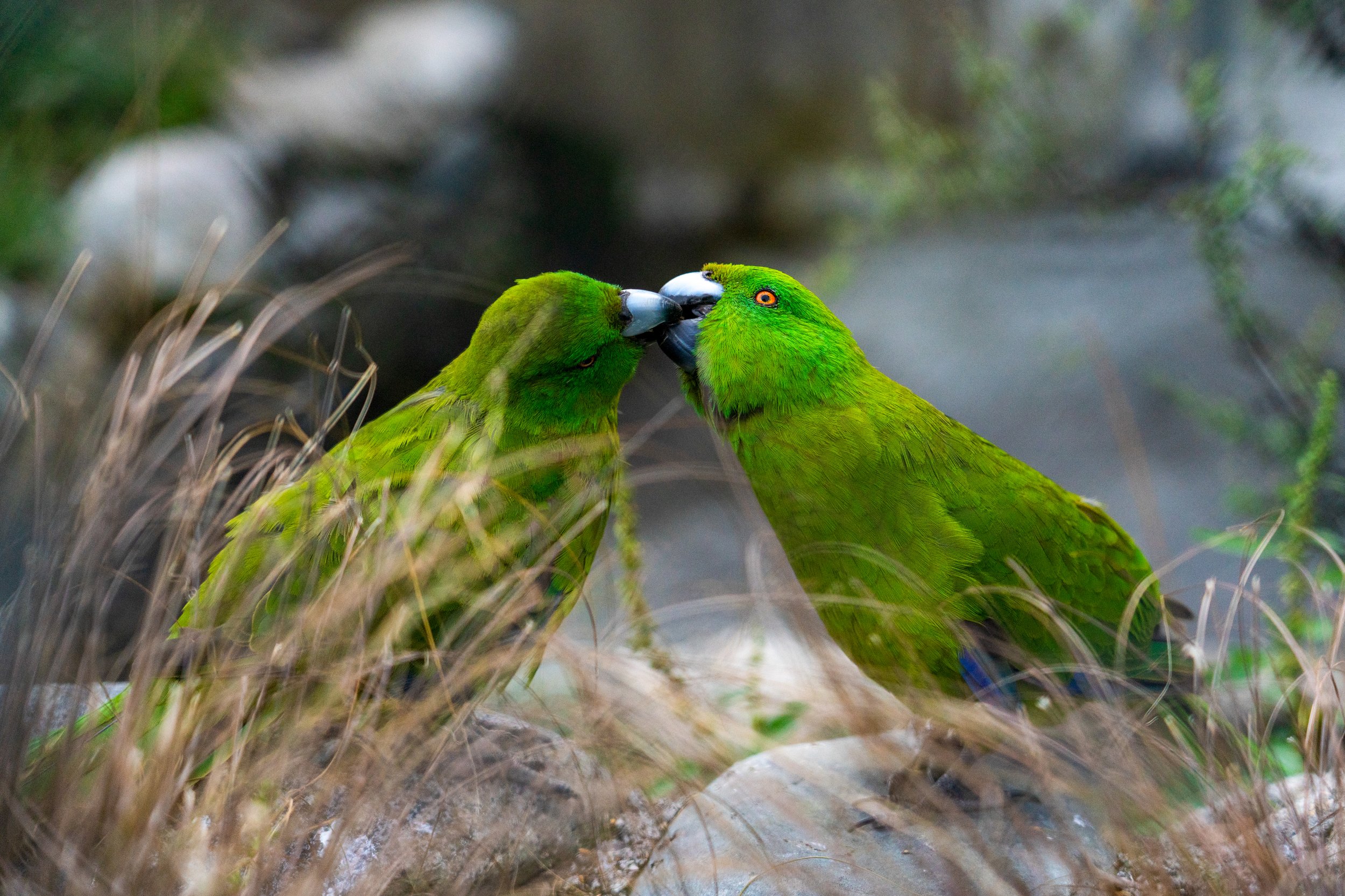
Golden Parakeet They look like they are kissing but they are actually fighting over a nut. These funny, social birds are endangered due to habitat destruction and poaching for the pet trade.
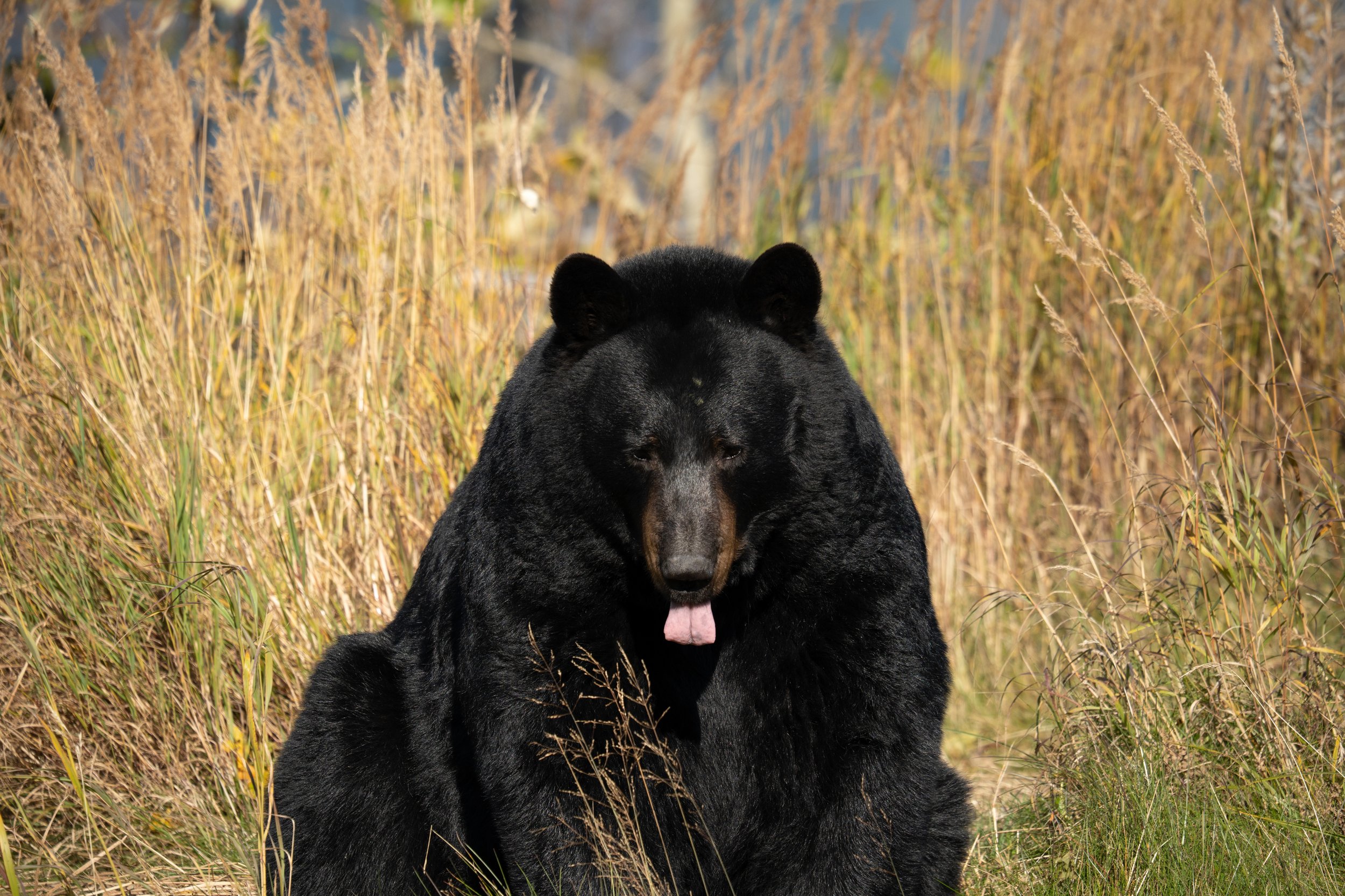
A Moment of Levity This Alaskan Black Bear was photographed during a quiet moment of foraging. Beyond their fierce reputation, black bears are incredibly expressive and curious animals, possessing a level of intelligence that allows them to thrive in some of the most rugged environments on Earth.
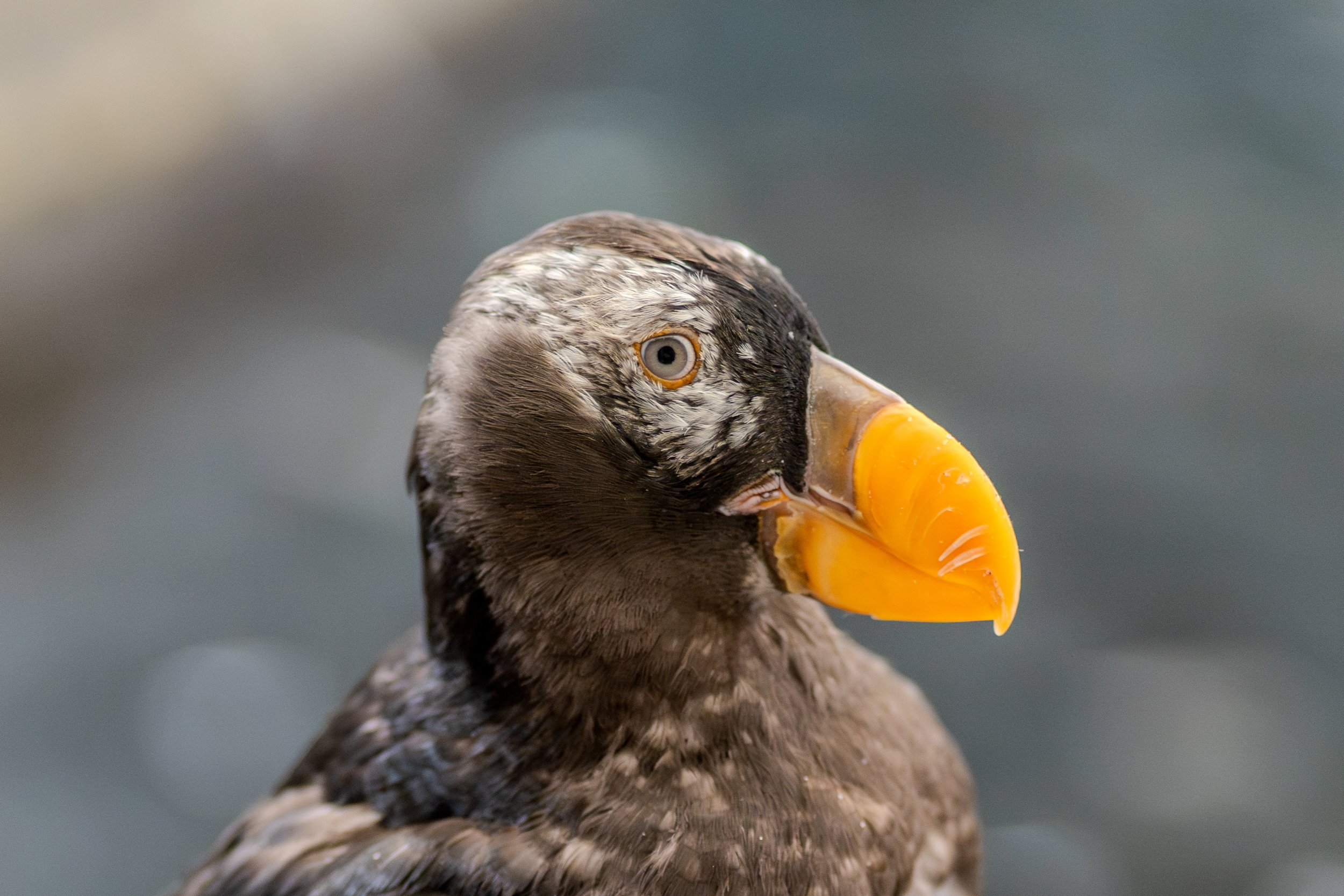
Tufted Puffin A young Tufted Puffin prepares for its life at sea. These birds spend the vast majority of their lives on the open ocean, only returning to the rocky cliffs of the Pacific Northwest and Alaska to breed and raise their young.
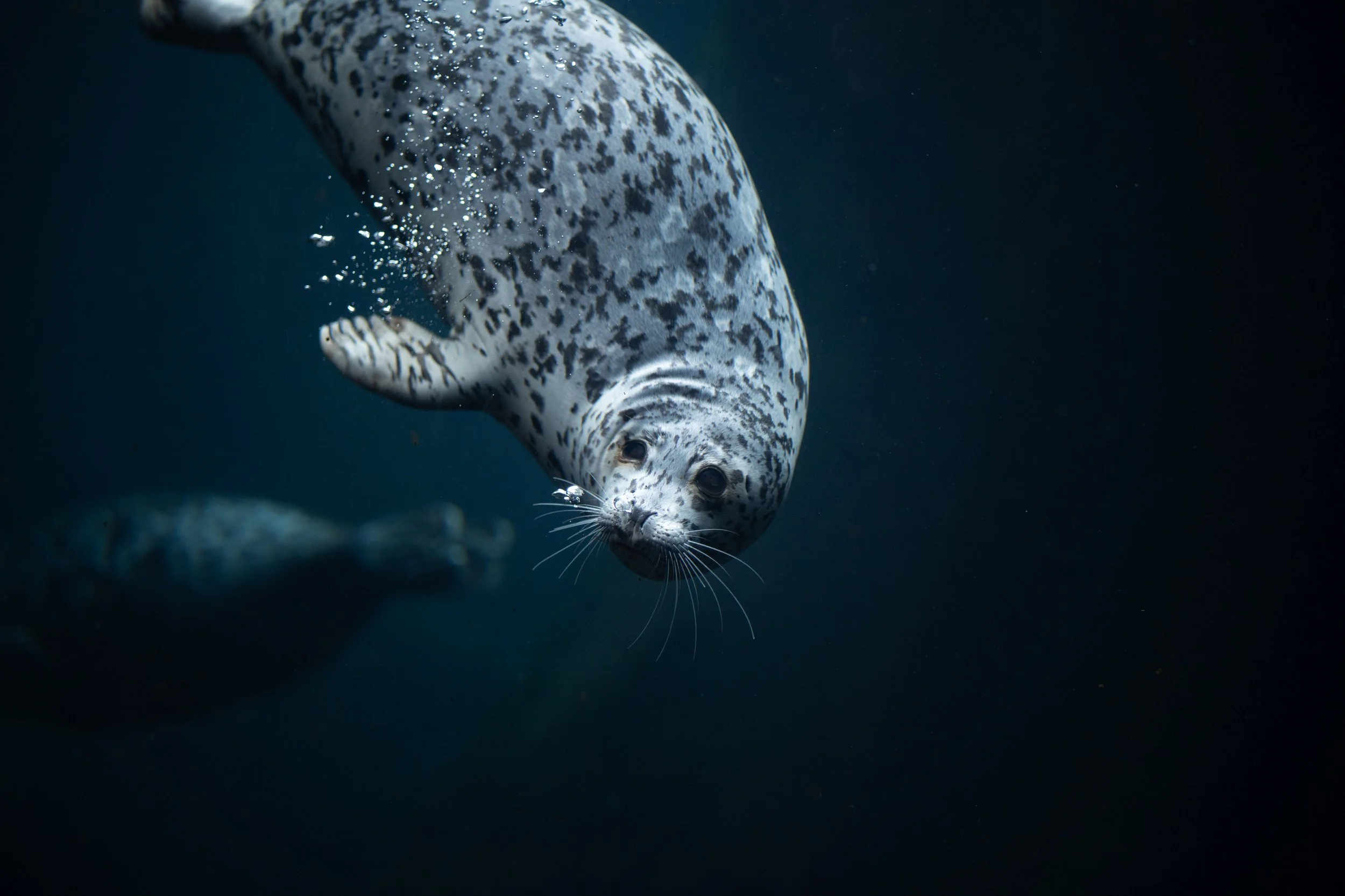
Into the Abyss Surrounded by a trail of rising bubbles, this Harbor Seal navigates the sun-dappled depths. Harbor seals rely on their highly sensitive whiskers—called vibrissae—to detect the tiny vibrations of swimming prey in near-total darkness. This portrait highlights the quiet intensity of one of the ocean’s most successful and adaptable hunters.
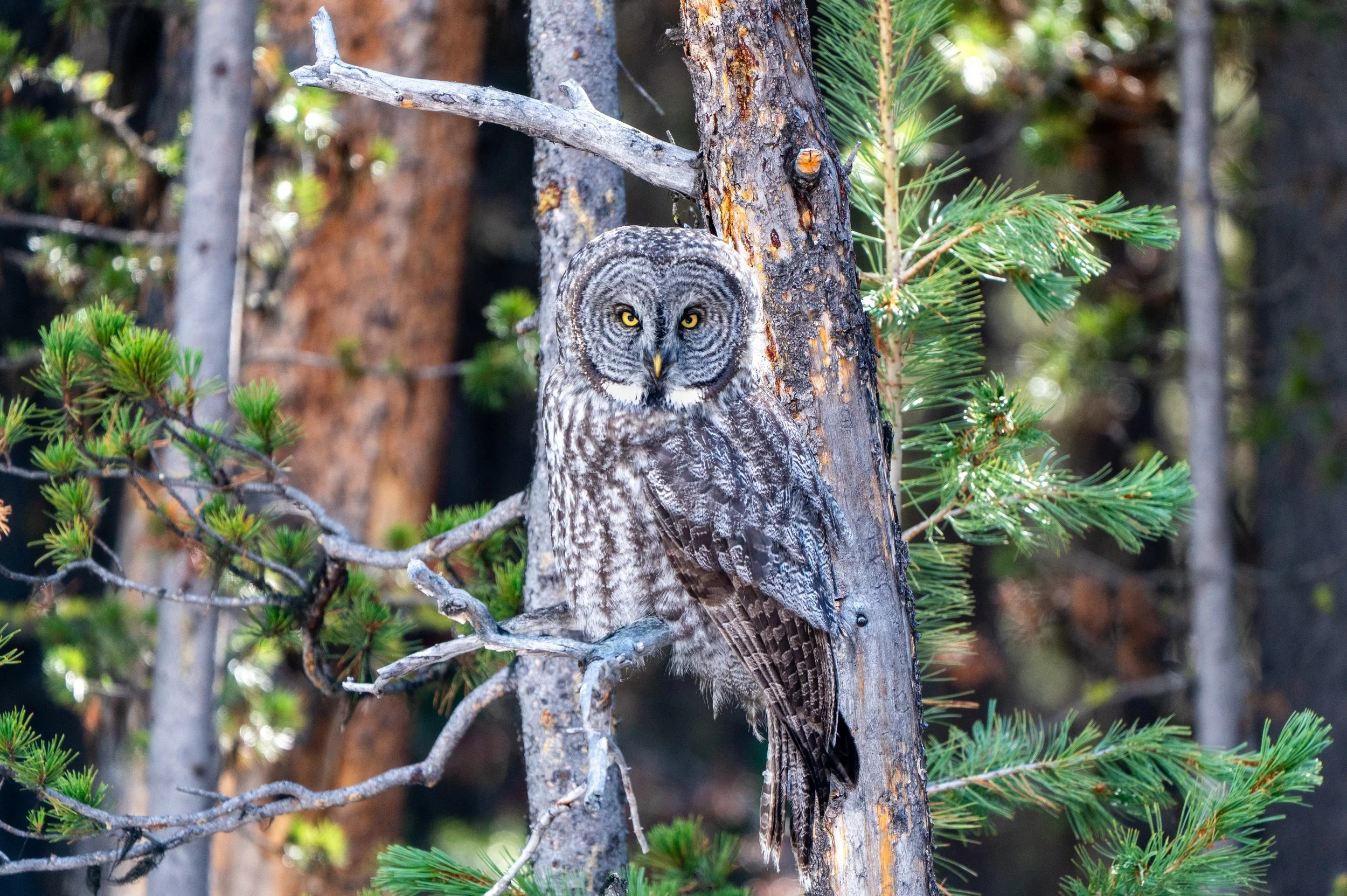
Great Gray Owl One of the world's largest owl species by length. Despite its size, it is an apex predator. It is a master of silent flight and can detect the heartbeat of prey moving beneath two feet of snow.
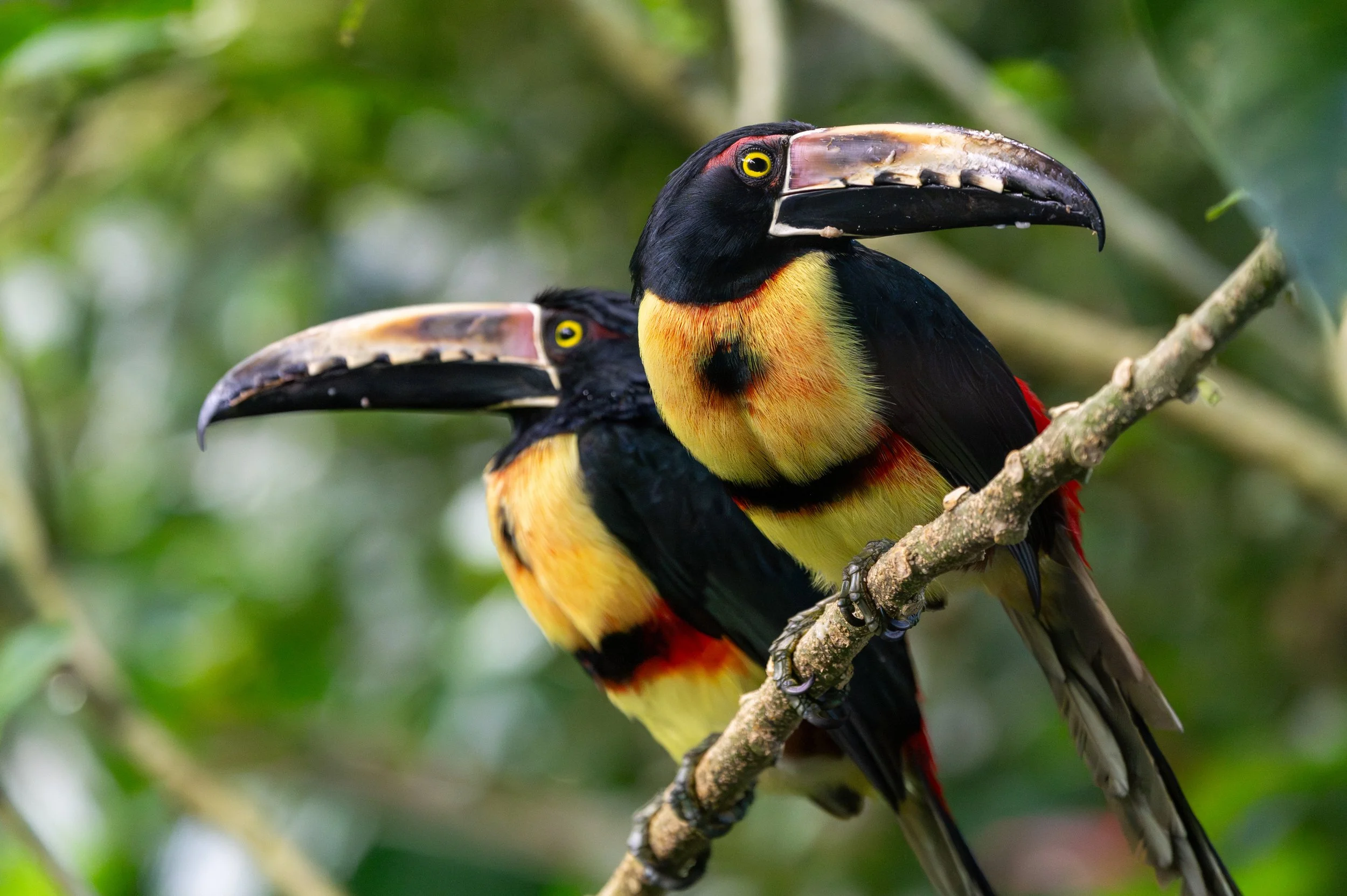
Collared Aracari A small, very social cousin of the toucan, the Aracari is known be one of the few species of birds that roost in groups, with up to six or seven adults and fledglings squeezing into a single tree cavity.
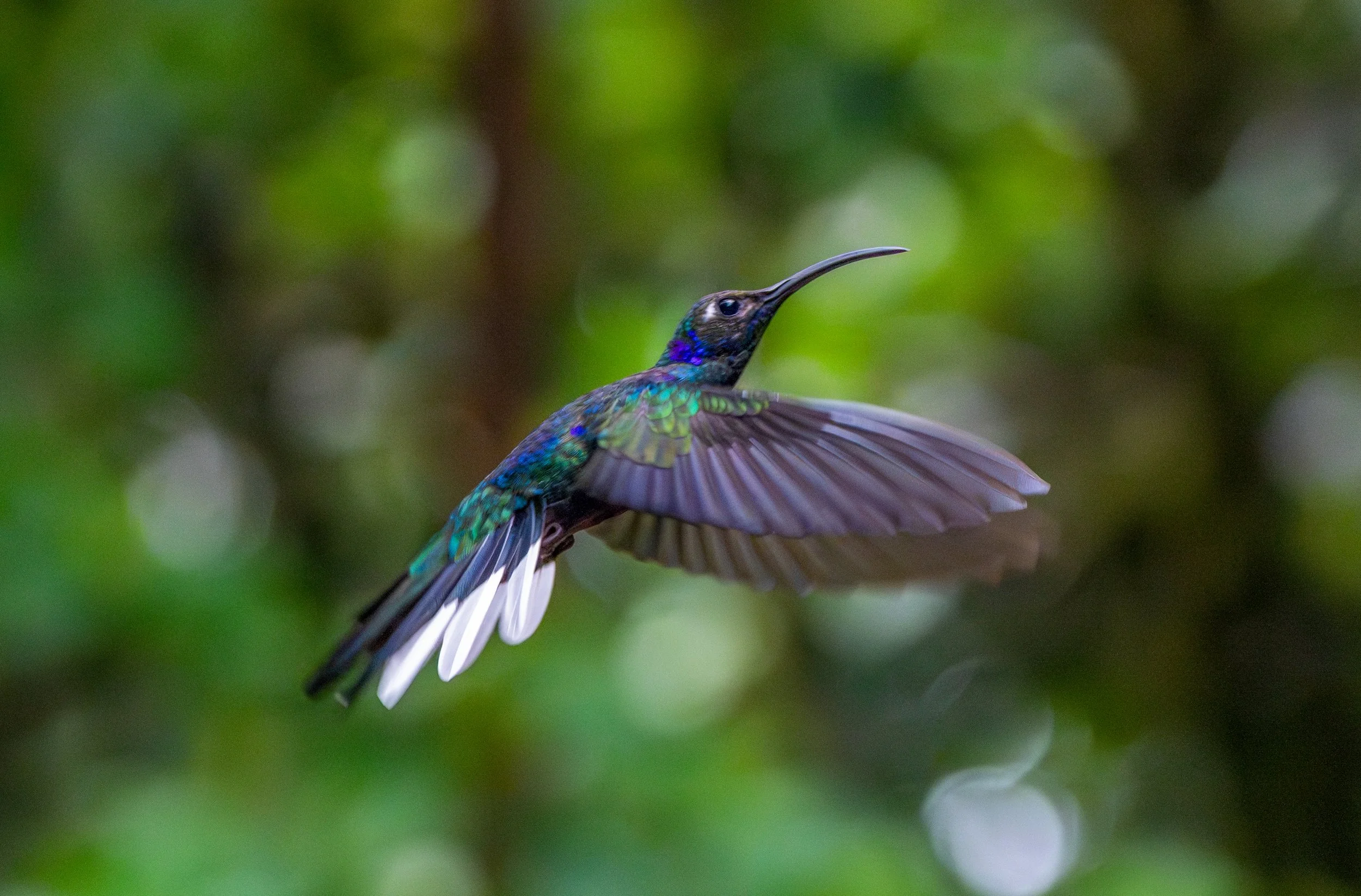
Violet Sawbrewing The largest hummingbird in Central America and a true spectacle of deep violet and emerald. This shot captures its territorial nature as it defends a prime feeding spot.
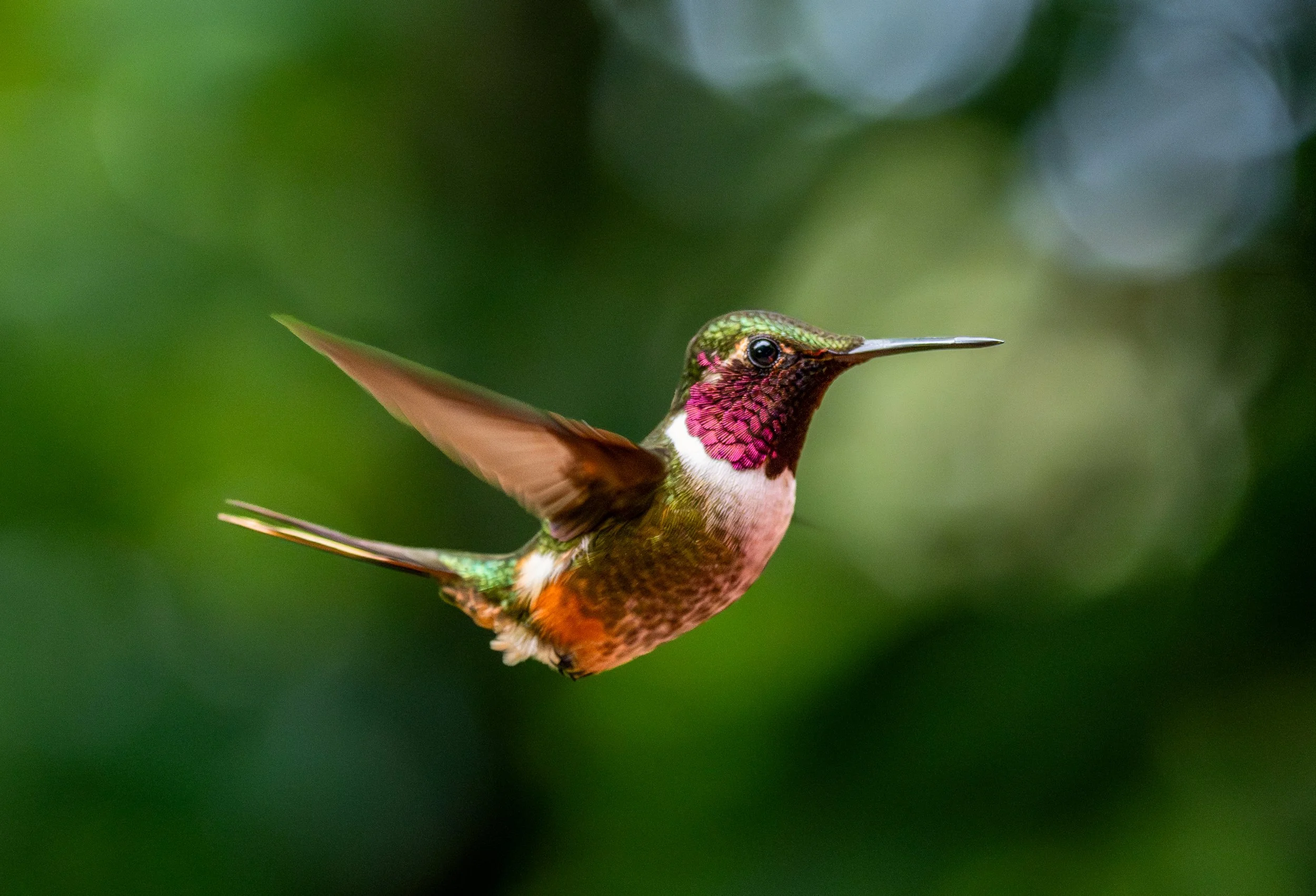
Magenta-Throated Woodstar One of the smallest of the hummingbird species in existence. Despite its tiny size, the Woodstar is a marvel of speed and vibrant plumage.
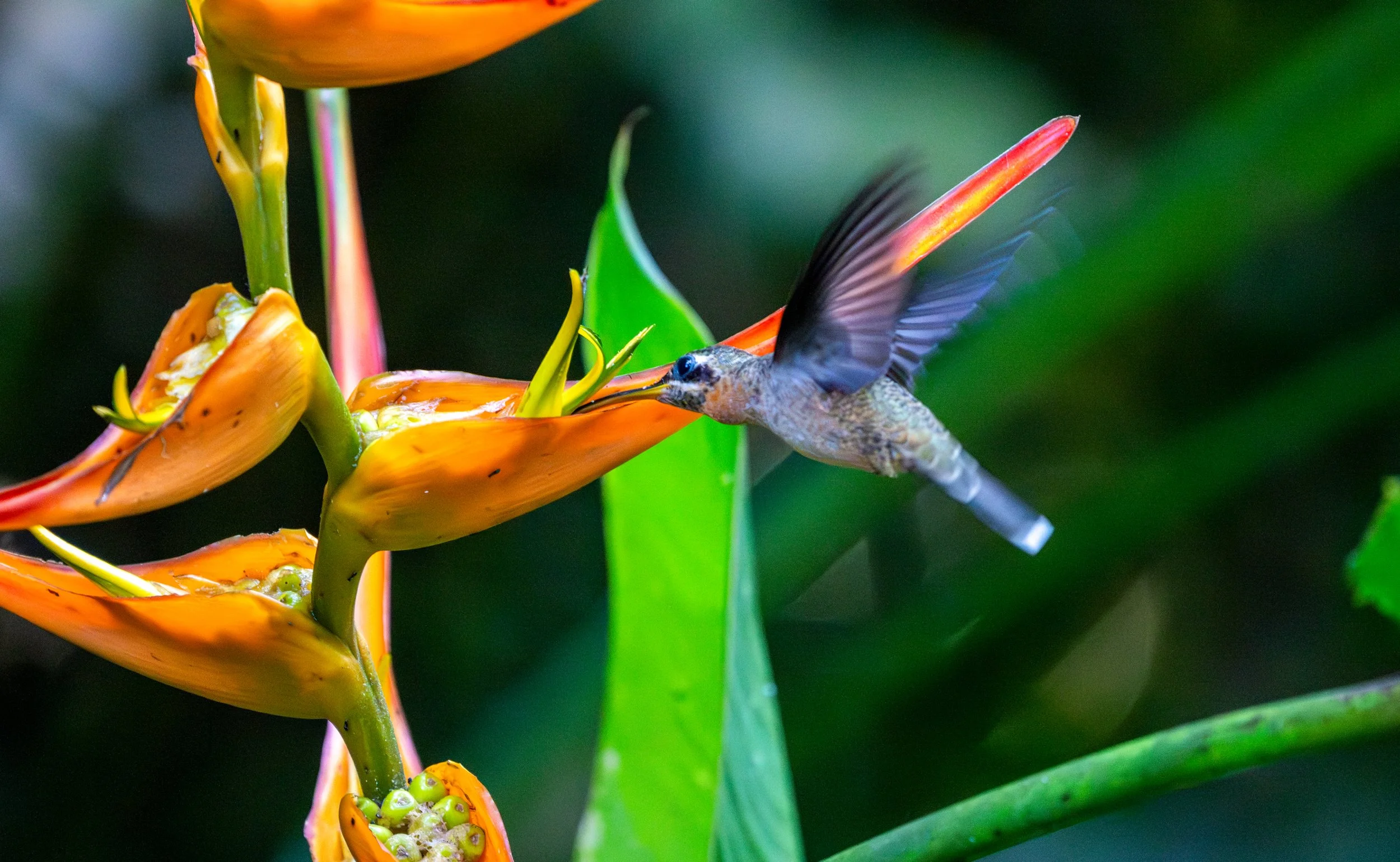
Copper-Headed Emerald A rare find, this hummingbird is endemic to the cool, misty cloud forests of Costa Rica. Its namesake coppery crown is a stunning contrast against the deep green foliage.
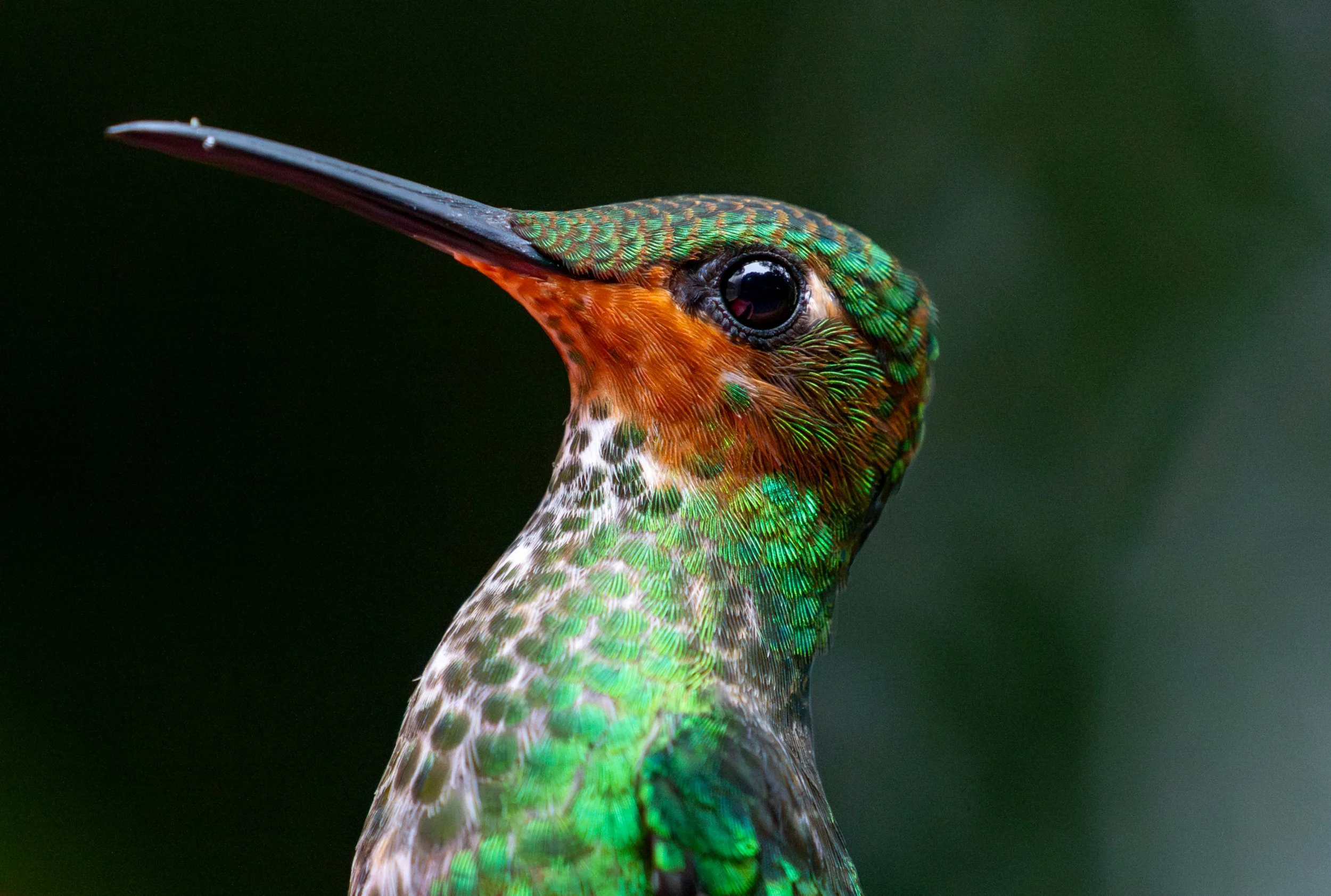
Rufous Tailed Hummingbird Don’t let their size fool you—the Rufous-tailed Hummingbird is one of the most territorial birds in the rainforest. Known for aggressively defending prime nectar sources from much larger birds, this tiny dynamo is a master of precision flight, capable of hovering and maneuvering with split-second accuracy to claim its territory.
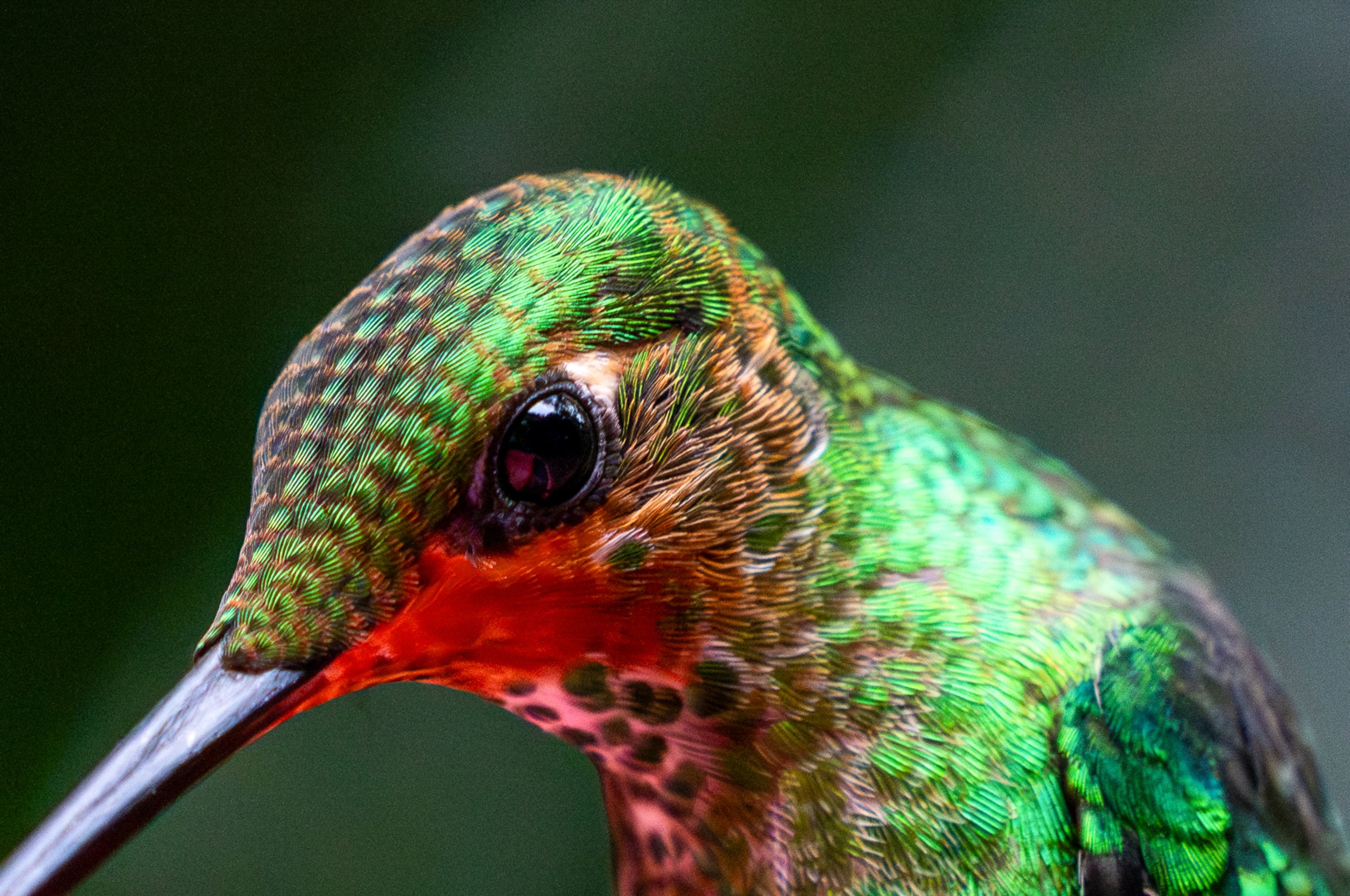
Rufous Tailed Hummingbird The most common hummingbird in Central America. They are highly adaptable, found everywhere from gardens to where I found this one, at the edge of the Costa Rican cloud forest.
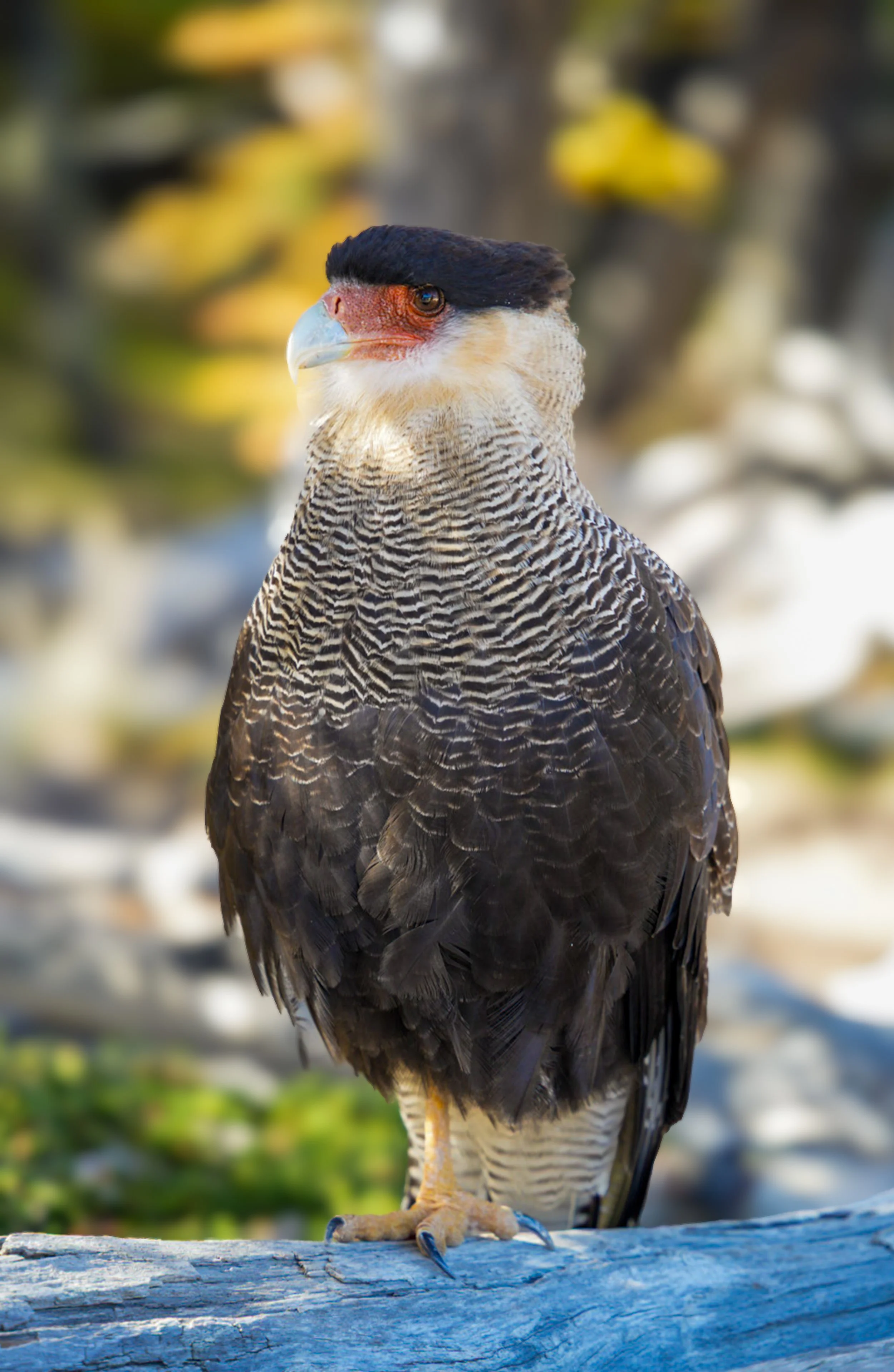
Southern Caracara A bold and opportunistic bird of prey found throughout South America. Unlike most raptors, the Caracara is frequently seen walking or running on the ground in search of food.
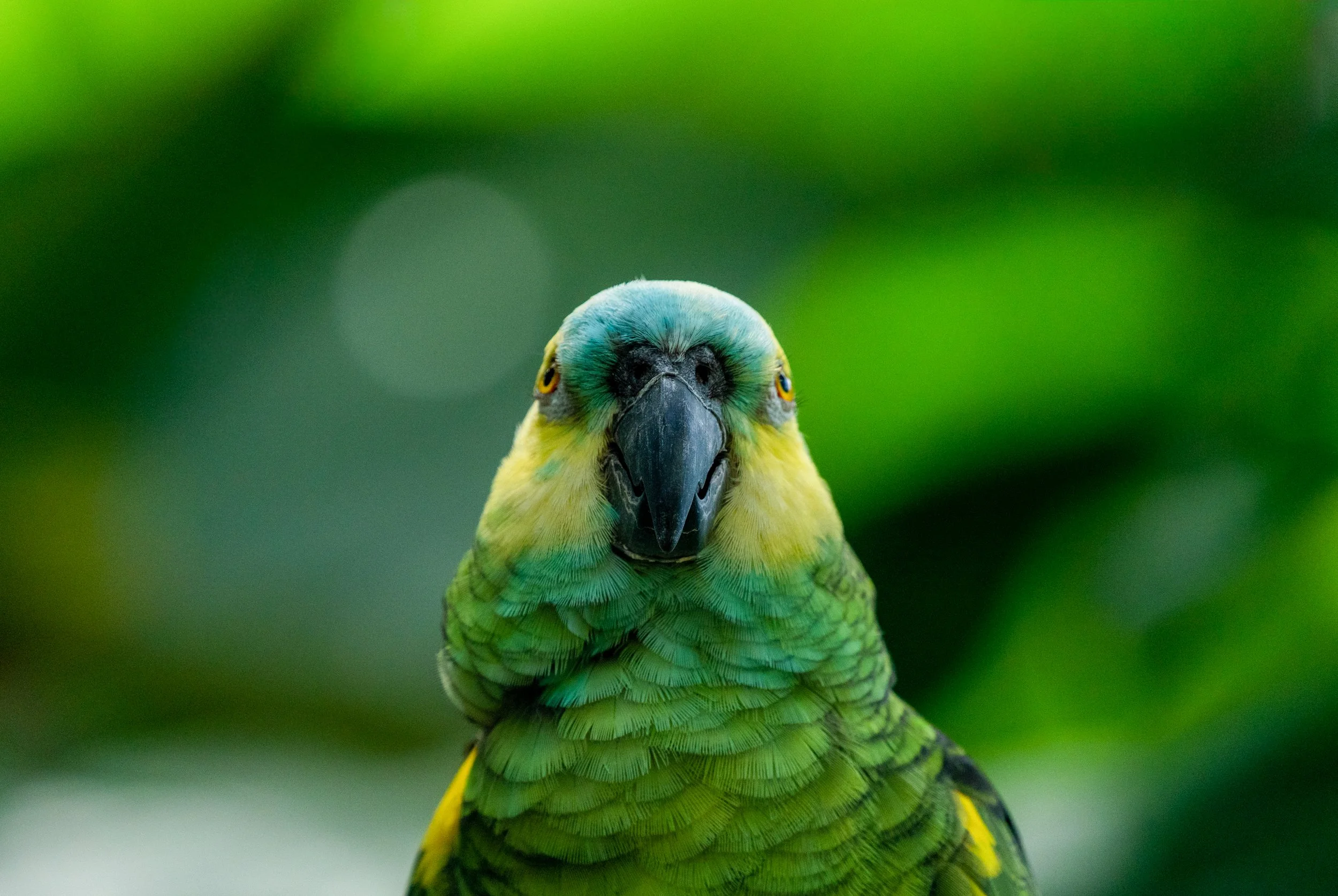
Yellow-Naped Amazon Known for their remarkable intelligence and vocal mimicry, the Yellow-naped Amazon is easily identified by the bright yellow patch on its nape. Sadly, they are currently listed as Critically Endangered due to habitat loss and the illegal pet trade.
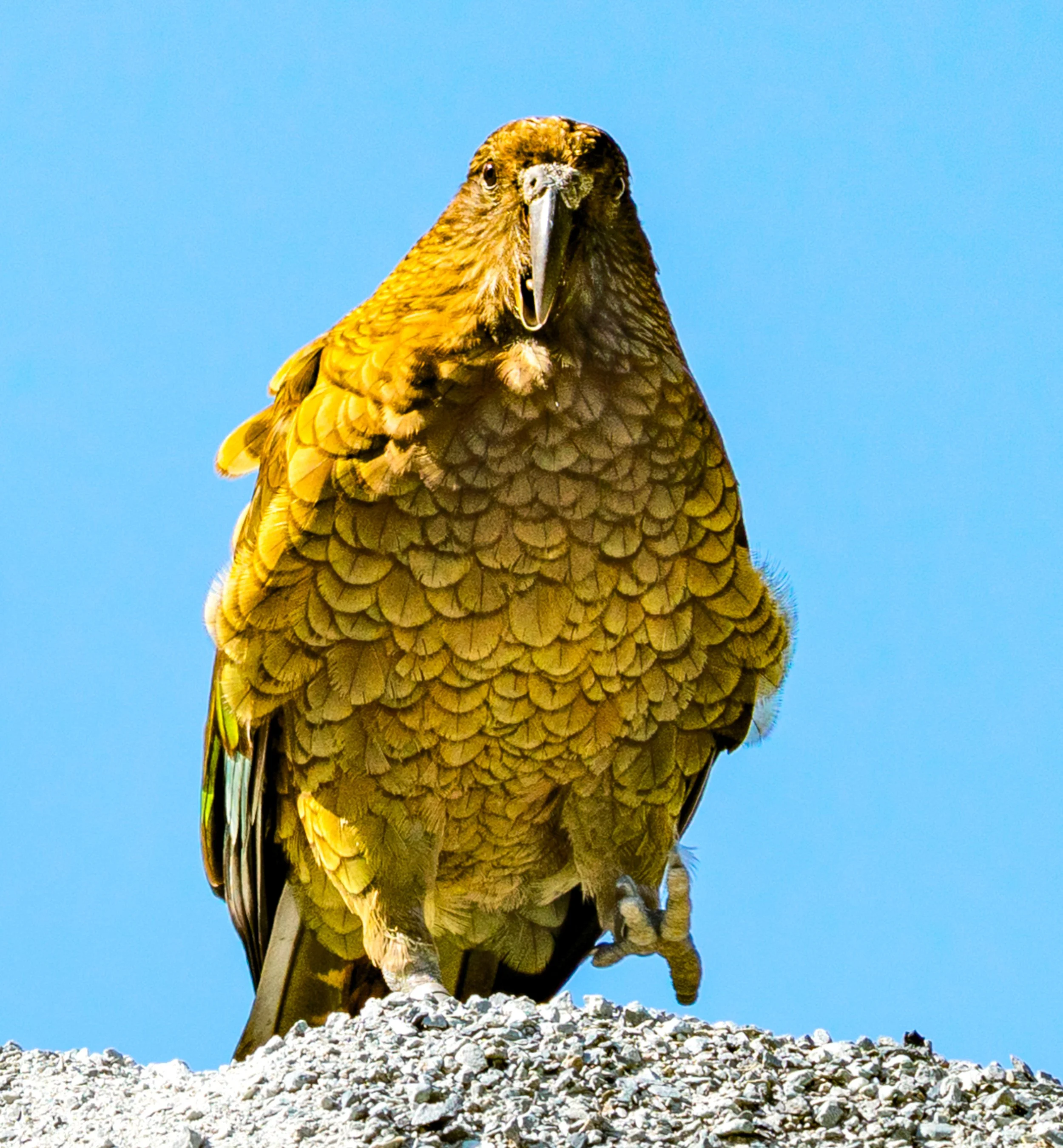
New Zealand Kea The world’s only alpine parrot. Famous for their high intelligence, Keas are notorious "mountain clowns" known to investigate (and occasionally dismantle) hikers' gear.
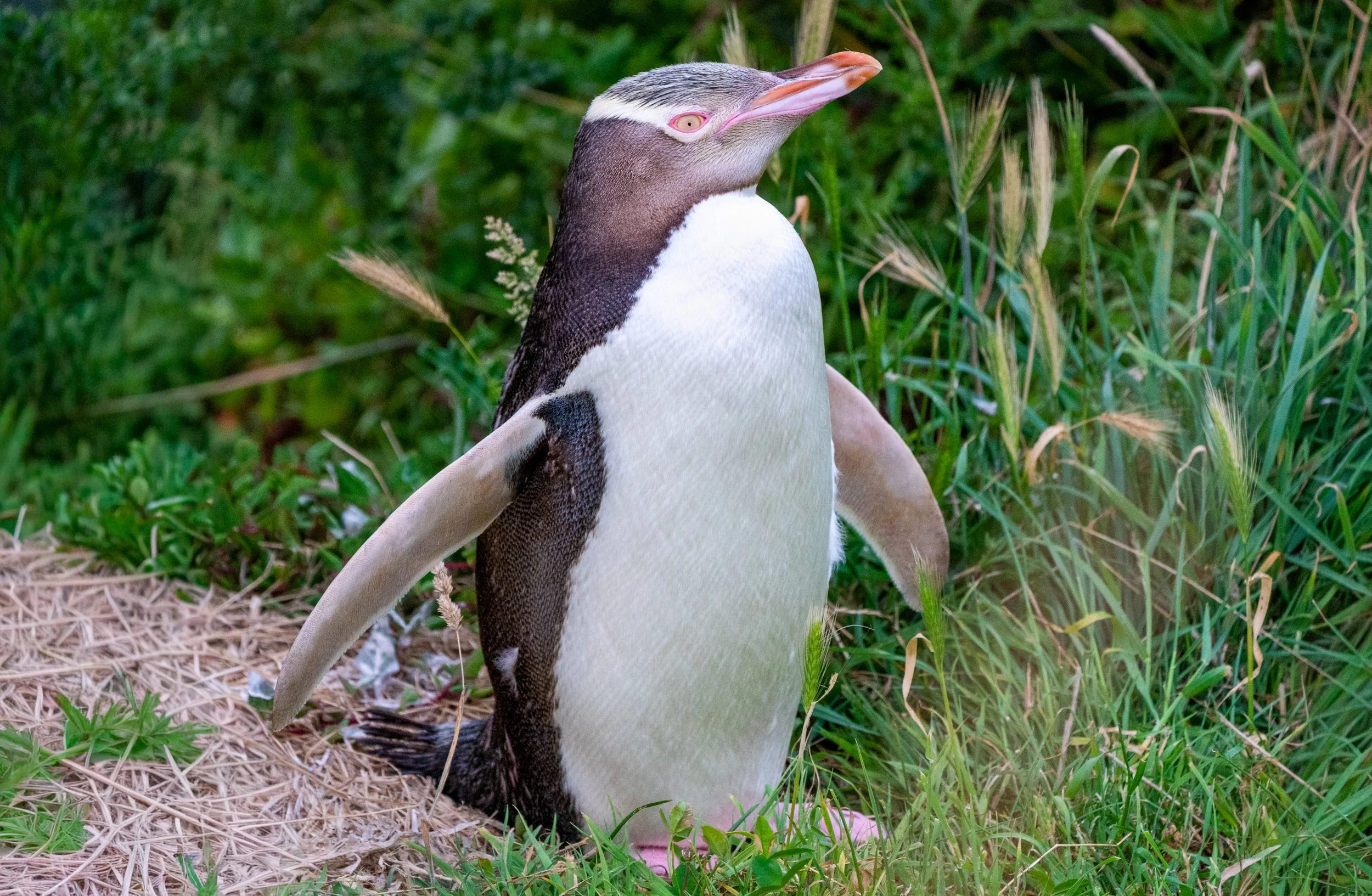
Yellow-Eyed Penguin One of the rarest penguin species on Earth, the Yellow-Eyed Penguin is native to the rugged coastlines of New Zealand. Known by its Māori name, Hoiho (meaning "noise shouter"), this bird is easily identified by its striking pale-yellow iris and the vivid band of yellow feathers that sweeps across its head.
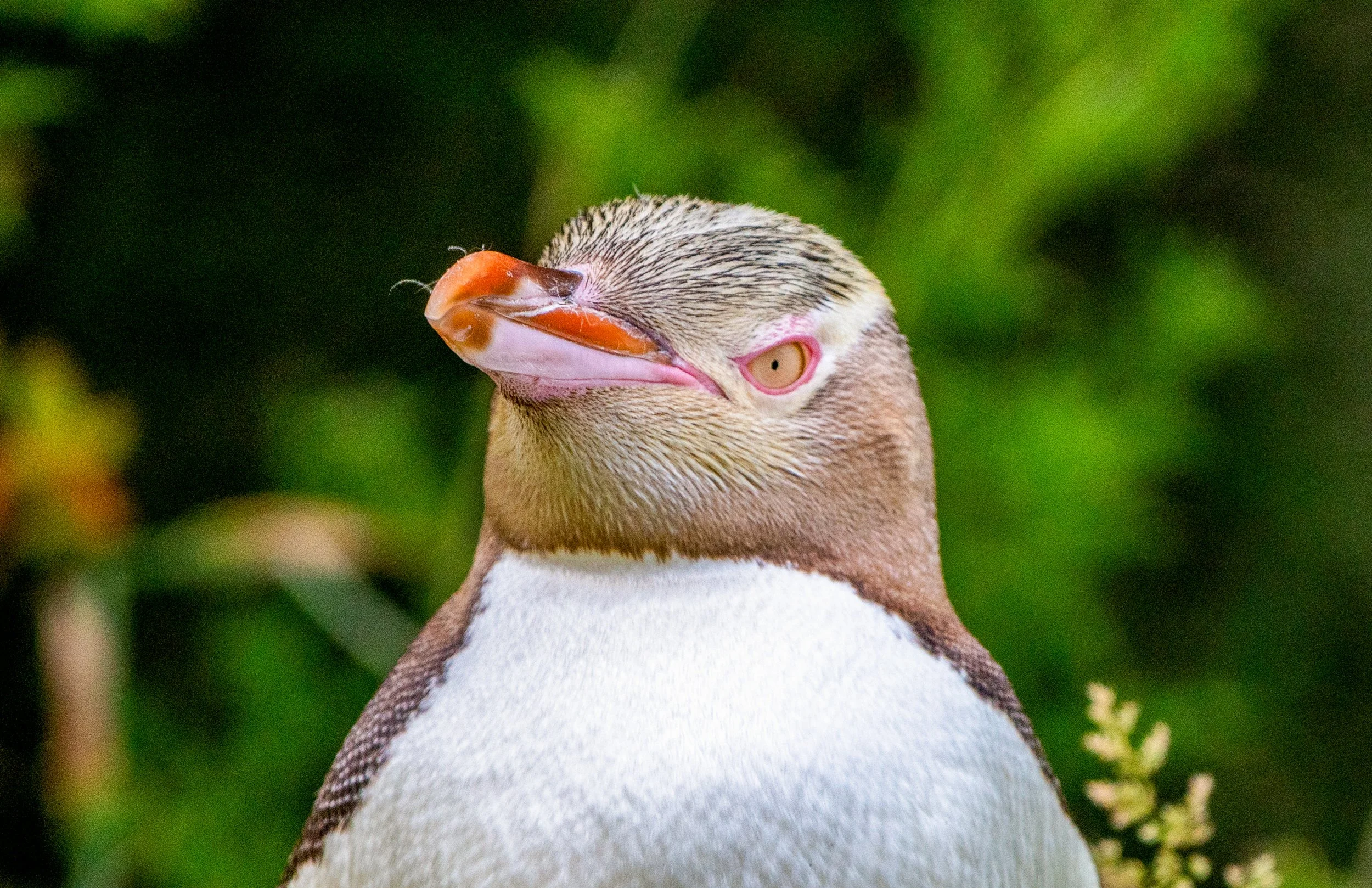
Hoiho Unlike many penguin species that nest in massive, crowded colonies, the Yellow-Eyed Penguin is a solitary nester, preferring the privacy of coastal forests and scrubland. This portrait captures the intense, watchful gaze of a species that is as elusive as it is beautiful, surviving in the secluded bays of the Otago Peninsula.
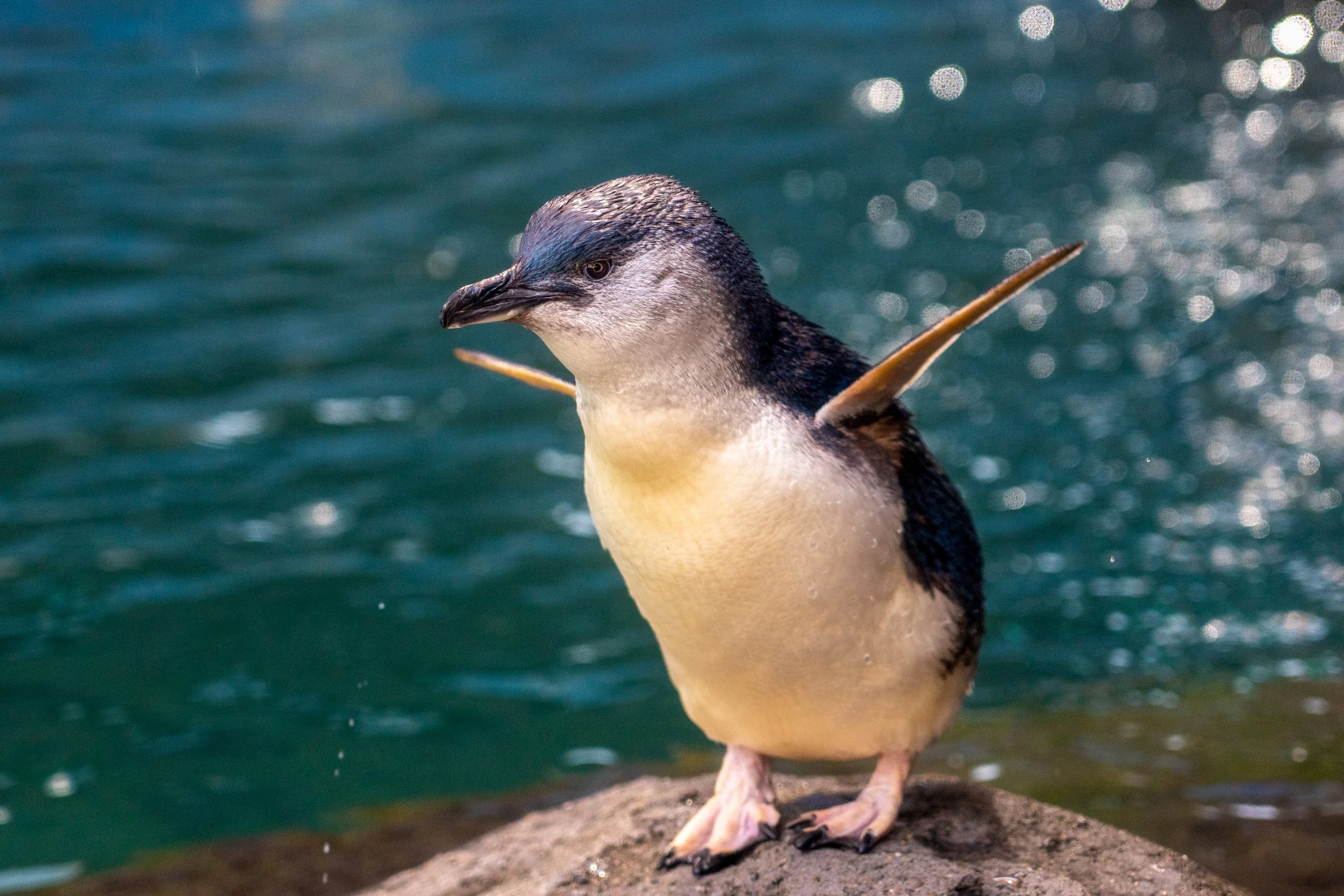
Blue Penguin The smallest species of penguin in the world, the Blue Penguin stands just over 9 inches tall. This portrait captures the subtle, slate-blue sheen of its feathers—a natural camouflage known as countershading, which protects them from predators while they spend their days foraging at sea.
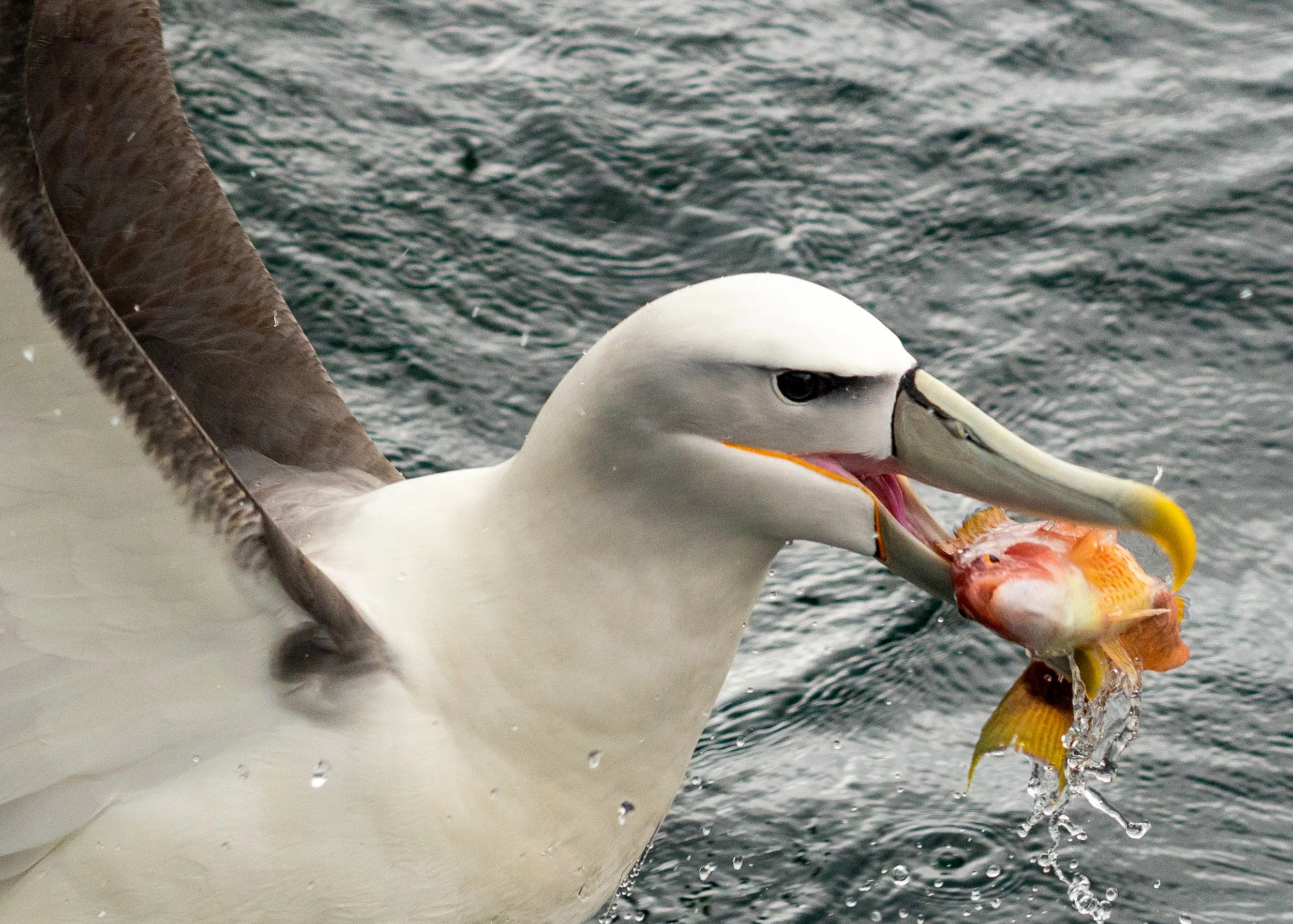
The Surface Hunter While they are known for their soaring, albatrosses are equally adept on the water. This portrait captures the moment of a successful hunt. Using their powerful, hooked yellow bills, they seize fish and squid from the surface or perform shallow dives. Interestingly, they have unique tubular nostrils that allow them to filter salt from seawater, letting them stay at sea for years at a time.
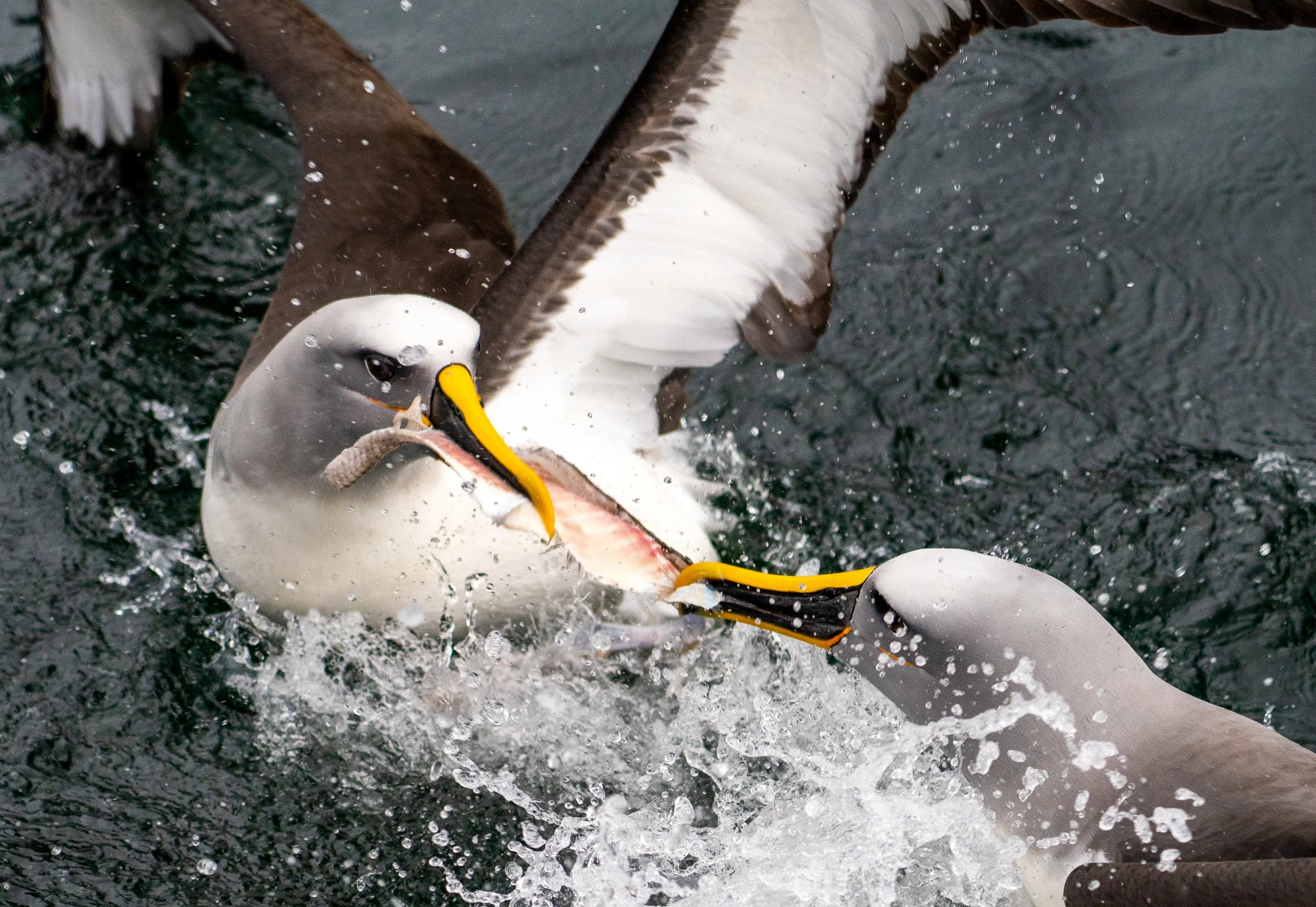
Black-browed Albatross Named for the distinctive dark plumage above their eyes, the Black-browed Albatross is a common yet striking resident of the southern oceans. They are highly social when feeding but return to remote, windswept cliffs in places like the Falkland Islands to raise a single chick—a process that involves a lifelong commitment to their mate.
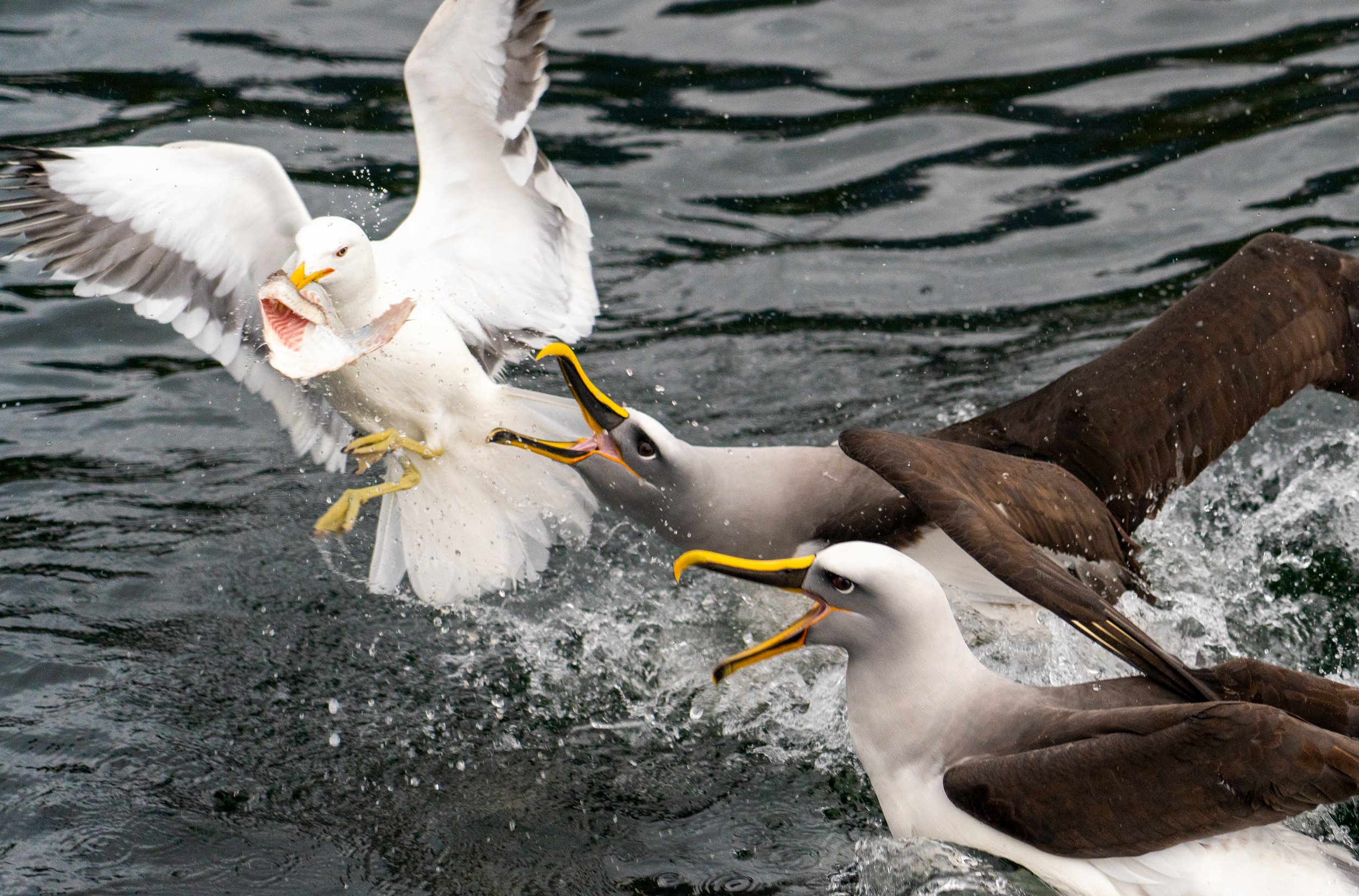
Albatross Thwarted A daring Pacific Gull takes advantage of the much bigger and stronger Albatross and steals their meal.
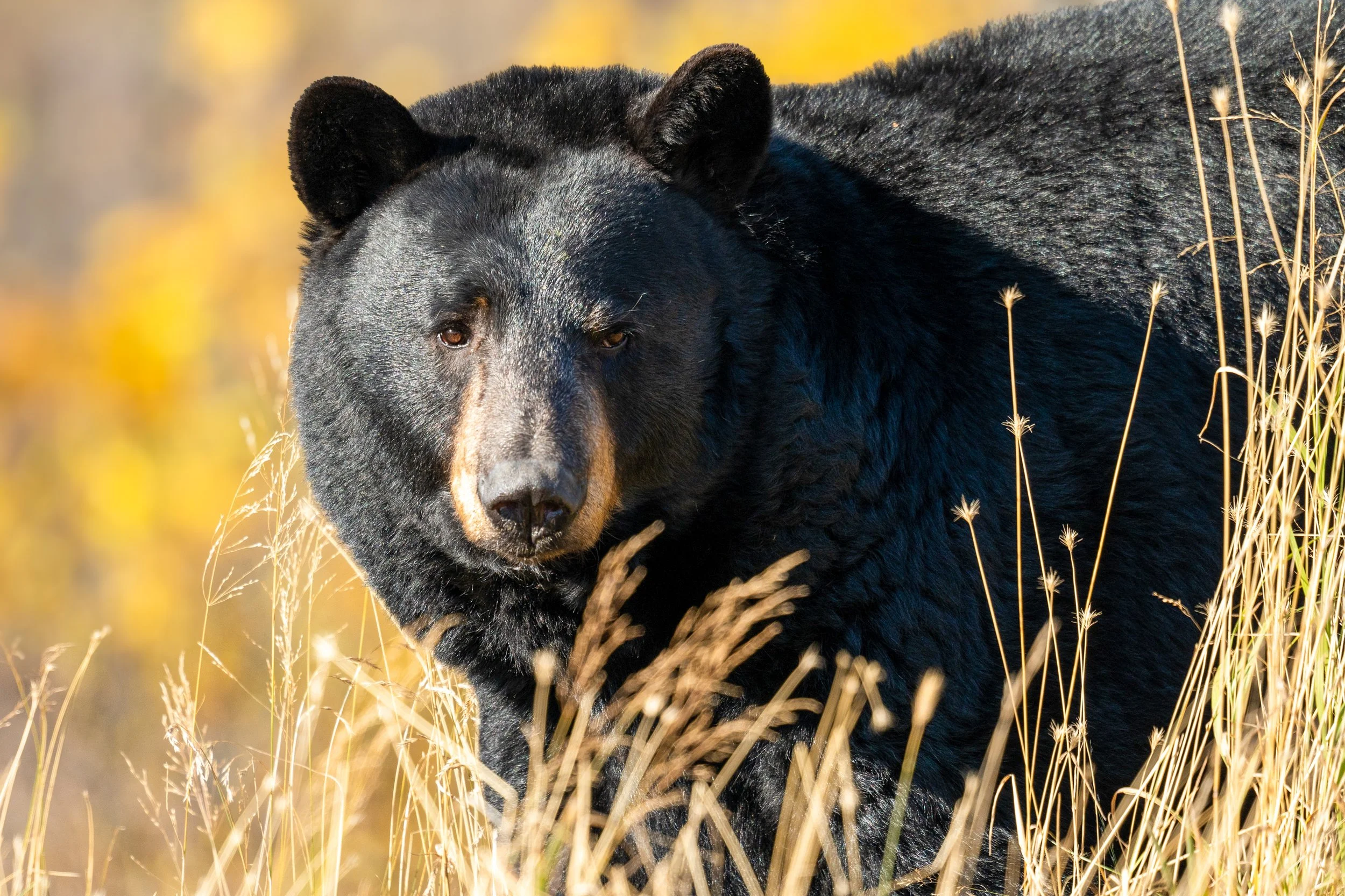
Alaskan Black Bear Often overshadowed by their larger grizzly cousins, black bears are masters of their environment, utilizing their incredible climbing skills and keen sense of smell to navigate the dense forests and coastal fringes of the Great North.
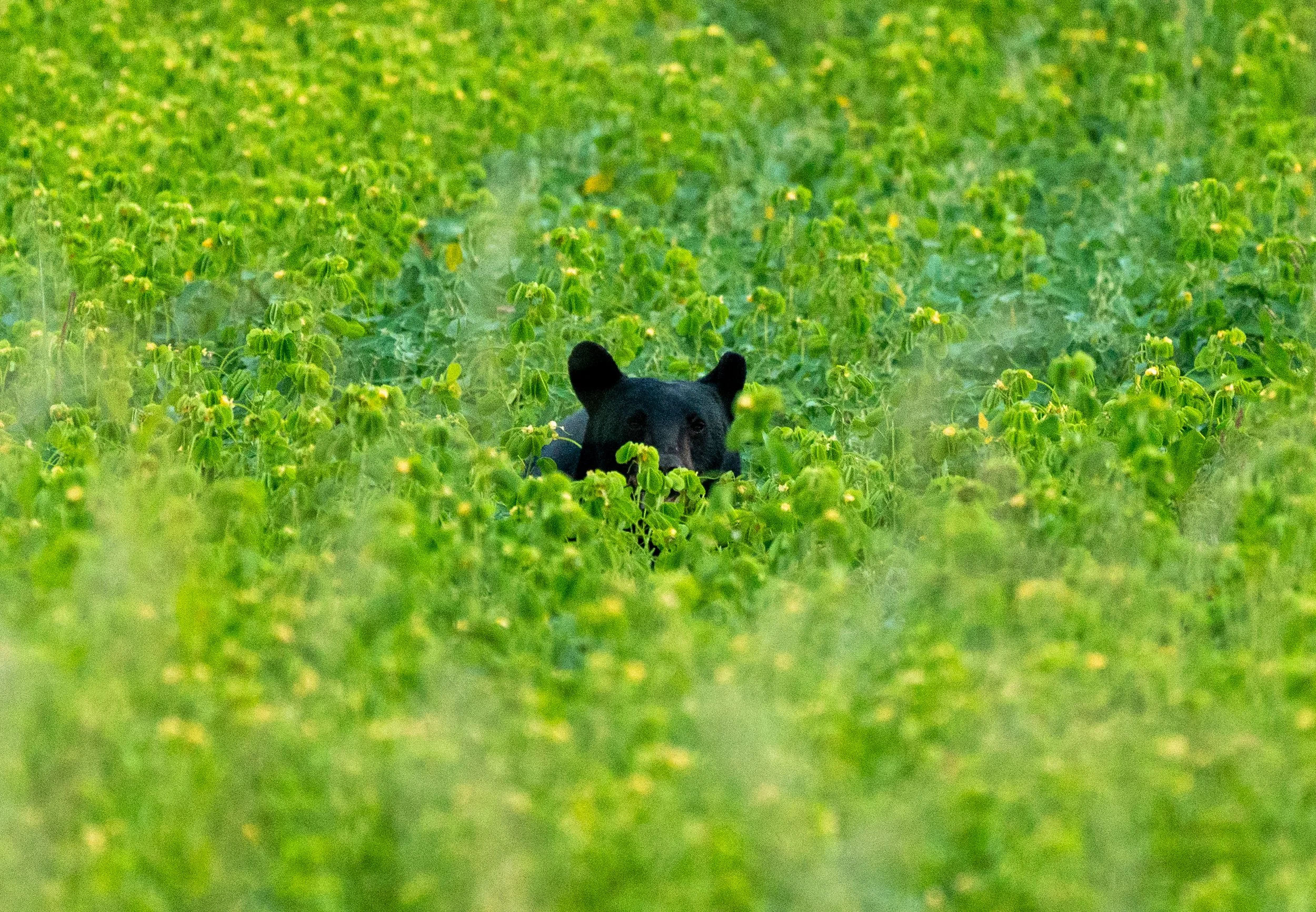
Coastal Black Bear They are unique "sea bears" that forage on beaches at low tide, using their immense strength to flip boulders for crabs and shellfish. These highly adaptable bears and are the largest black bears in the world due to a high-protein diet.
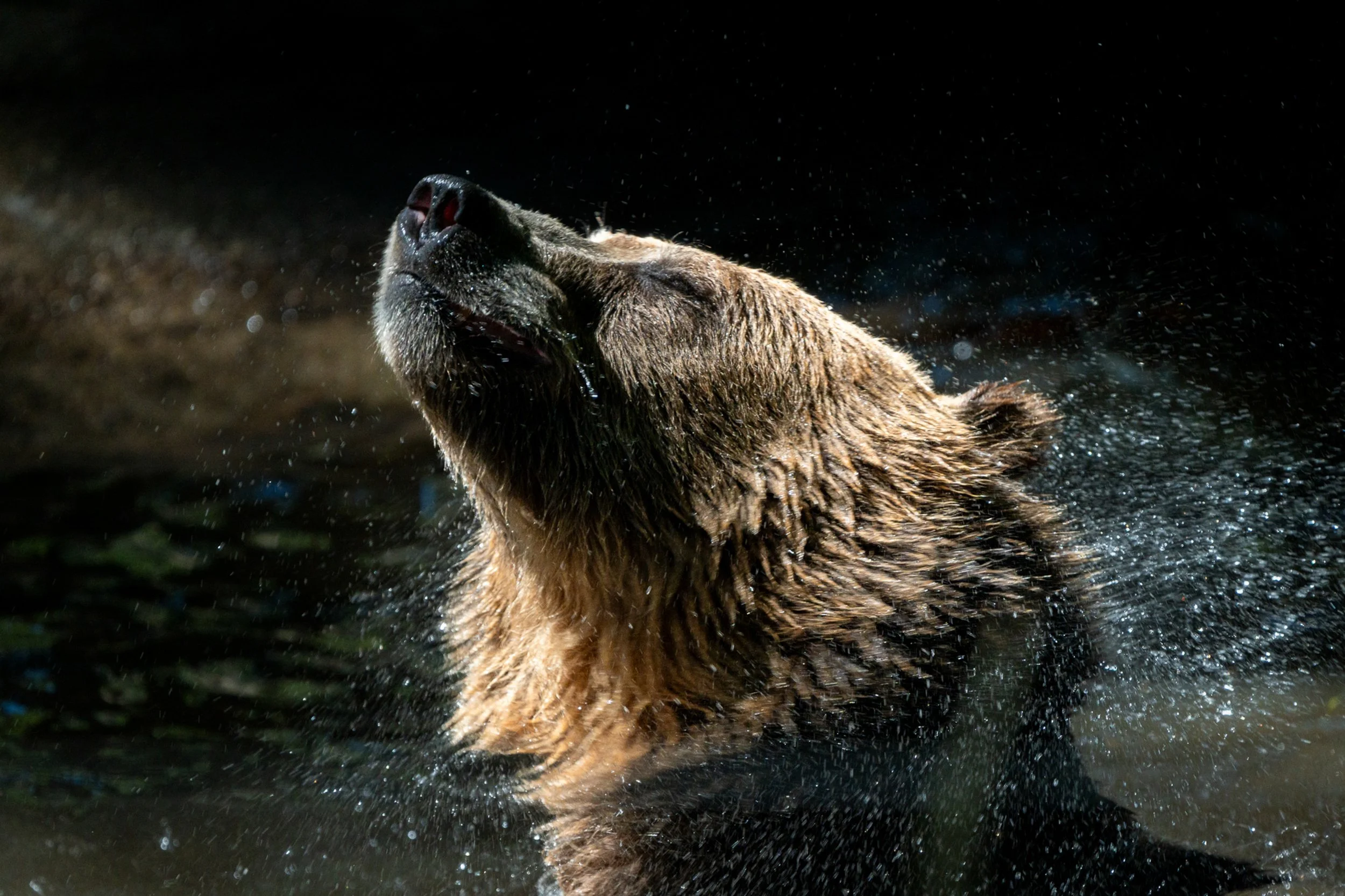
Cooling Off During the peak of a Western Canadian summer, the heat can be intense even for an apex predator. This candid portrait captures a moment of pure relief as a Grizzly bear cools off in a mountain stream. The flying droplets and the bear's closed eyes highlight a rare, peaceful side of these powerful giants in their natural habitat.
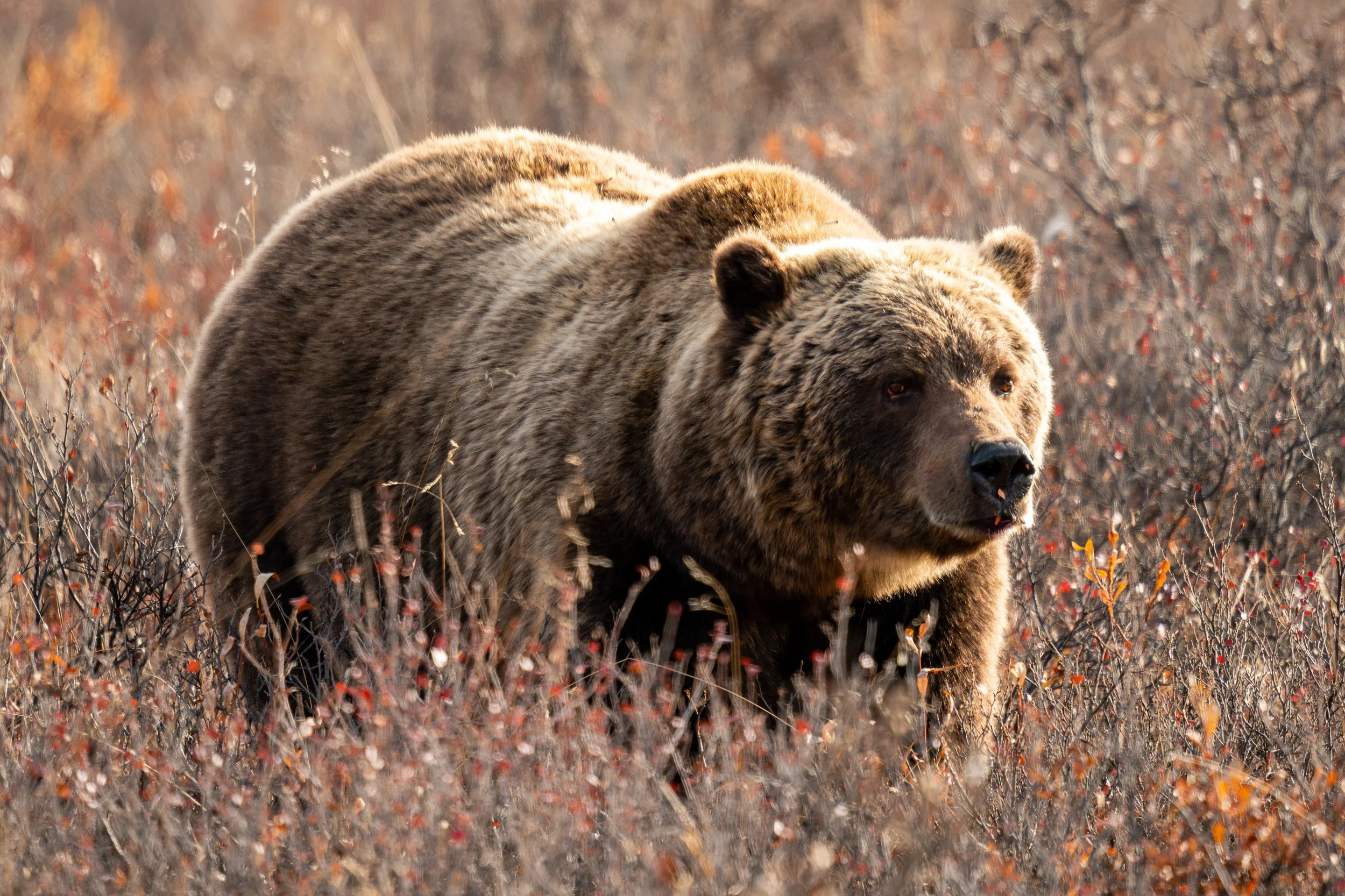
Grizzly Bear Foraging Alaska’s grizzly bears are remarkably huge, with coastal males reaching up to 1,500 pounds and standing 10 feet tall, making them some of the largest land predators on earth.
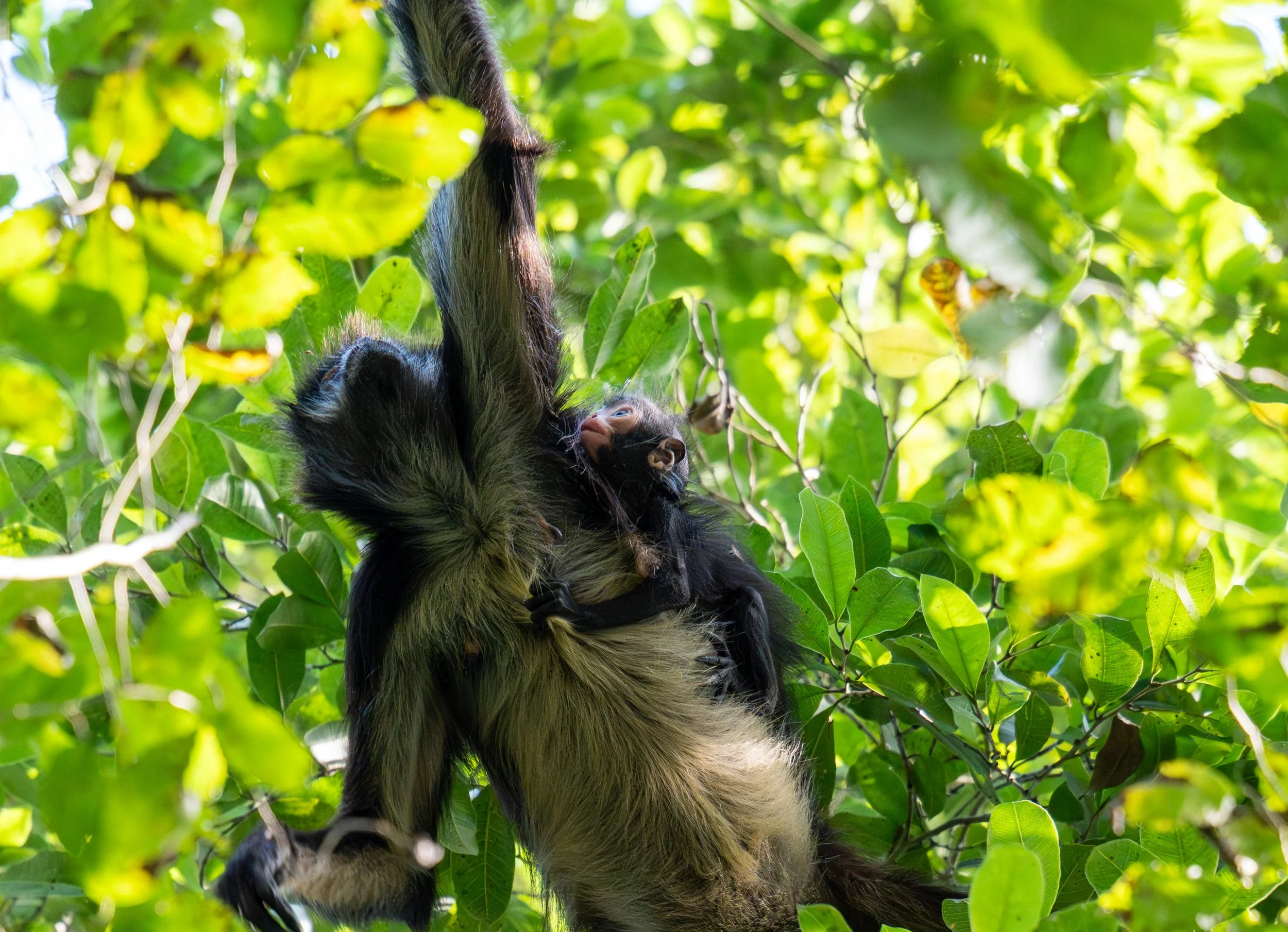
Newborn Geoffroy’s Spider Monkey A rare glimpse into the early life of a spider monkey. Even without using her prehensile tail in this moment, the mother's specialized "hook-like" hands—which have evolved to be thumbless for faster swinging—provide a secure anchor as she moves through the canopy. This newborn will spend its first few months tucked tightly against her chest or back, perfectly adapted for a life spent entirely off the ground.
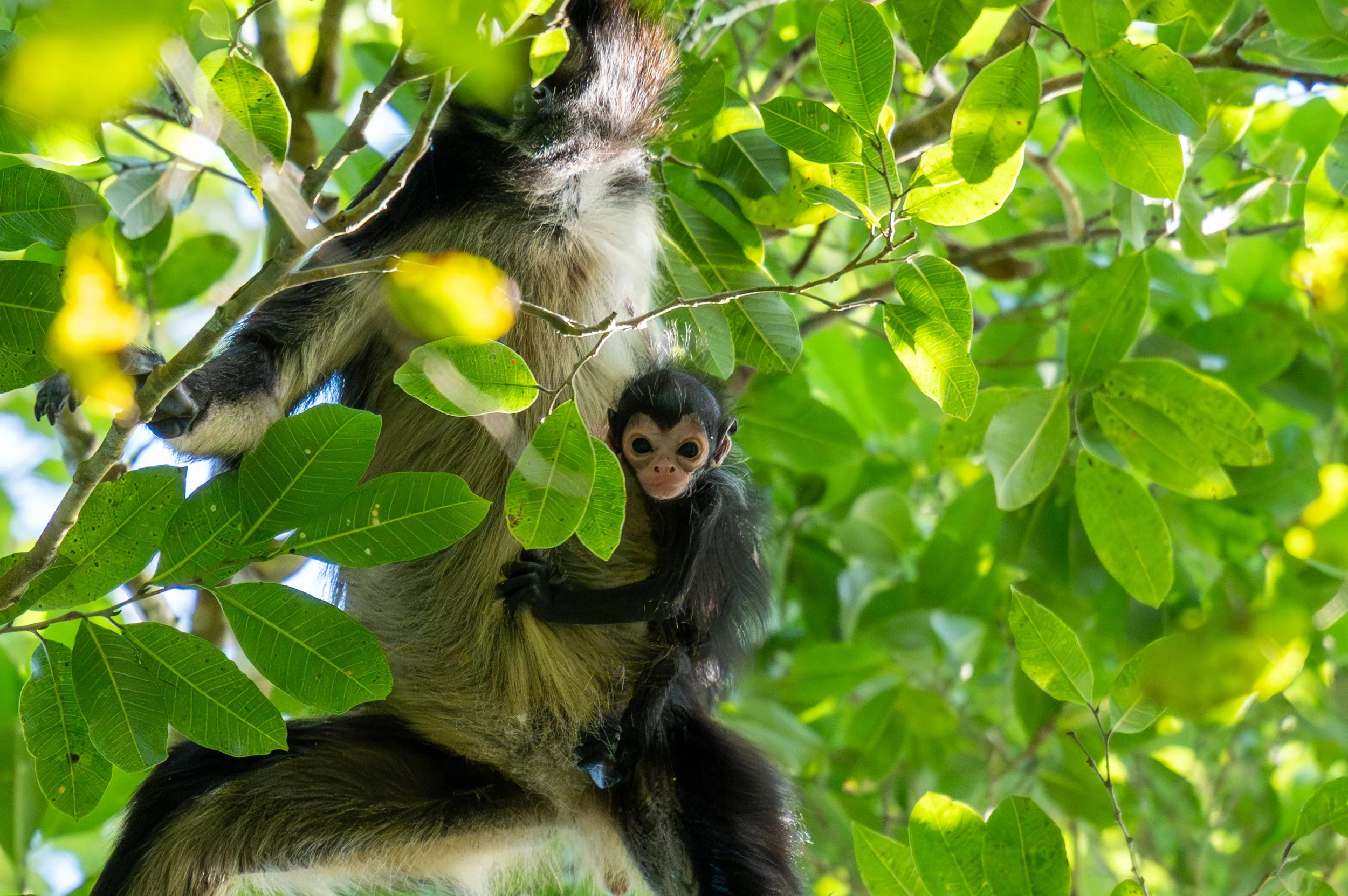
Endangered Beginnings This intimate portrait captures the deep physical connection between a mother and her newborn Geoffroy’s Spider Monkey. In the dense foliage of the Central American rainforest, visibility is a challenge, but the bond is unmistakable. This infant represents the future of a species currently facing significant habitat loss, making every successful birth a milestone for conservation in the region.
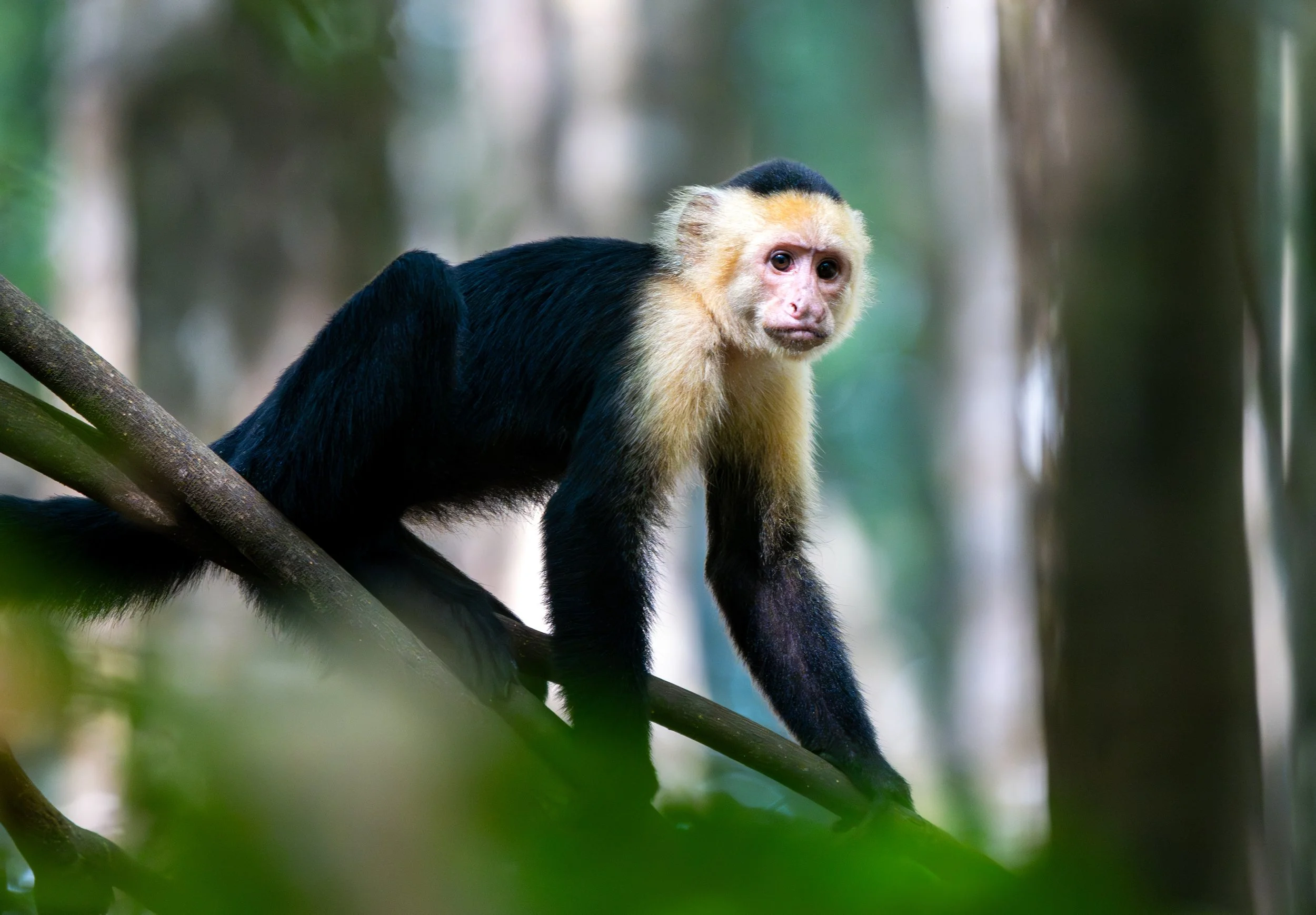
Capuchin Portrait Known for their intelligence and tool-using capabilities, the Capuchin is a master of the canopy. This portrait captures the intense, observant gaze of one of the jungle's most clever residents.
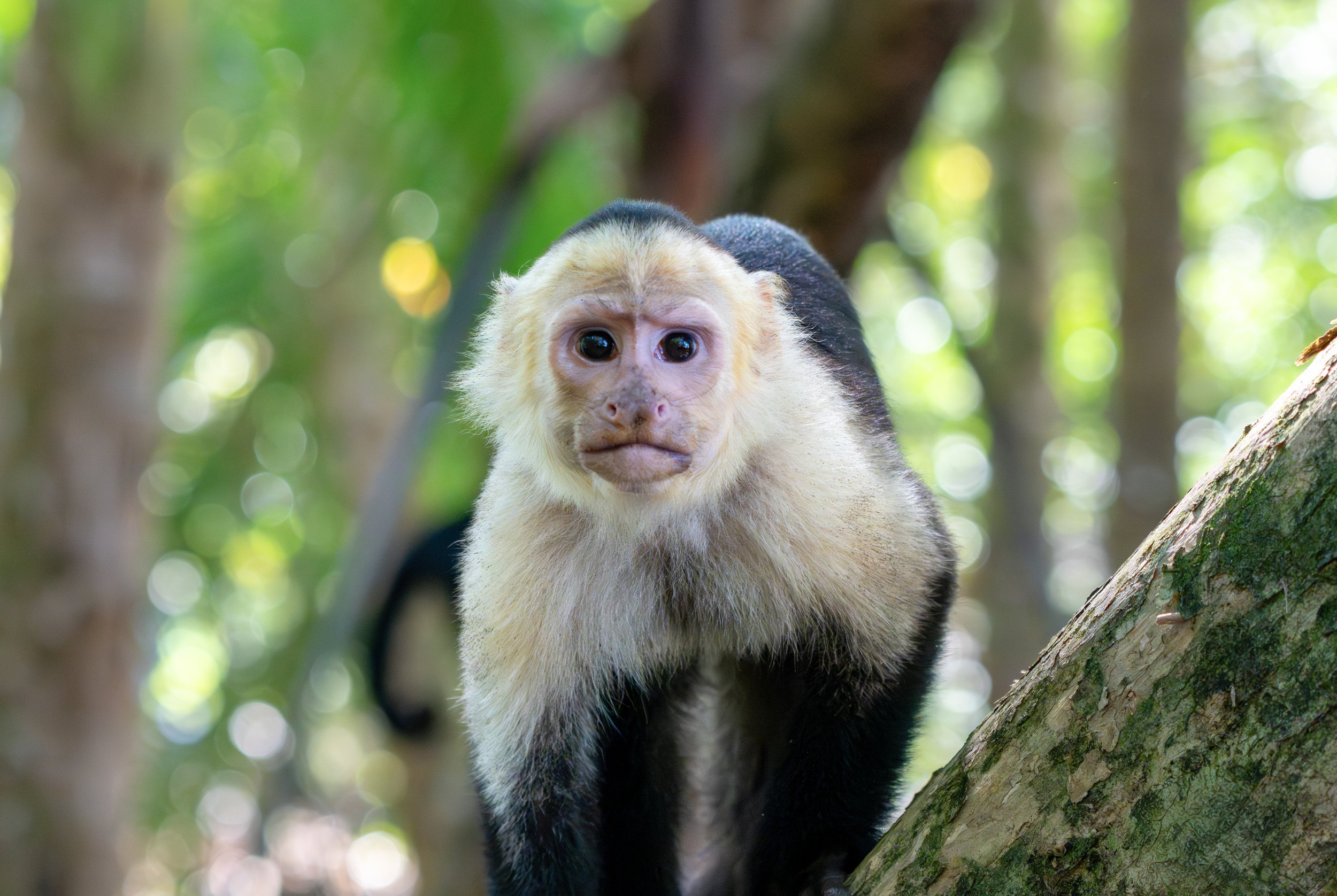
The Curious These monkeys are among the smartest New World monkeys, using stones to crack nuts, sticks to probe for insects, and leaves as cups.
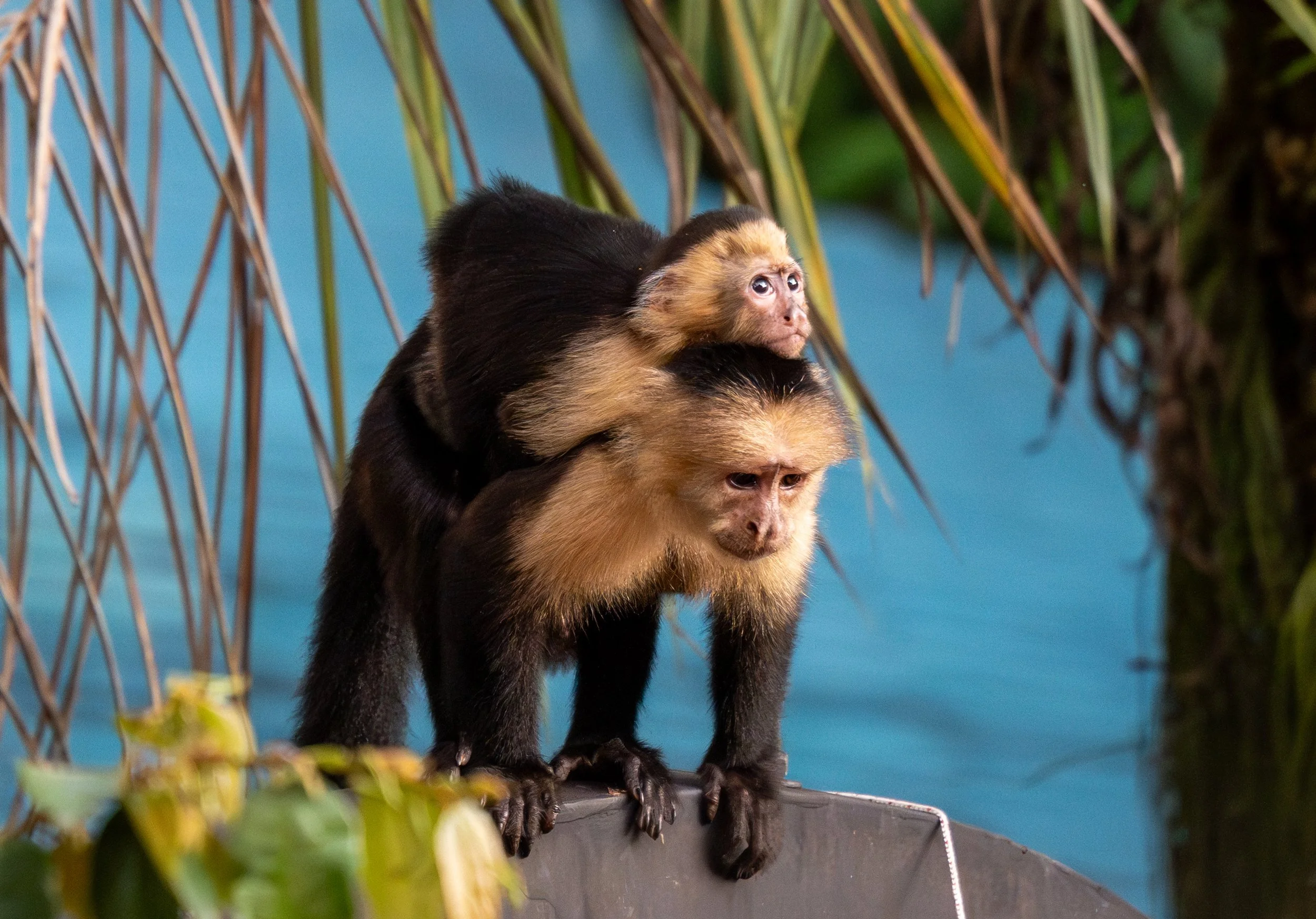
Eyes of the Troop While one member of the troop focuses on foraging, another often stays alert for potential threats. White-faced Capuchins live in highly organized groups where cooperation is key to survival. This shot highlights the individual personality and sharp awareness that allow these primates to thrive in the dense, competitive Central American rainforest.
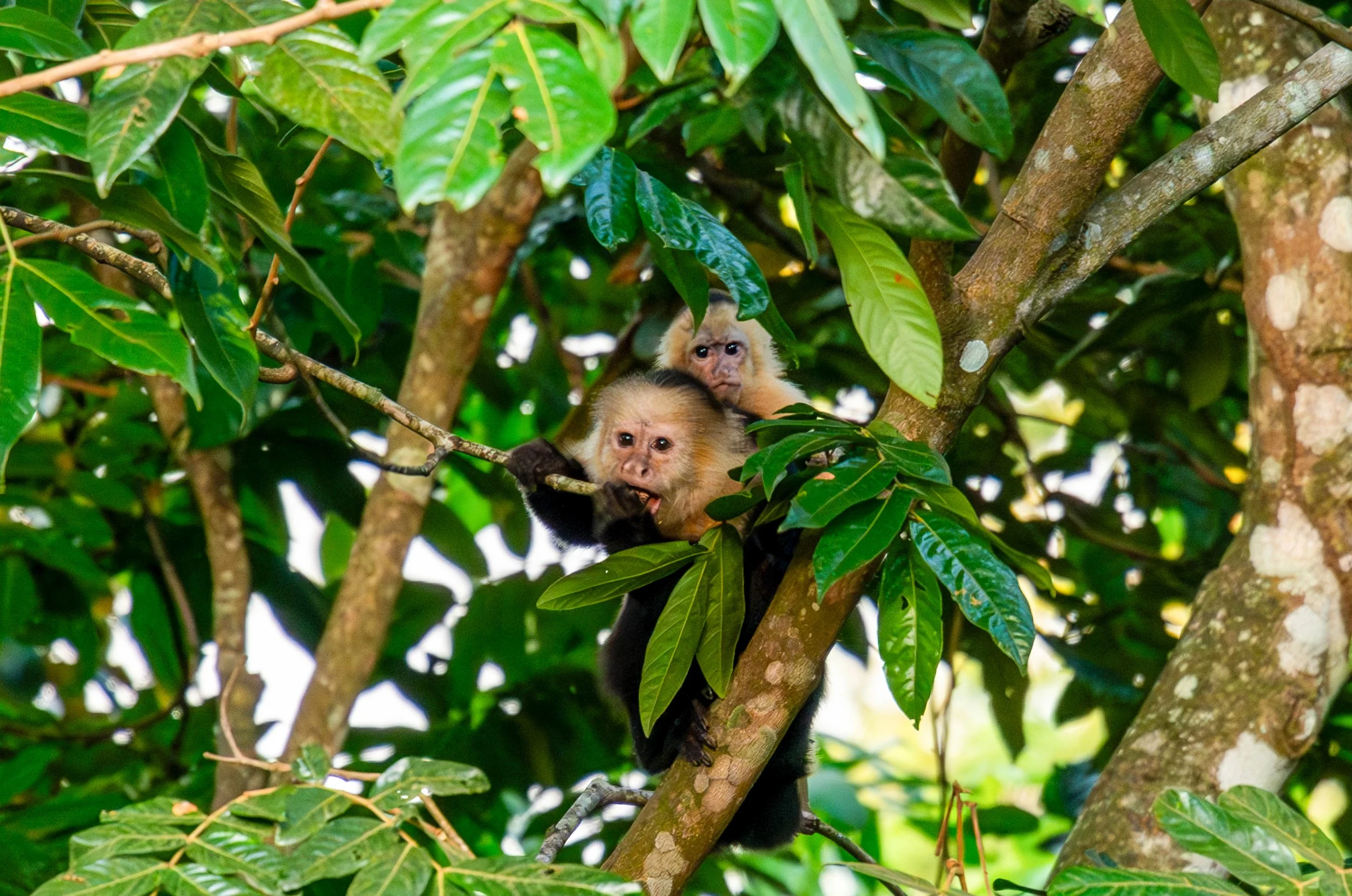
Canopy Commute Their prehensile tail acts as a fifth limb, strong enough to hold their weight while they forage with both hands, though they cannot hang by it for very long.
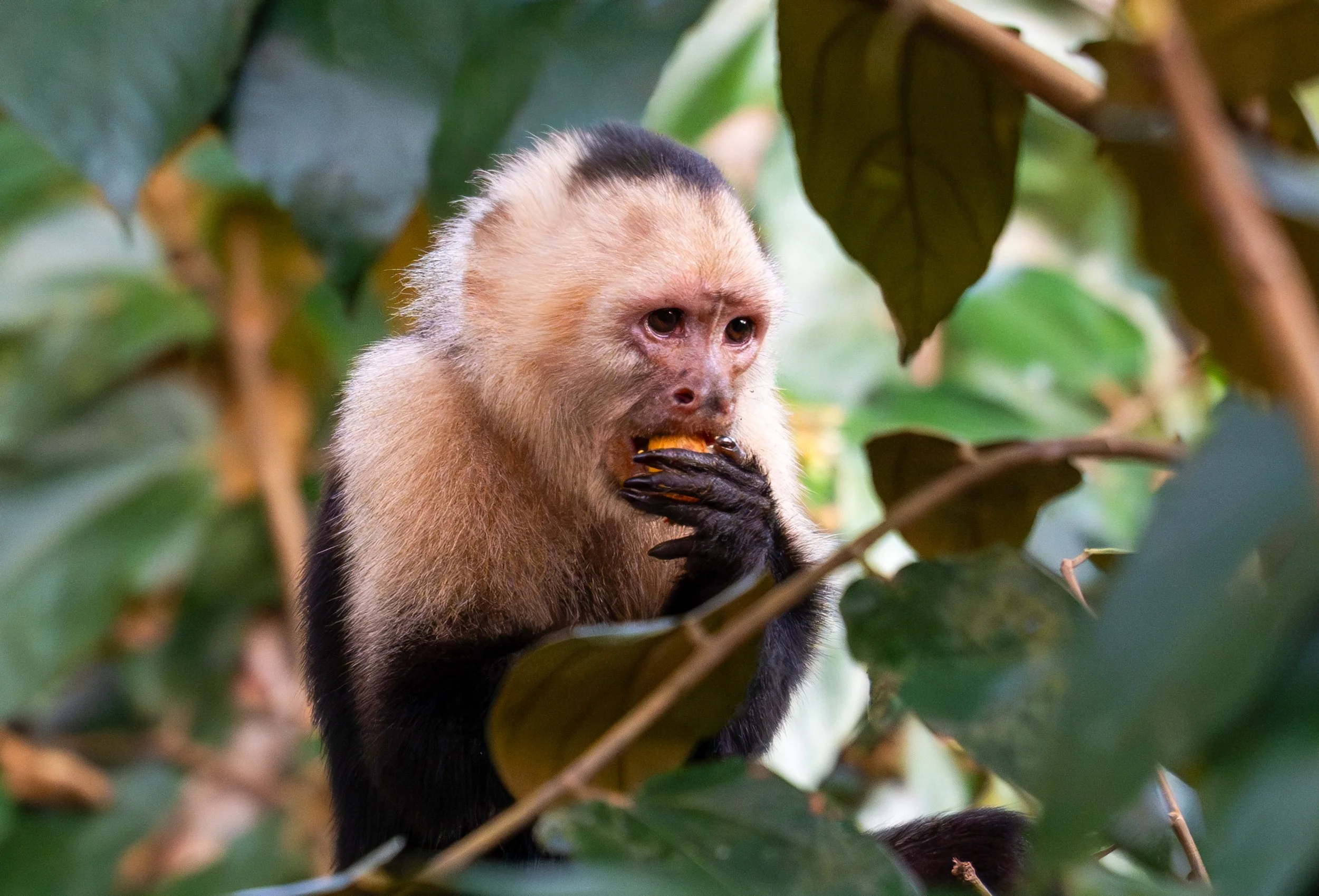
Forest Forager They are opportunistic omnivores, with diets consisting of 70% fruit, but they also eat insects, small birds, and squirrels.
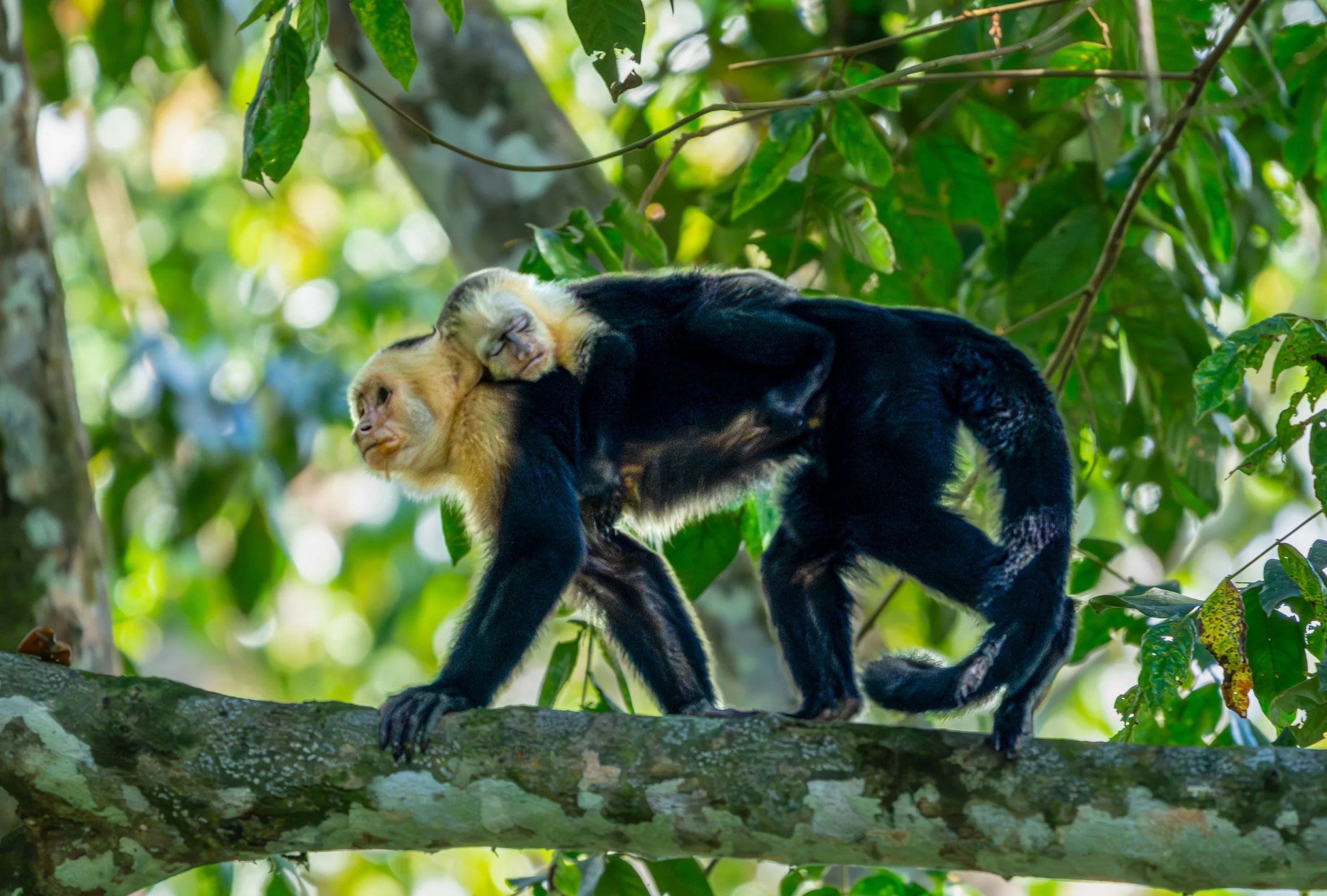
A Quick Nap Female Capuchins are philopatric and stay with the group they are born into; males leave around age 4 to find a place in a new group
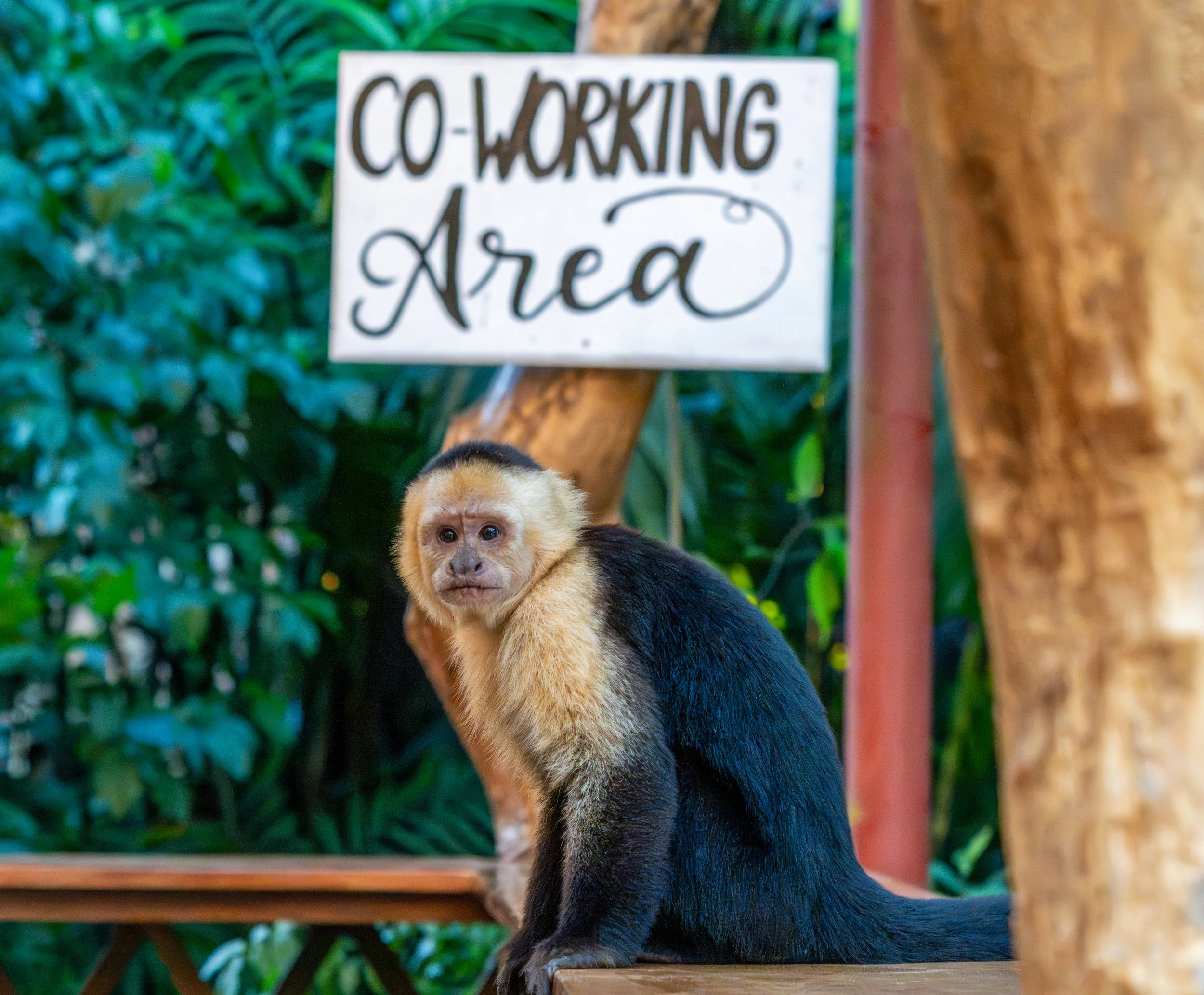
Midday Sabbatical This Capuchin Monkey in unfazed and unbothered by your attempts to be productive.
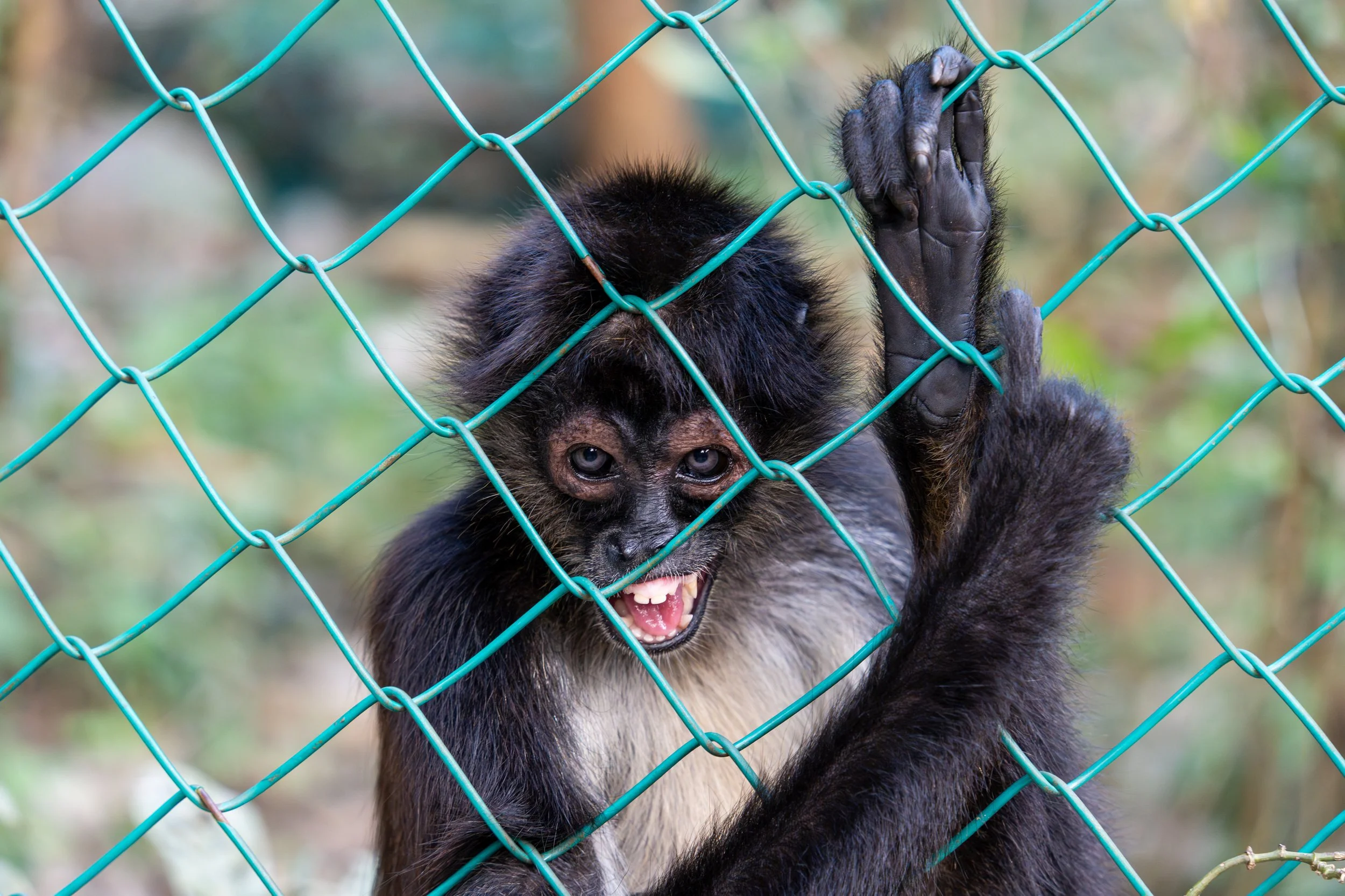
Black-Handed Spider Monkey Photographed during feeding time at a wildlife rehabilitation center in Costa Rica. Unlike most primates, Spider Monkey's have no thumbs.
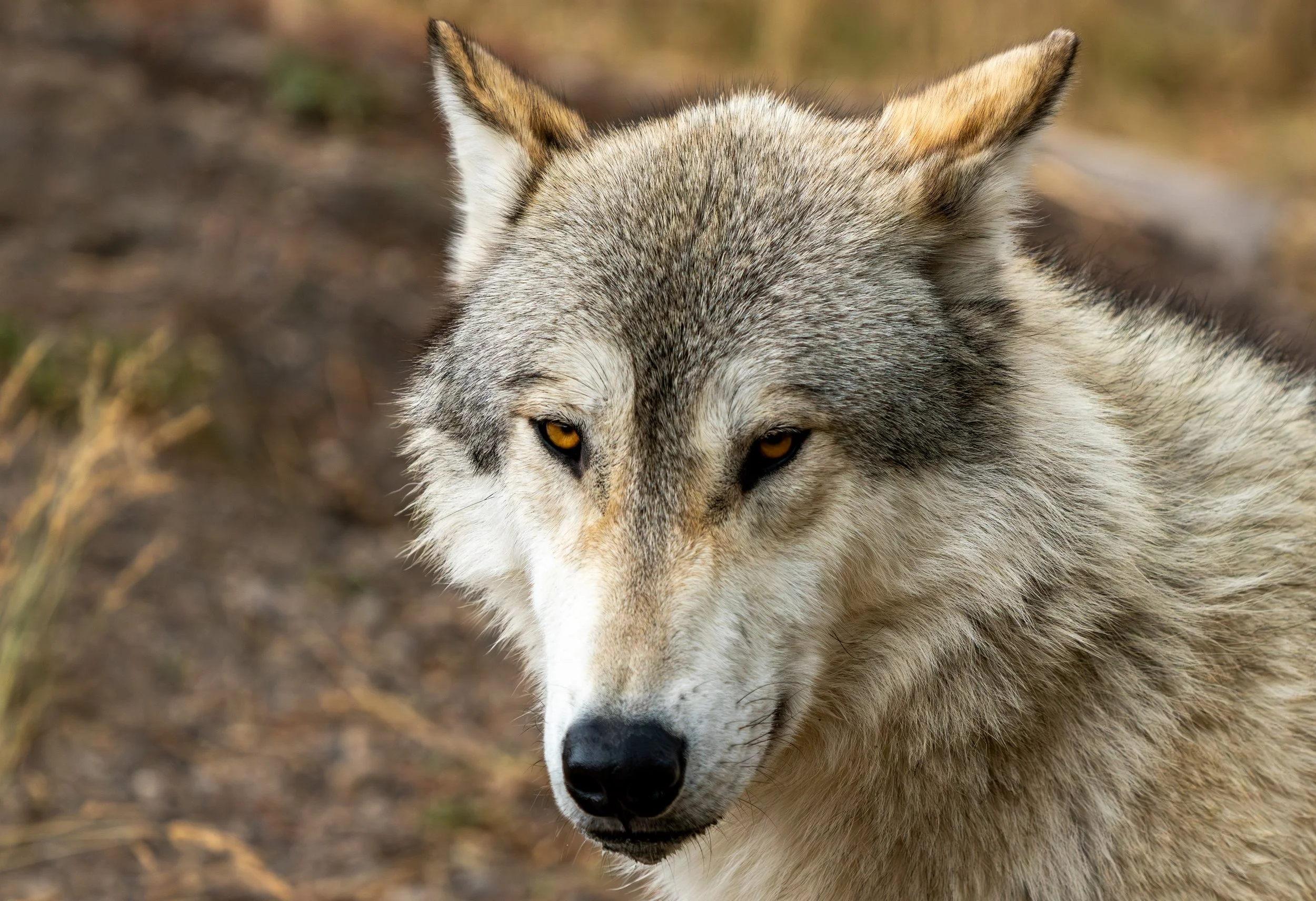
Grey Wolf A study in focus and social complexity. Whether as a lone wanderer or a coordinated pack, the wolf remains the ultimate symbol of the untamed wilderness.
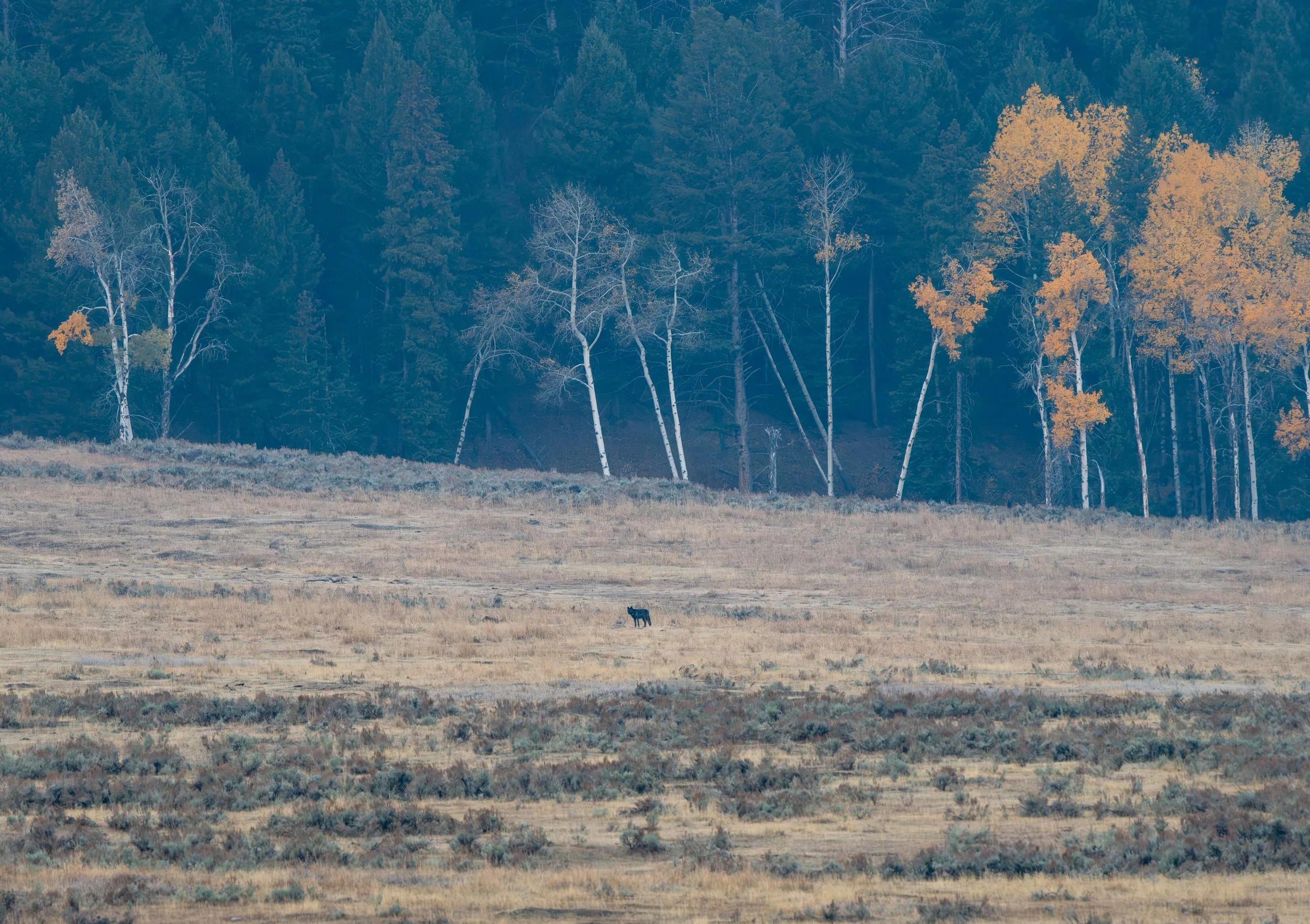
A Lone Wolf Outside of humans, gray wolves have the largest natural range of any living land mammal, covering much of North America, Europe, and Asia.
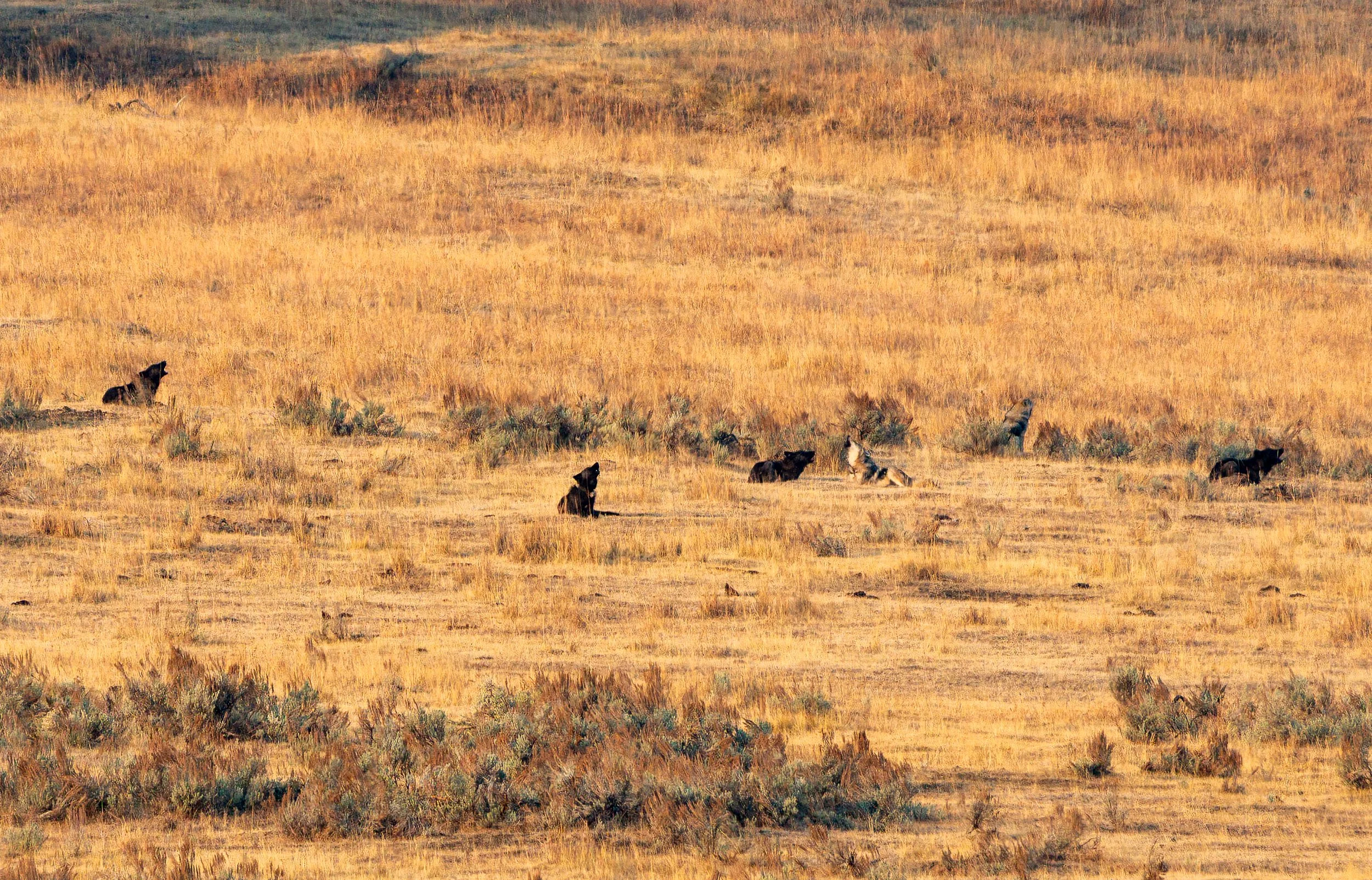
Wolf Pack Howling Despite their reputation, Grey Wolves rarely attack humans, with only two documented fatal attacks by wild, healthy wolves in North America in the last 100 years. They typically avoid people, and pose a very low risk.
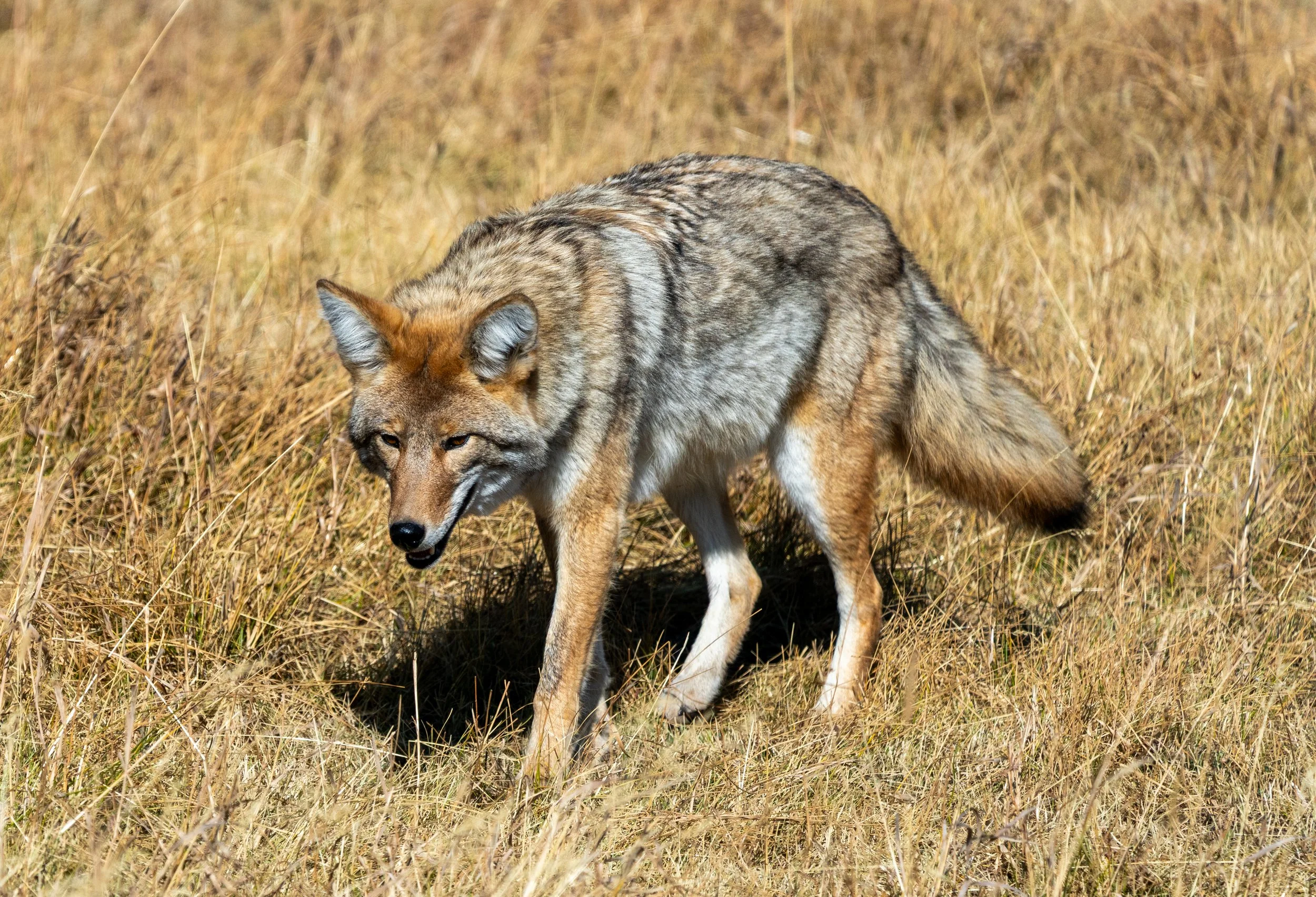
Coyote One of the most adaptable predators in the world. This shot captures a rare moment of stillness from a creature usually known for its cunning and elusive nature in the high desert and mountain brush.
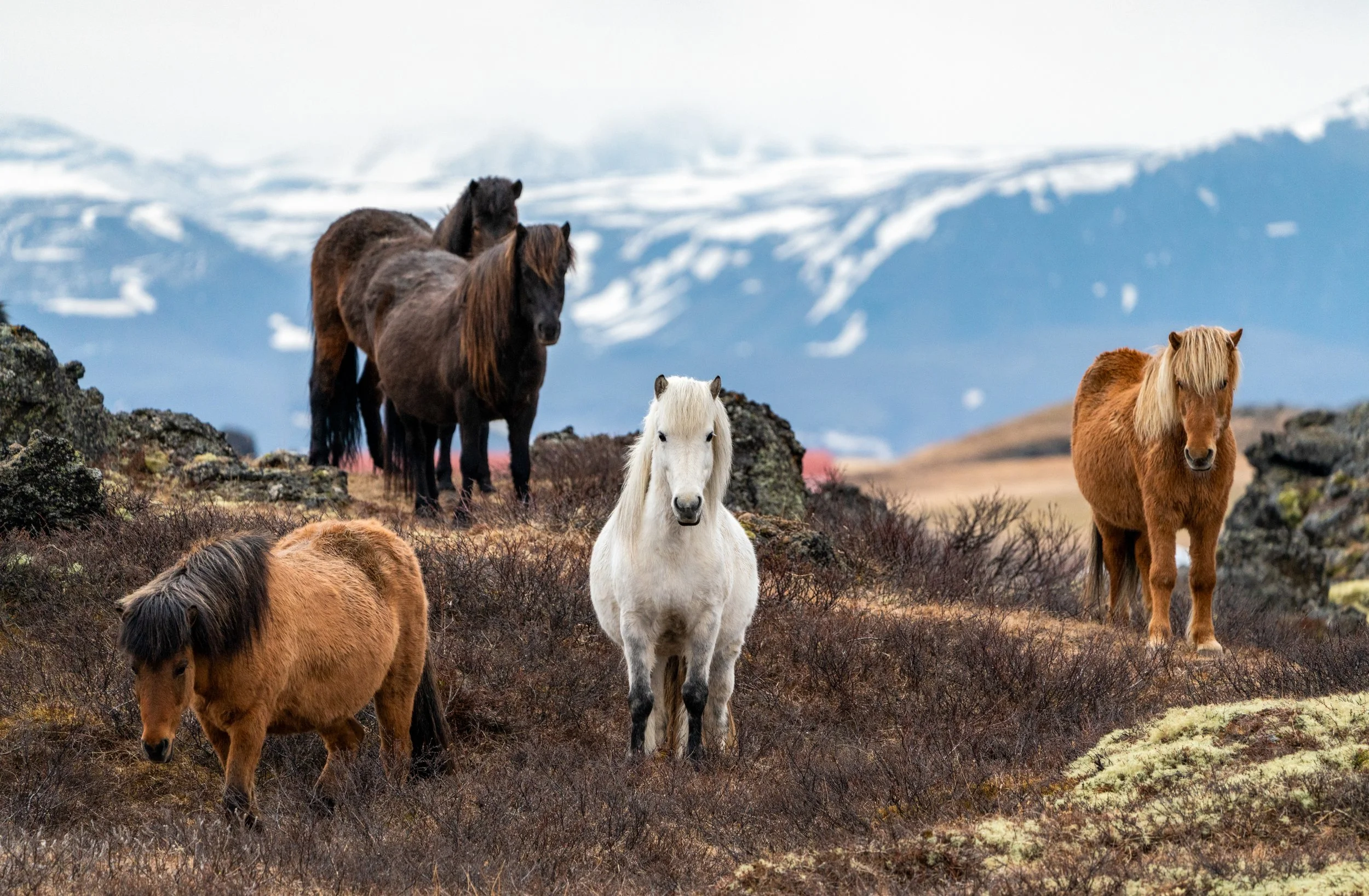
Icelandic Horse Brought to Iceland by Vikings in the 9th century, these horses have remained purebred for over a millennium. Their thick coats and sturdy stature are biological responses to one of the harshest sub-arctic climates on Earth.
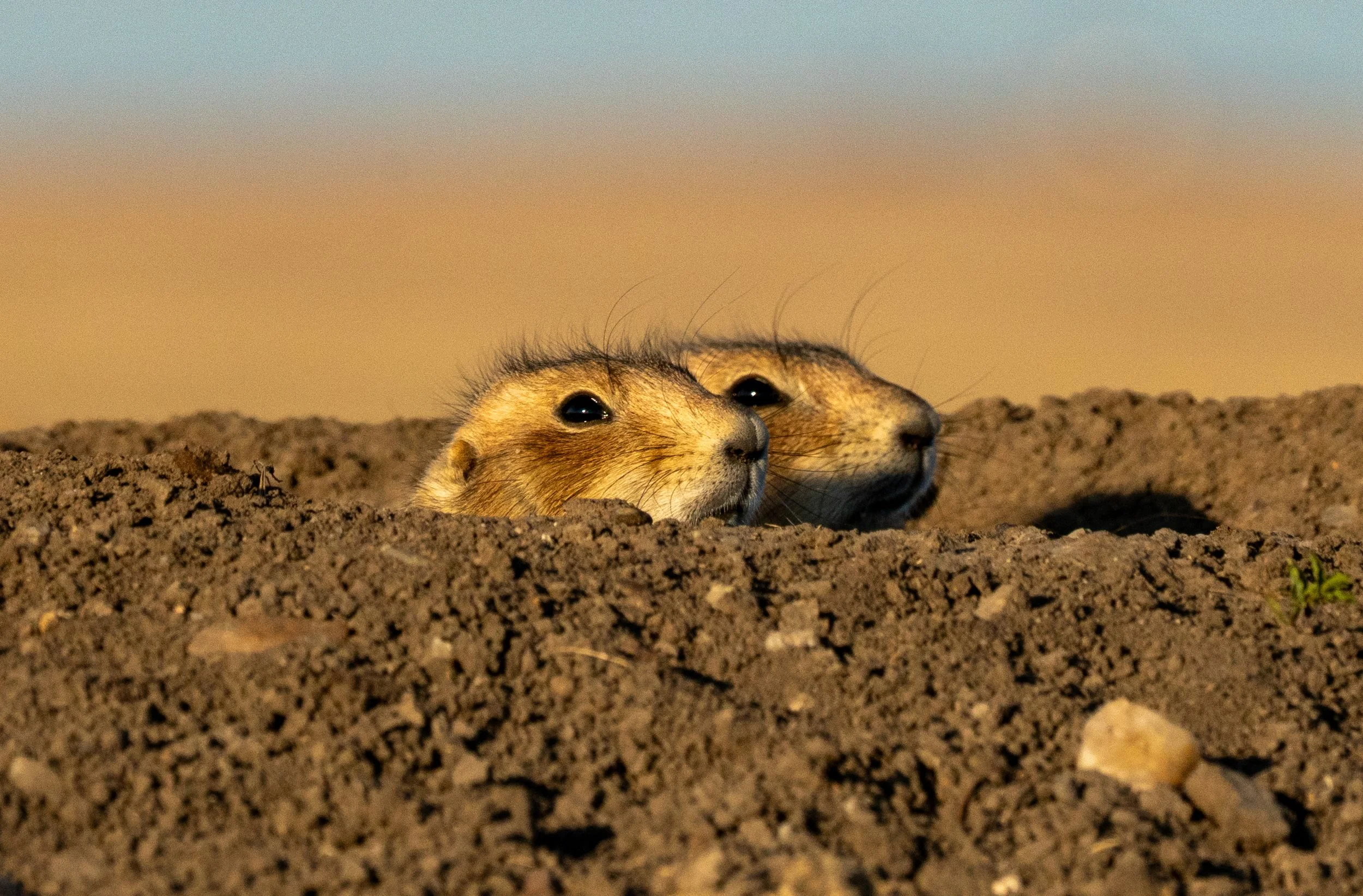
The Neighborhood Watch Safety in numbers is the primary rule of the prairie dog "town." This pair of sentinels keeps a watchful eye on the horizon from the safety of their burrow entrance. At the first sign of a hawk or coyote, they will alert the entire colony with a high-pitched "jump-yip" bark, sending hundreds of their kin underground in seconds.
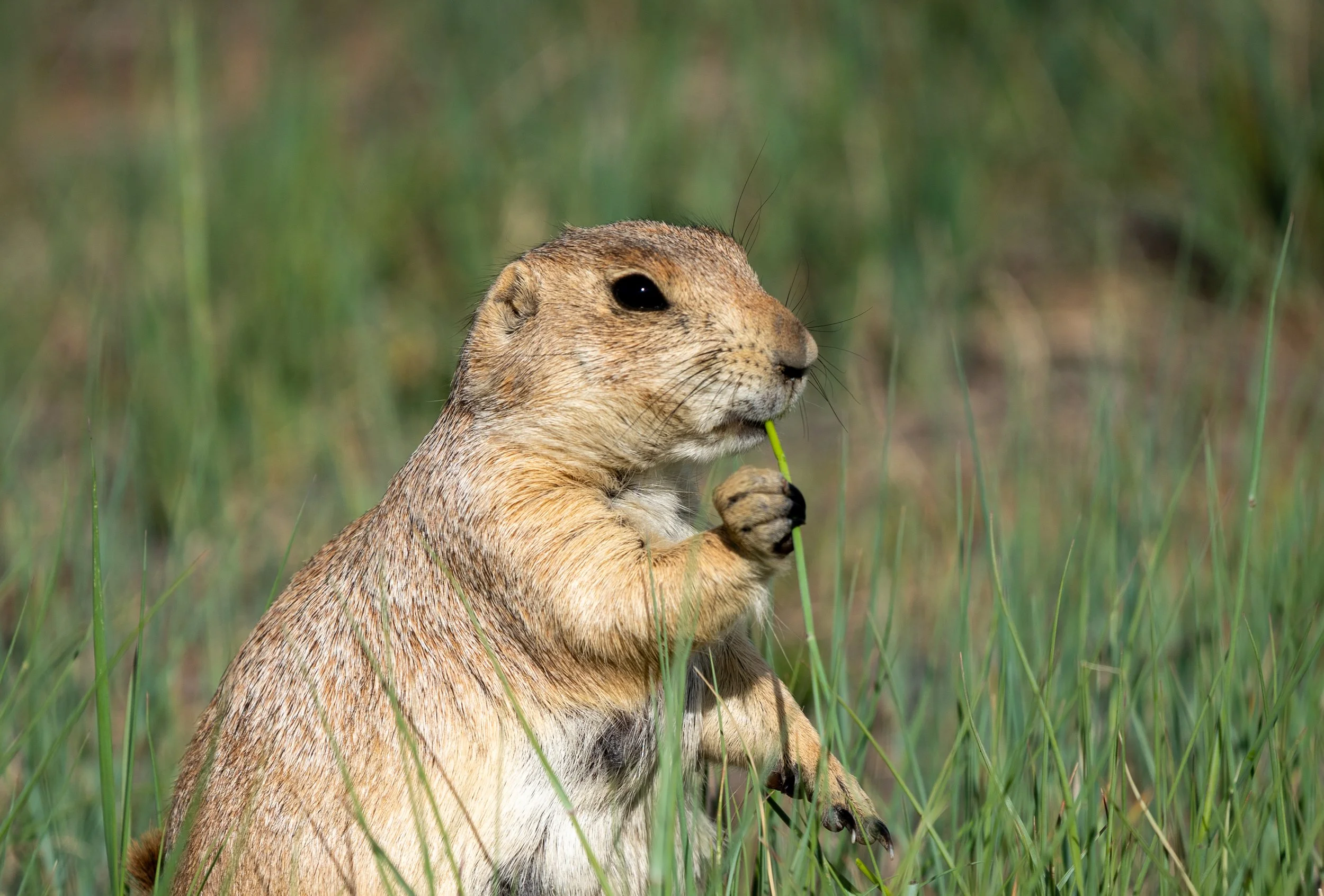
The Prairie Gardener A lone black-tailed prairie dog enjoys a midday meal. These rodents are essential to the Great Plains ecosystem; by selectively grazing on certain grasses, they encourage the growth of nutrient-rich plants that attract larger herbivores like bison and pronghorn.
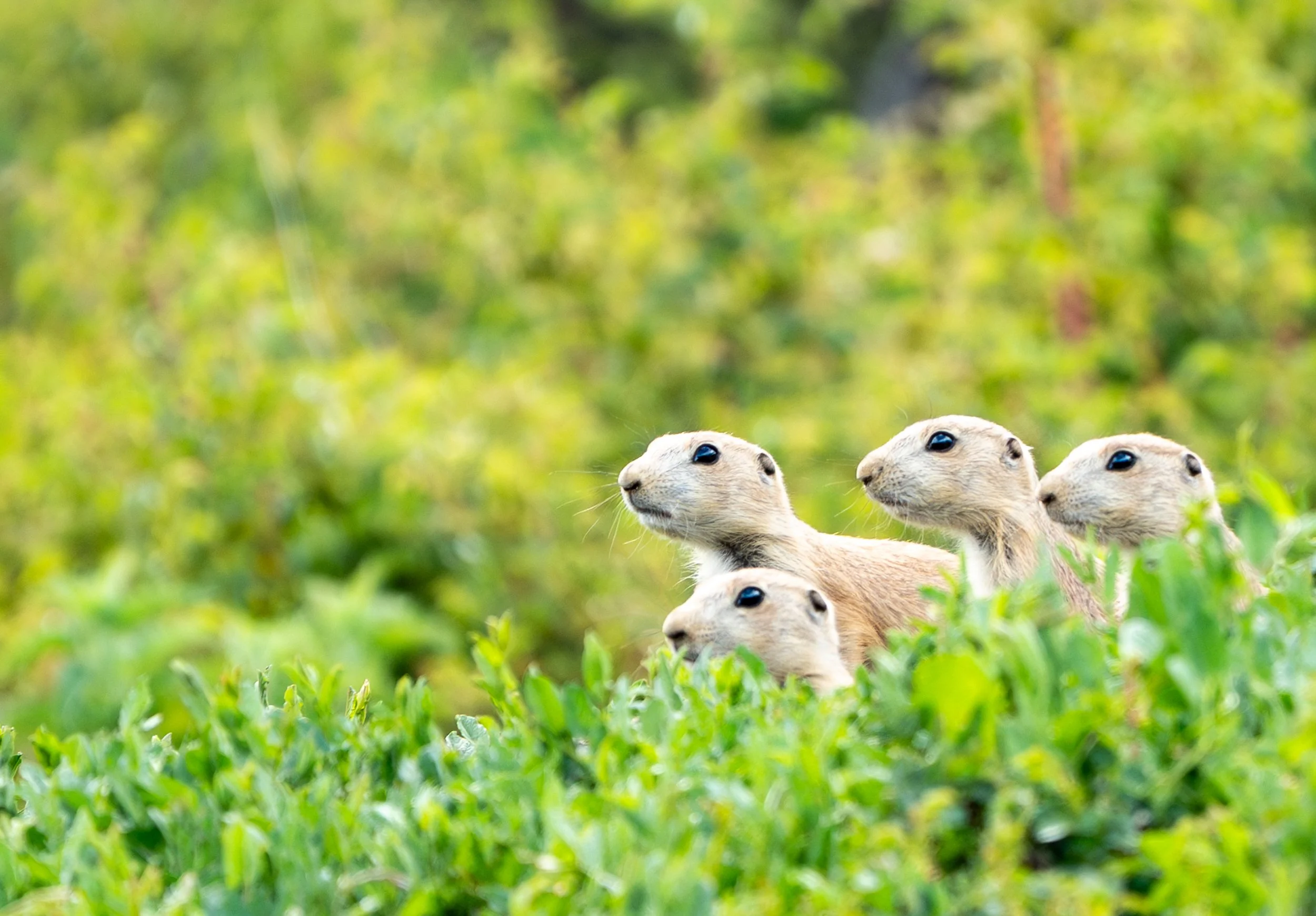
Life in the "Ward" Prairie dog colonies are divided into tight-knit family groups called "coteries." This group showcases the social bonding that defines the species. From grooming one another to sharing burrows, these social interactions are the glue that holds the complex underground city together.
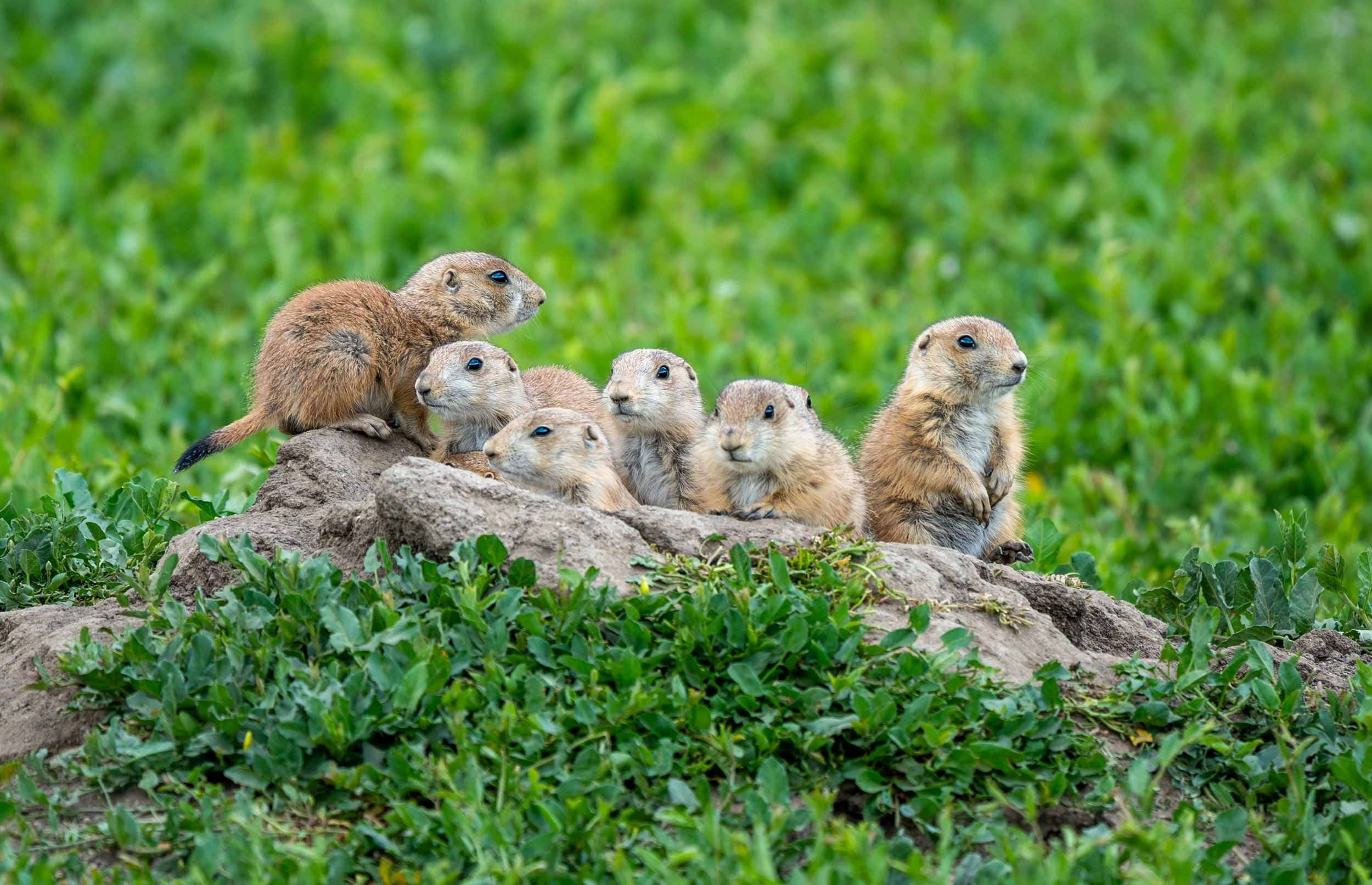
The Sophisticated Scout Research has shown that prairie dogs possess one of the most complex languages in the animal kingdom. Their barks aren't just noise—they can communicate specific details about a predator's size, color, and speed. This scout stands tall to ensure its warning is heard across the colony.
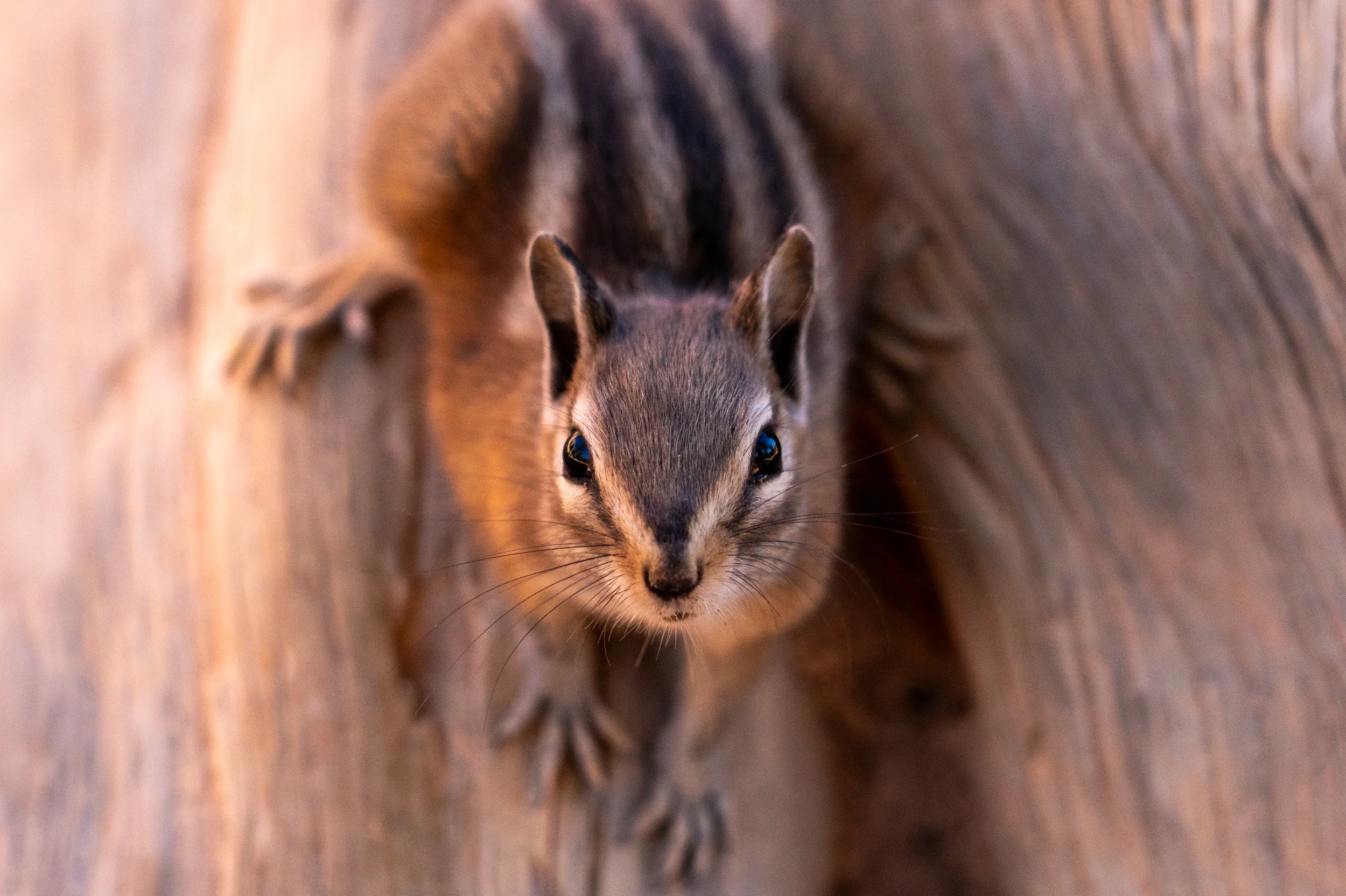
Uinta Chipmunk aka Hidden Forrest Chipmunk A quick-moving resident of the high-altitude plateaus of Utah. This little forager is a staple of the Bryce Canyon ecosystem, always on the lookout for its next meal.
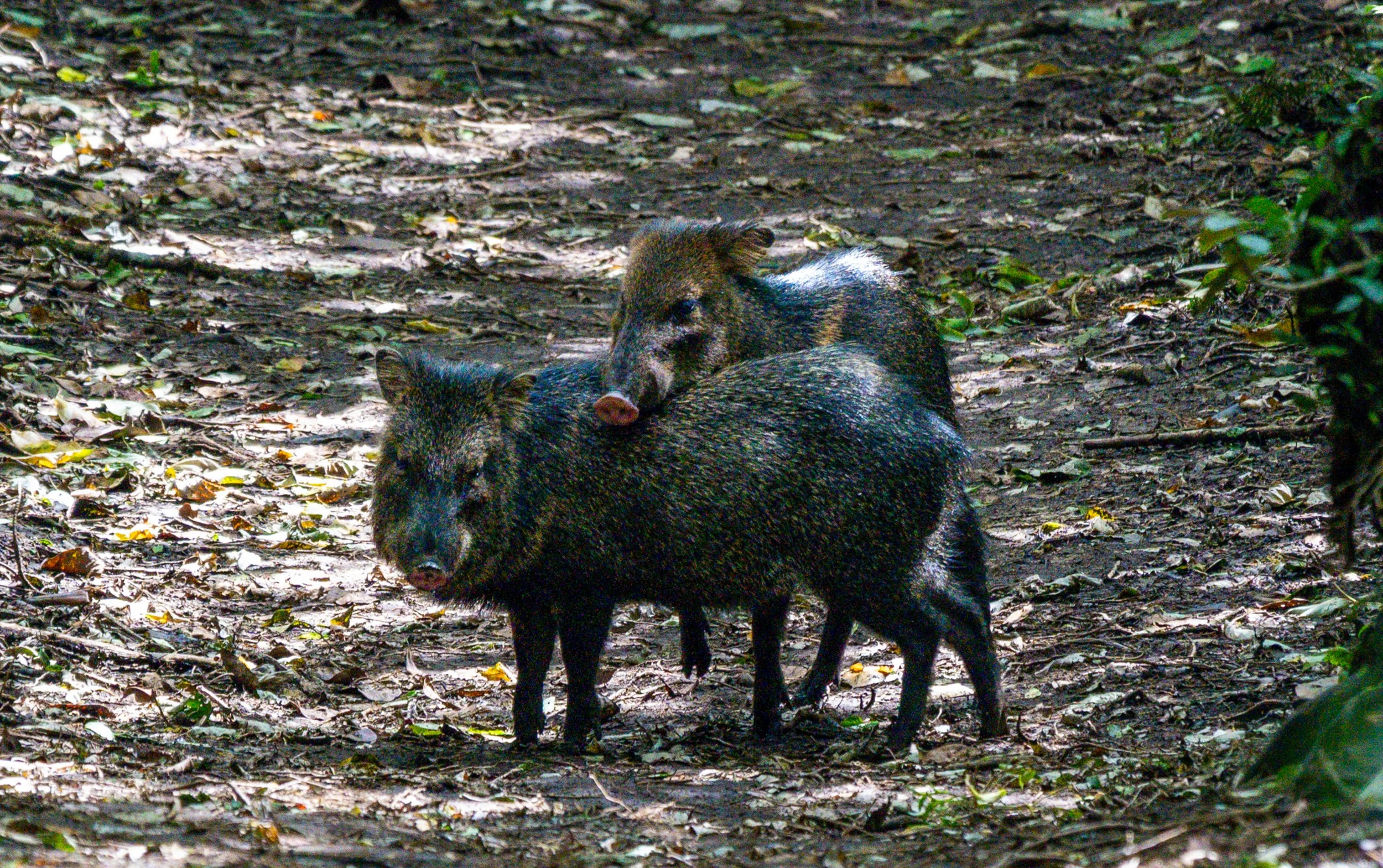
Wild Boar A rare photo of these elusive animals. You can smell them before you see them.
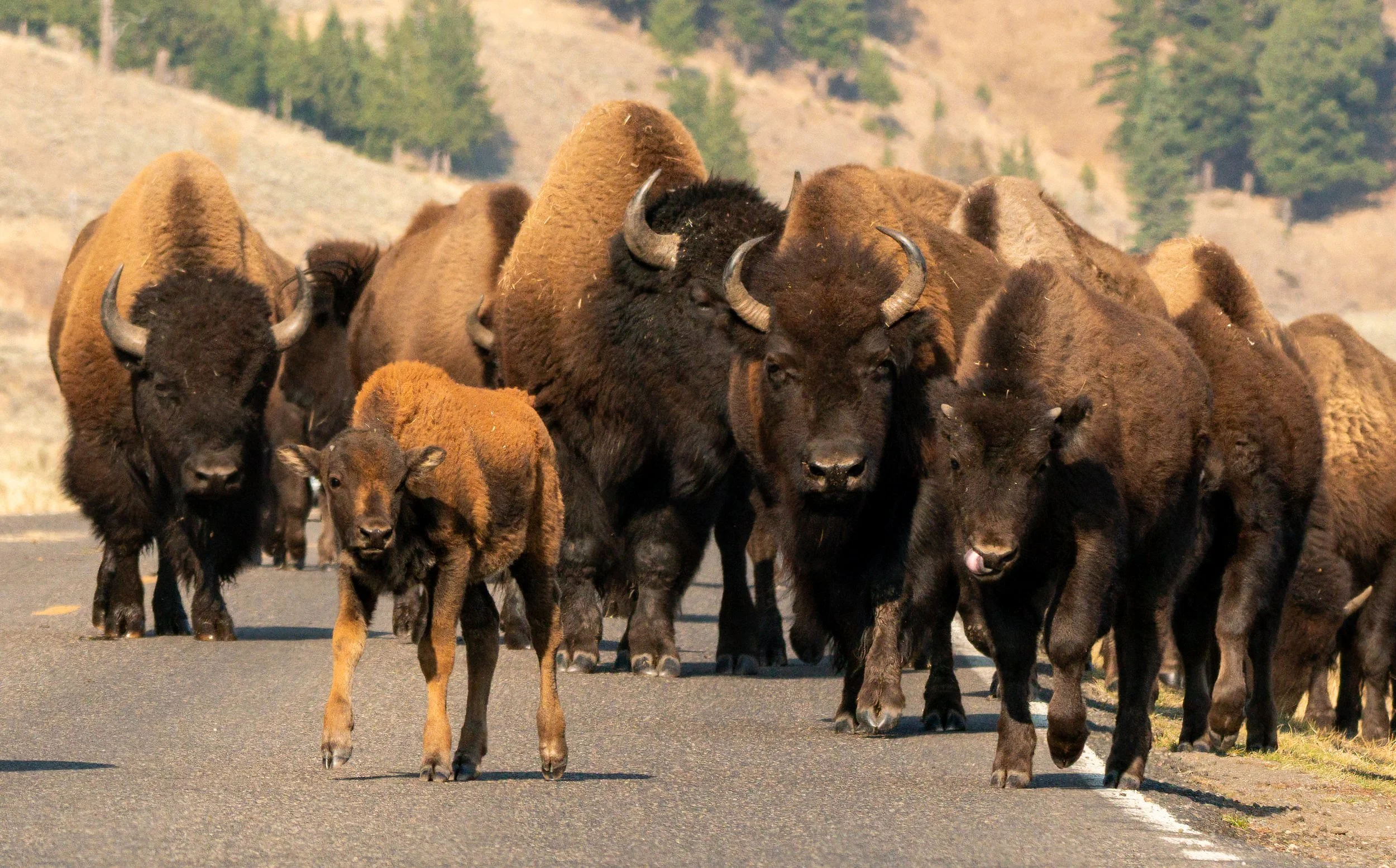
The "Red Dog" of the Plains Newborn bison are affectionately nicknamed "red dogs" for their bright orange-red coats, which provide a surprising amount of camouflage in the sun-baked prairie grass. Born in late spring, these agile calves are on their feet and following the herd within hours. Over the next few months, their fiery fur will slowly deepen into the classic chocolate brown of the adults as they begin to grow their iconic shoulder humps.
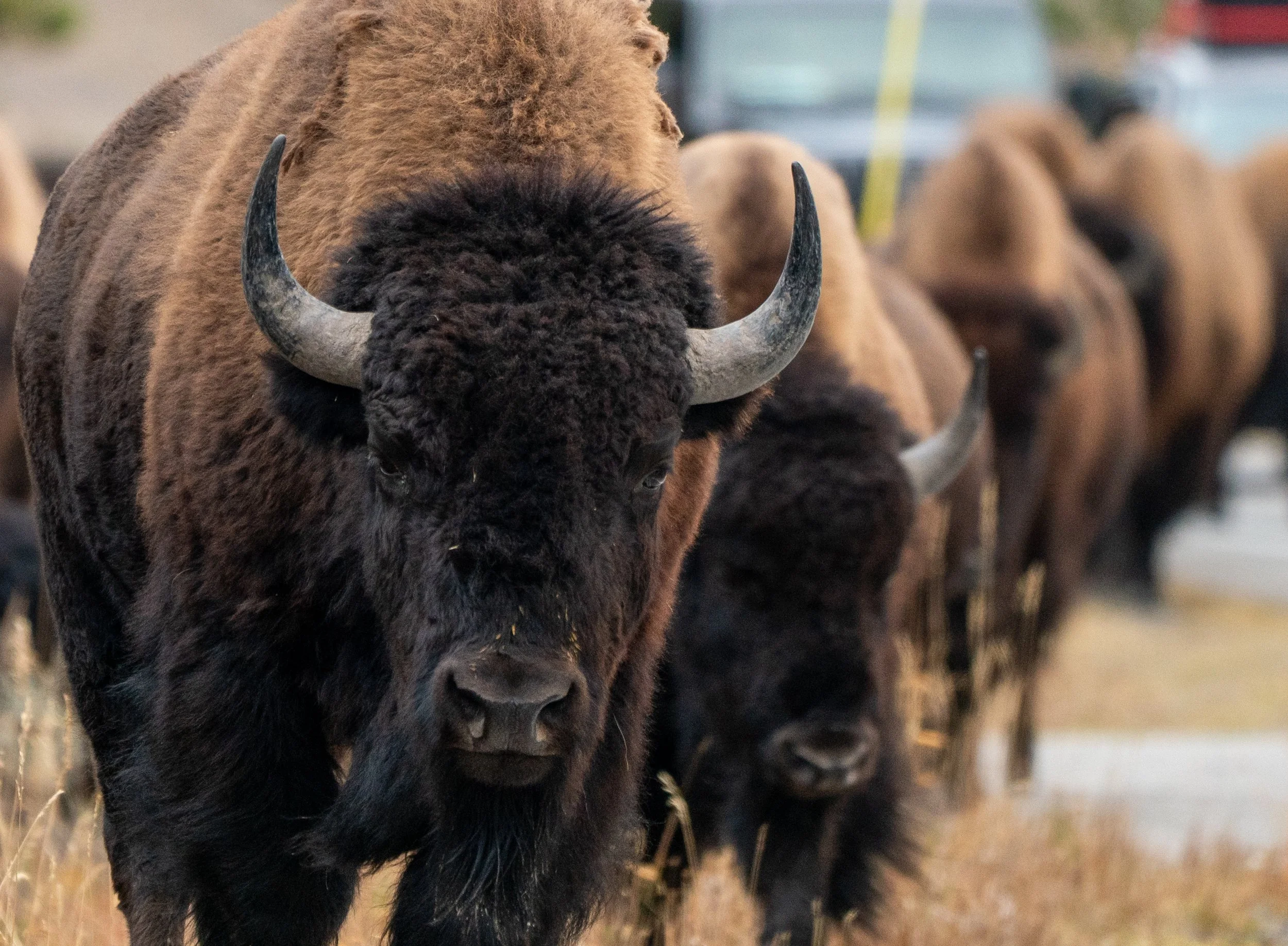
The Great Divide Commute In places like Yellowstone, the road often becomes the path of least resistance for a migrating herd. This "Bison Jam" is a quintessential encounter with the West’s largest mammal. Whether they are moving to lower elevations for winter or simply commuting between grazing patches, bison recognize no right-of-way but their own, moving as a singular, unstoppable force of nature.
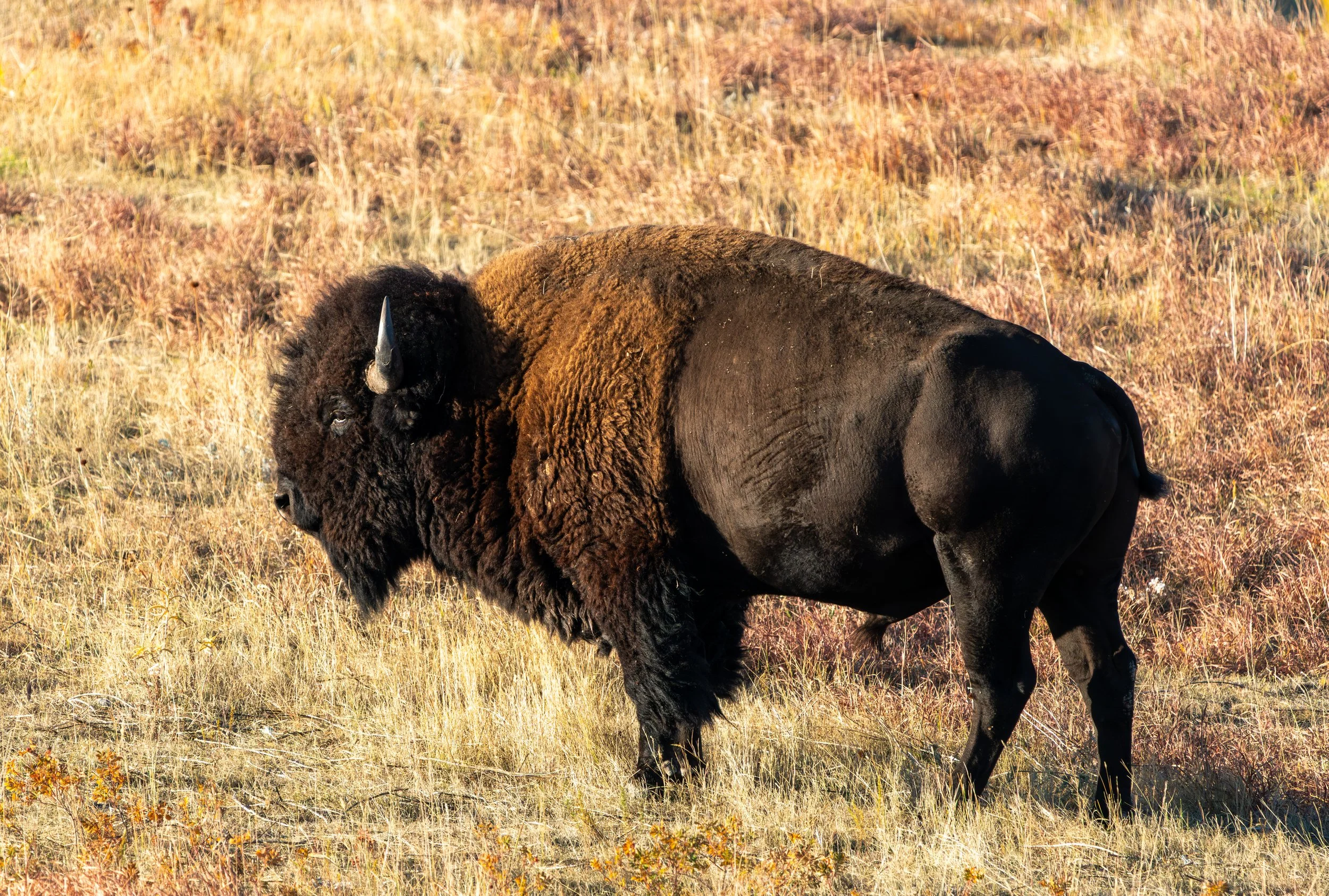
Architect of the Grasslands As a keystone species, the bison's presence is written into the very soil of the Great Plains. Their grazing habits promote plant diversity, while their wallowing creates seasonal pools that provide homes for amphibians. From the birds that use bison fur to line their nests to the prairie dogs that thrive in their heavily grazed wake, the entire ecosystem is built around the rhythms of the herd.
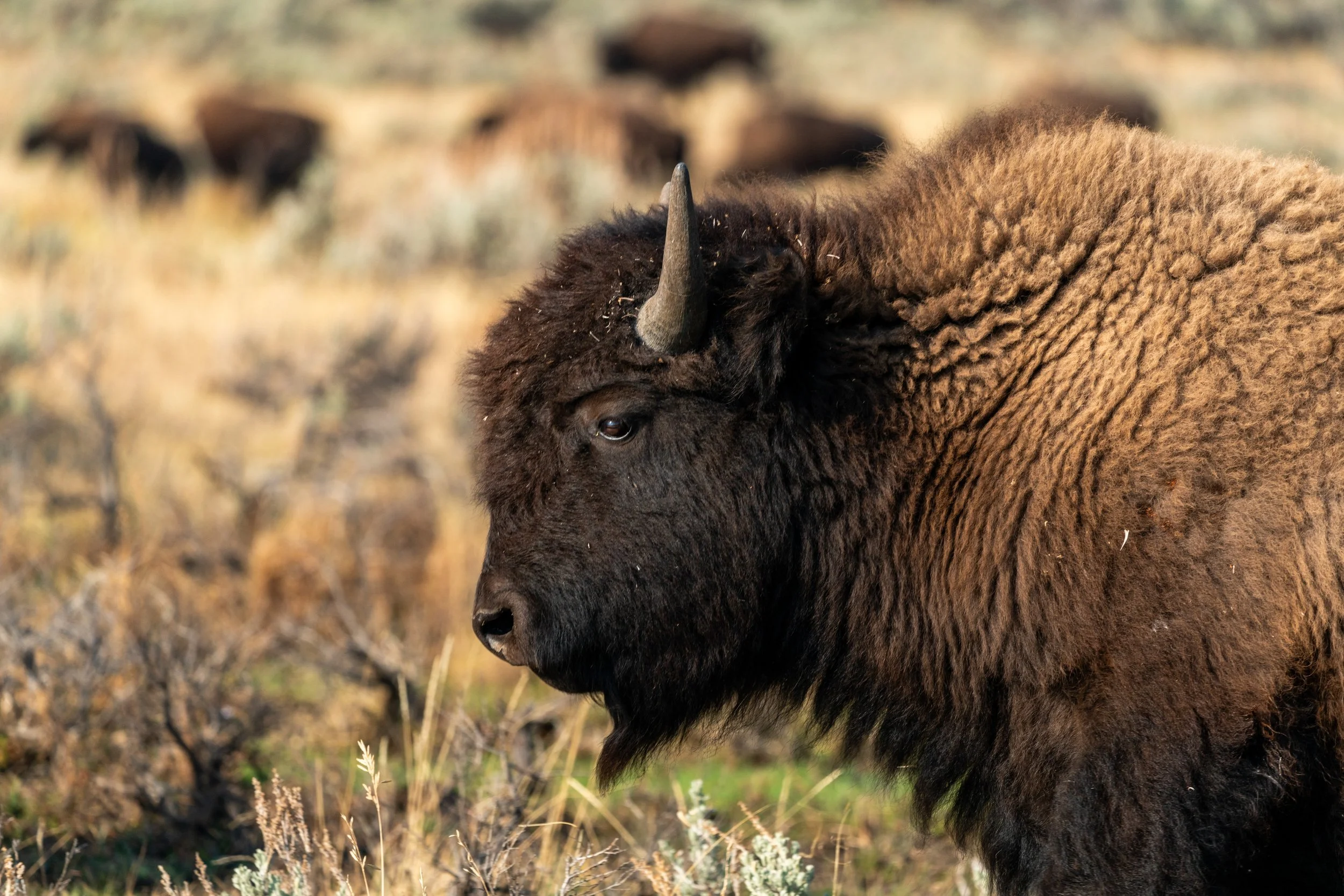
Resilience Up close, the rugged features of the American Bison reveal a story of survival. From the thick, insulating coat that protects them from sub-zero winds to the sharp, curved horns used for defense, every detail is a testament to their resilience. This portrait highlights the "grizzled" texture of their fur, which transitions from a wooly mane to a shorter, sleeker coat toward their hindquarters.
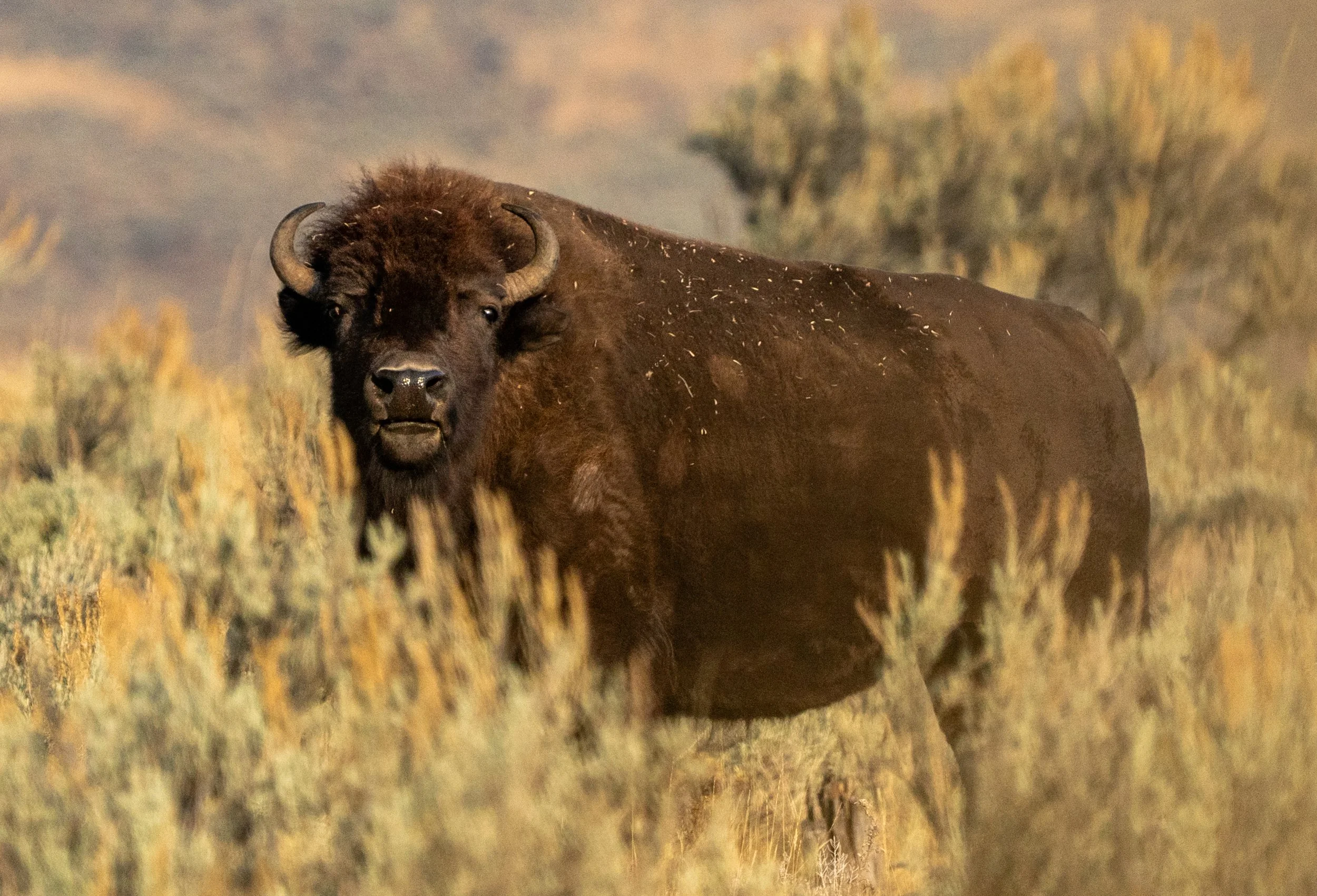
The Grazer A lone bull stands against the vast horizon of the American West. Bison are nomadic grazers, moving constantly to prevent overgrazing of the prairie. This shot captures the quiet dignity of a species that once numbered in the tens of millions, playing a central role in the spiritual and physical lives of Indigenous peoples across the continent.
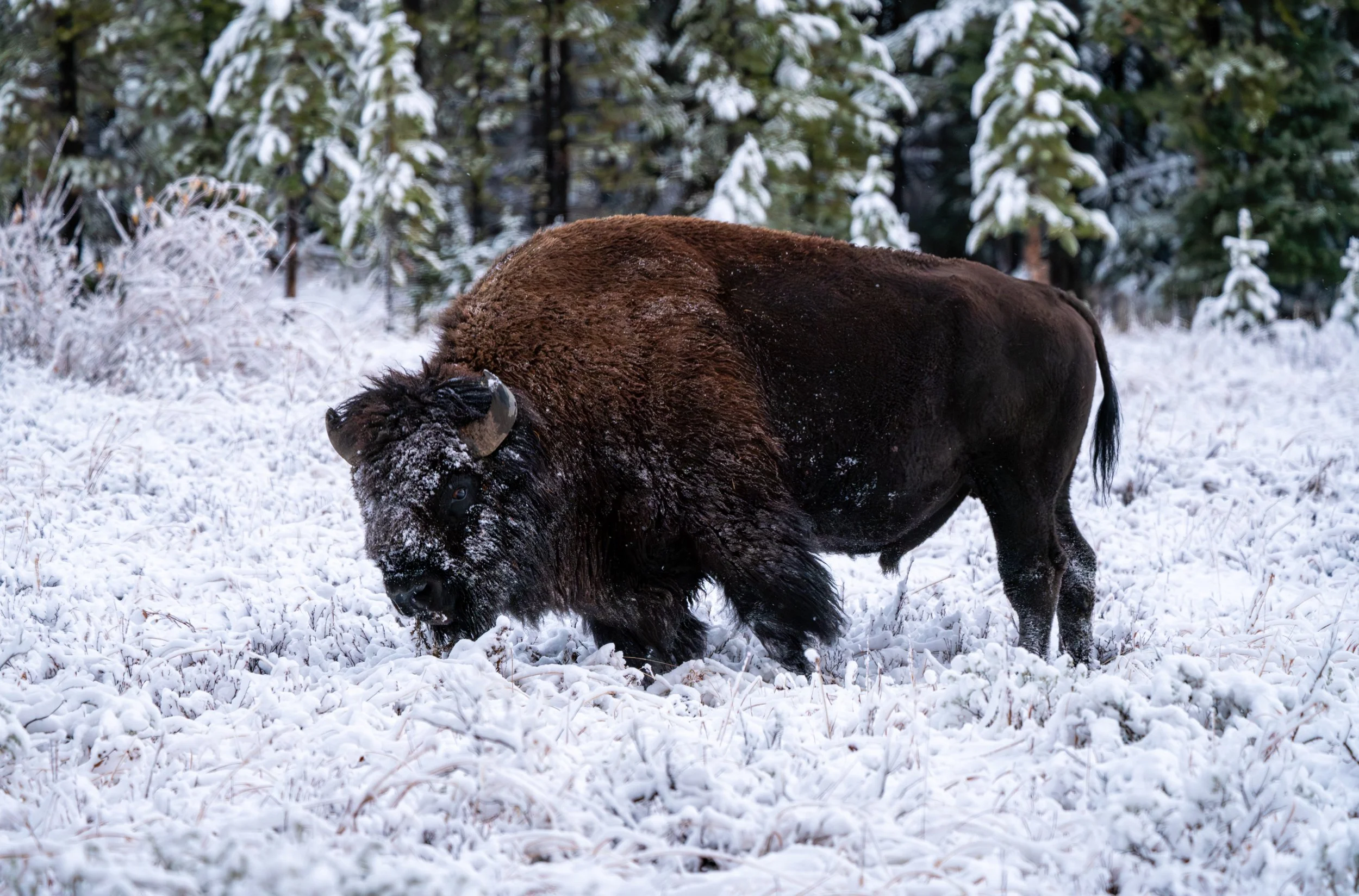
Bison in the Snow Bison are evolutionary masterpieces of winter survival. Their massive shoulder humps are actually anchors for powerful neck muscles, allowing them to use their heads like a giant swinging plow to clear snow up to four feet deep. This "body plowing" doesn't just help the bison; it creates "highways" in the deep snow that other wildlife, like pronghorn and elk, use to navigate and find food during the harshest months.
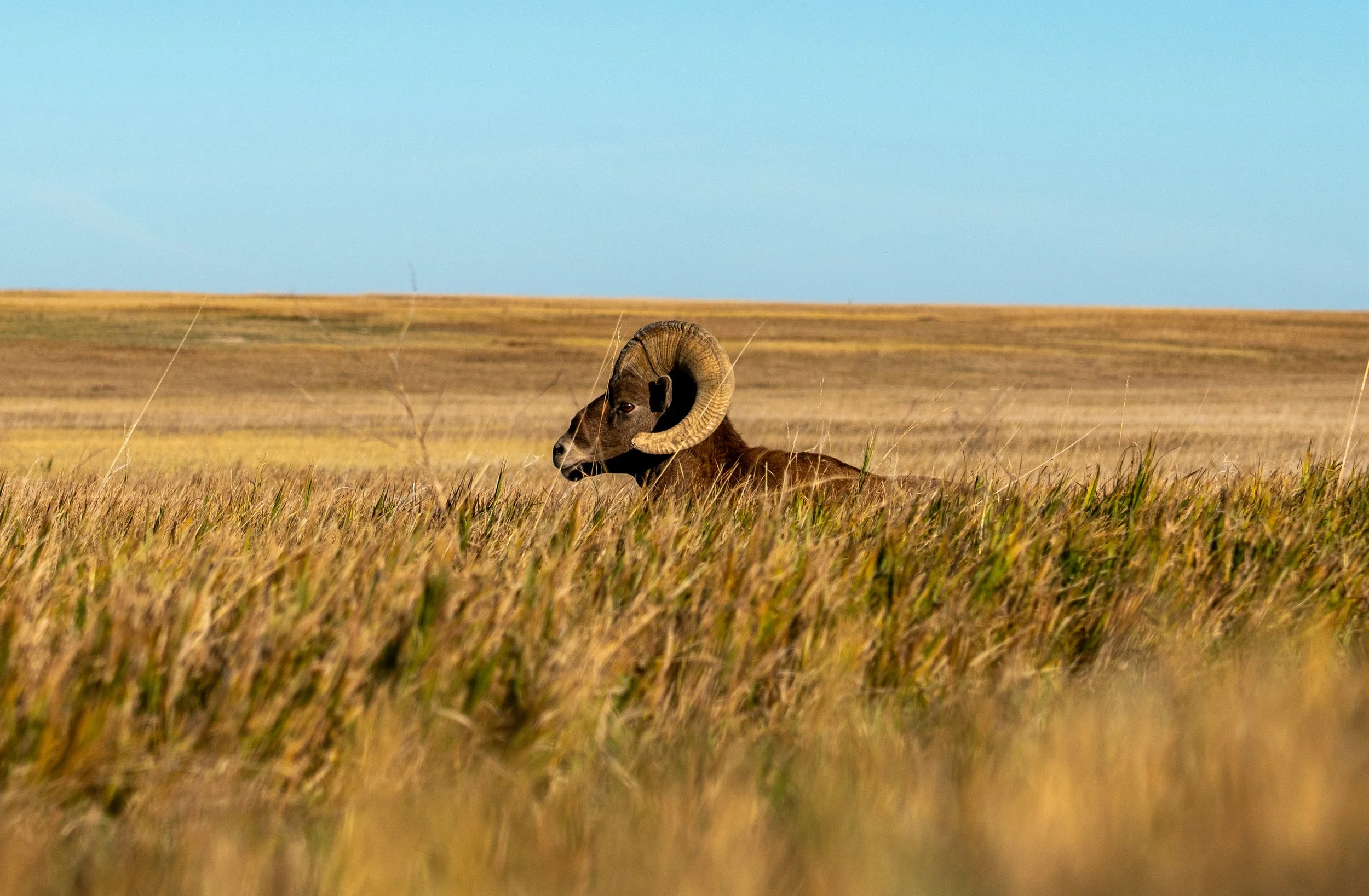
Mountain Monarch The Bighorn Sheep is well named. Those horns can weigh as much as 30 lbs. They are one of the original species to come over the Bering Land Bridge.
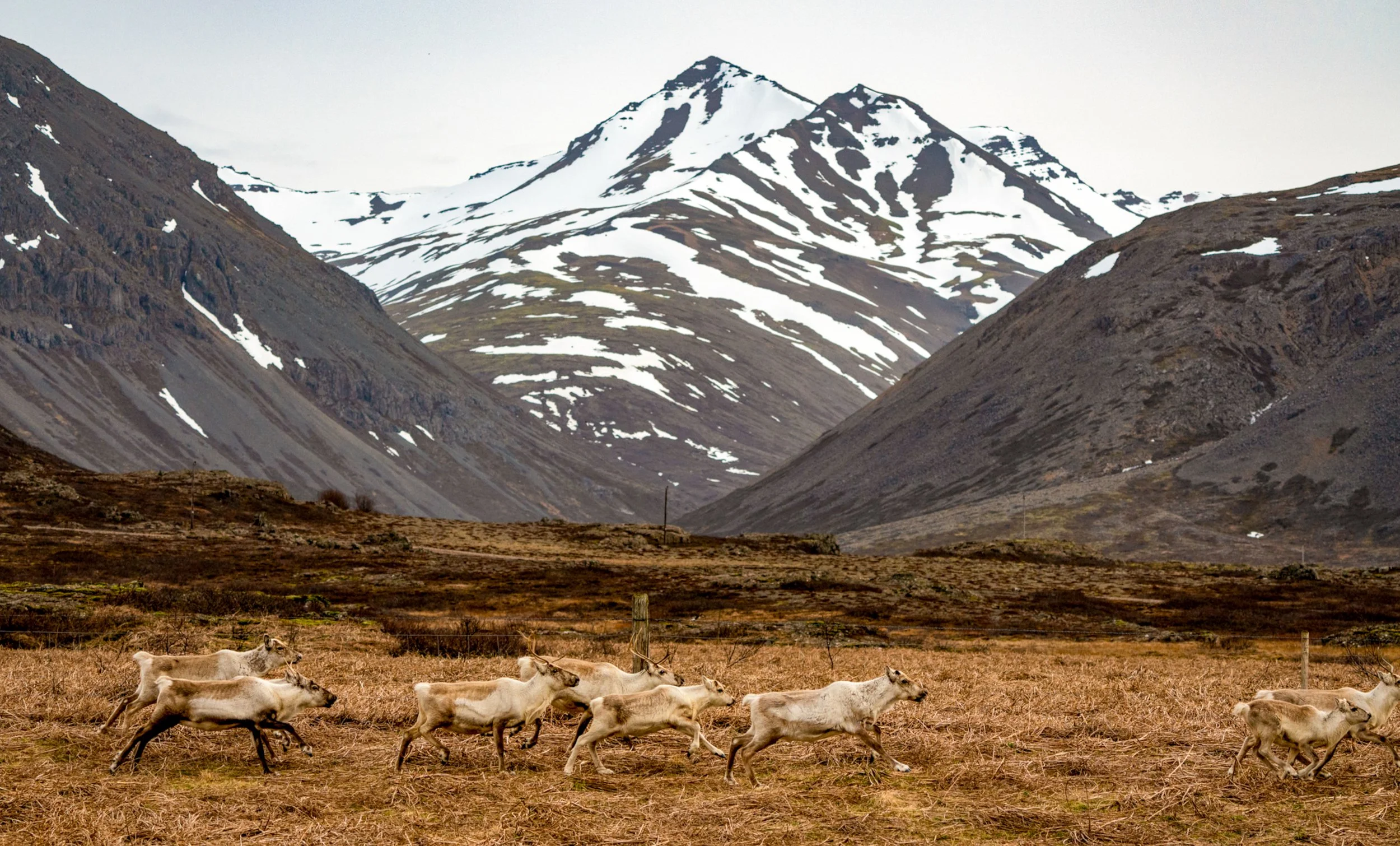
Nomads of the North While they look like a permanent fixture of the landscape, reindeer are actually the only deer species in Iceland, brought over from Norway in the late 1700s. This herd is part of a wild population that thrives in the rugged Eastern Highlands. This shot captures their natural grace as they navigate the mossy tundra against the backdrop of Iceland’s snow-capped volcanic peaks.
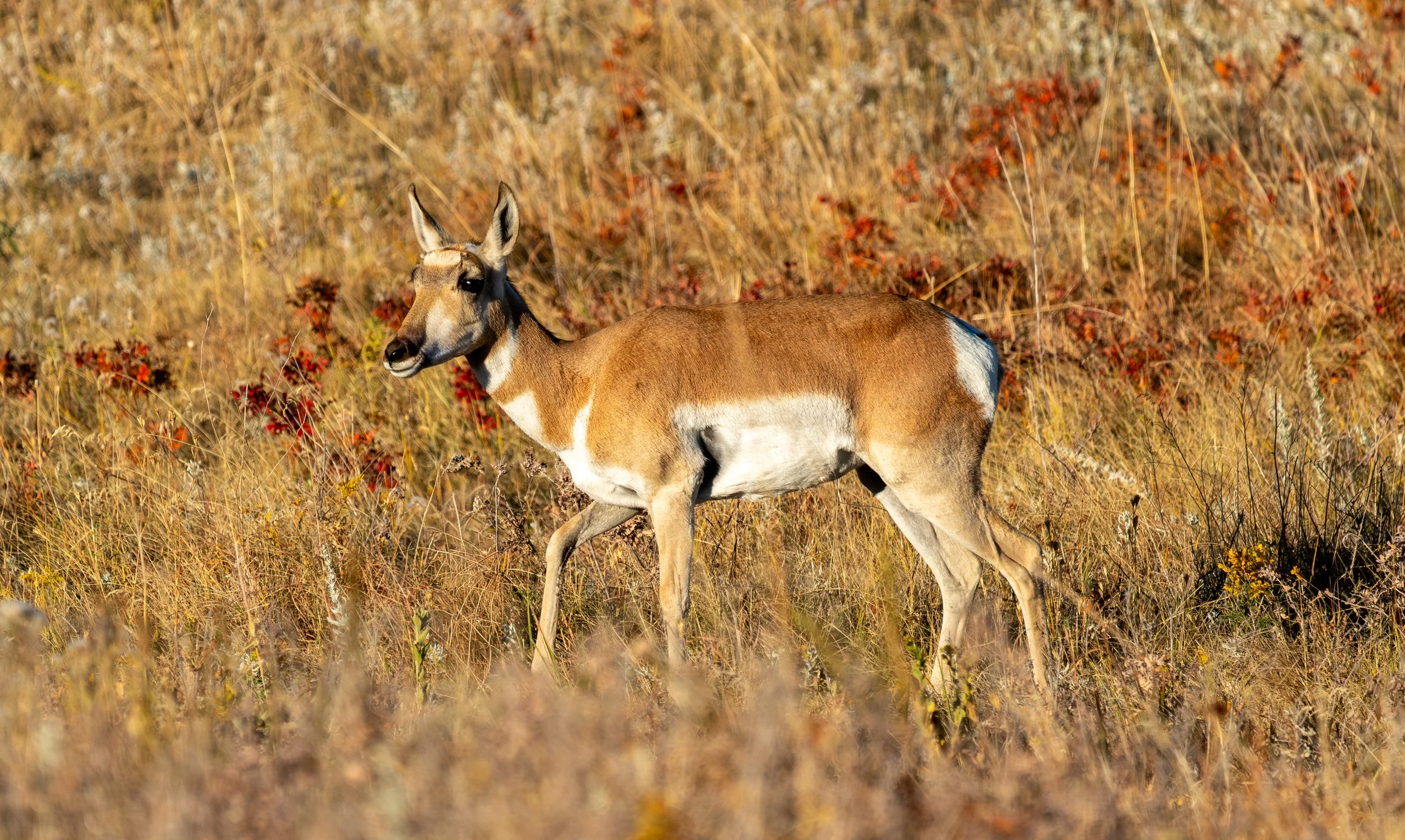
Pronghorn The fastest land animal in North America, reaching speeds of over 55 mph. While they look like antelope, they are actually the last surviving members of a unique family found only in this continent.
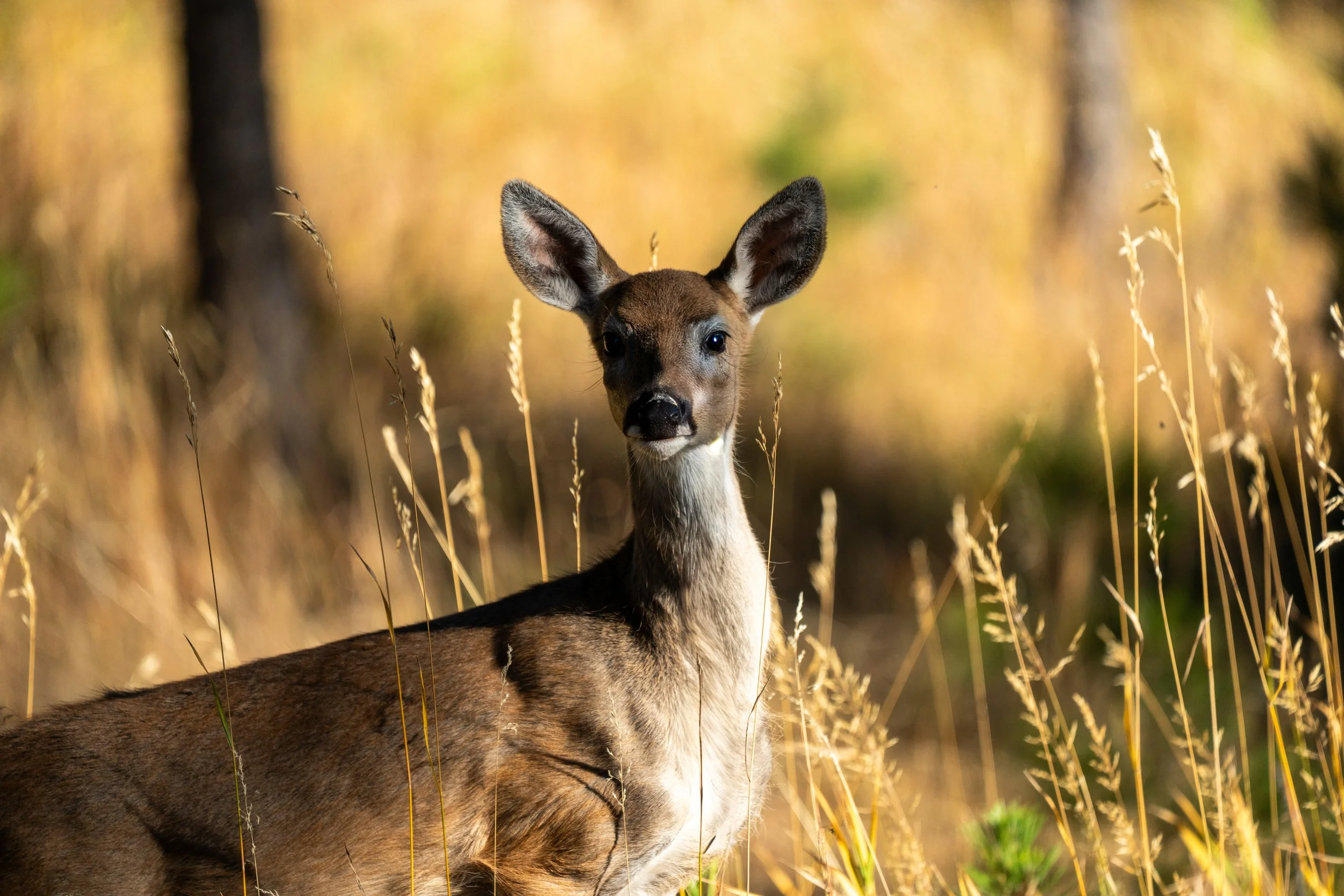
Baby Mule Deer A tender moment with a young Mule Deer fawn. Their oversized ears—the inspiration for their name—give them an incredible sense of hearing to detect movement in the brush.
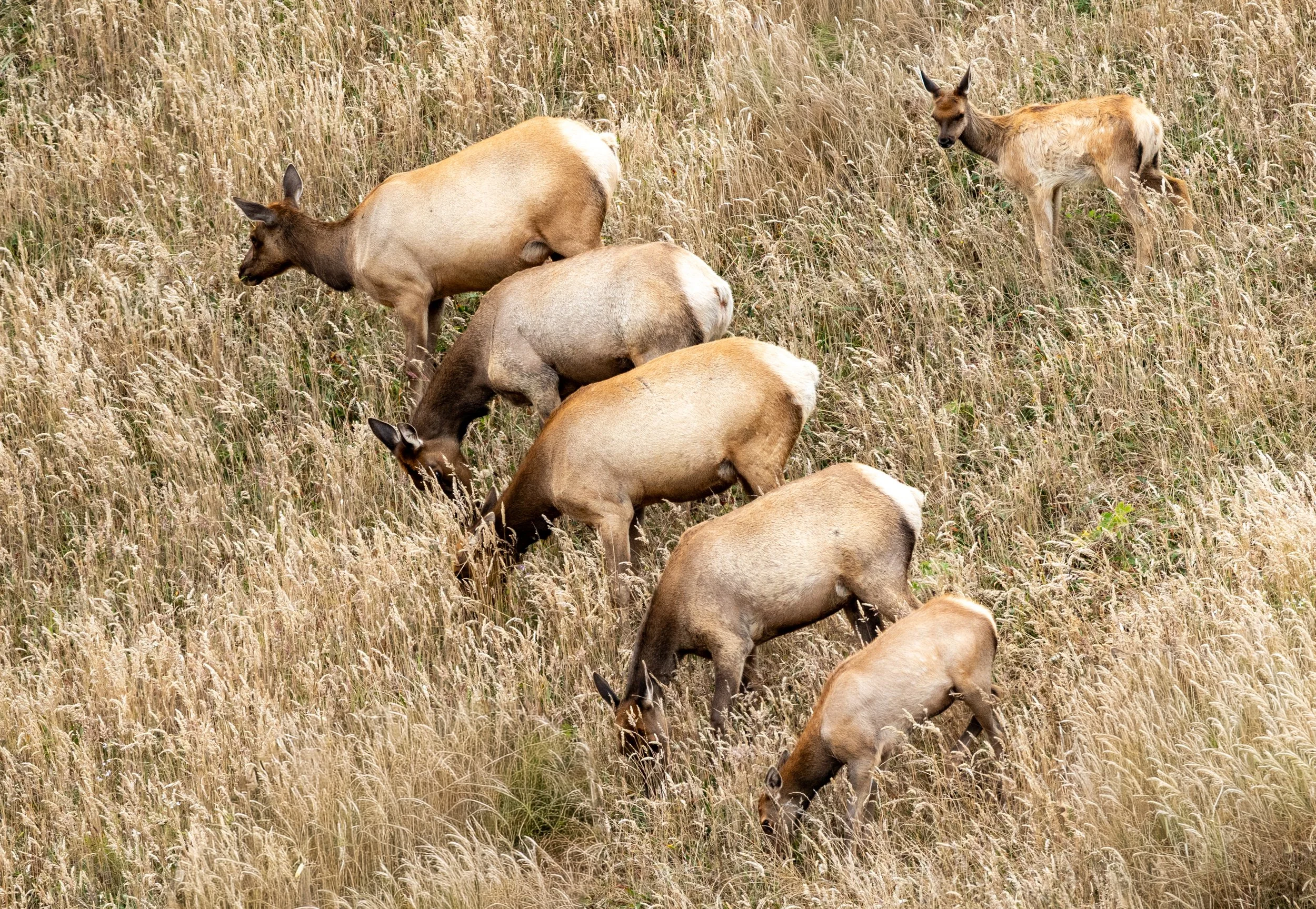
The Social Herd A glimpse of a herd on the move. Elk are highly gregarious animals, often found in large groups that provide safety in numbers against predators like wolves and bears. While the bulls are famous for their bugles, it is the cows that lead the herd, using a complex system of chirps and barks to communicate while navigating the mountain brush.
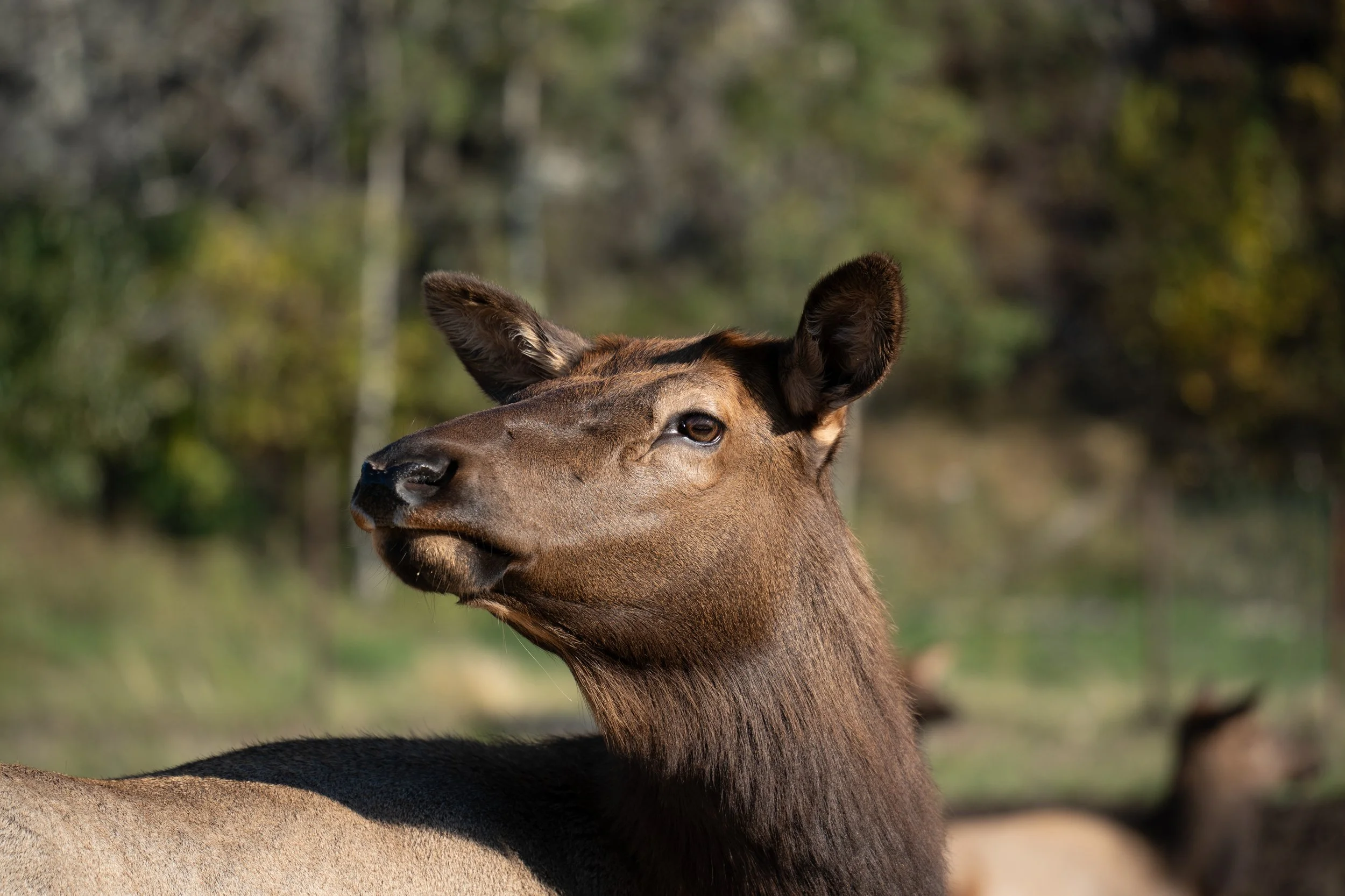
Grazing the High Country One of the largest species within the deer family, Elk are vital to the ecosystem. Their grazing patterns help maintain the health of mountain meadows, while they serve as a primary food source for the region's top predators, keeping the wilderness in a delicate, ancient balance.
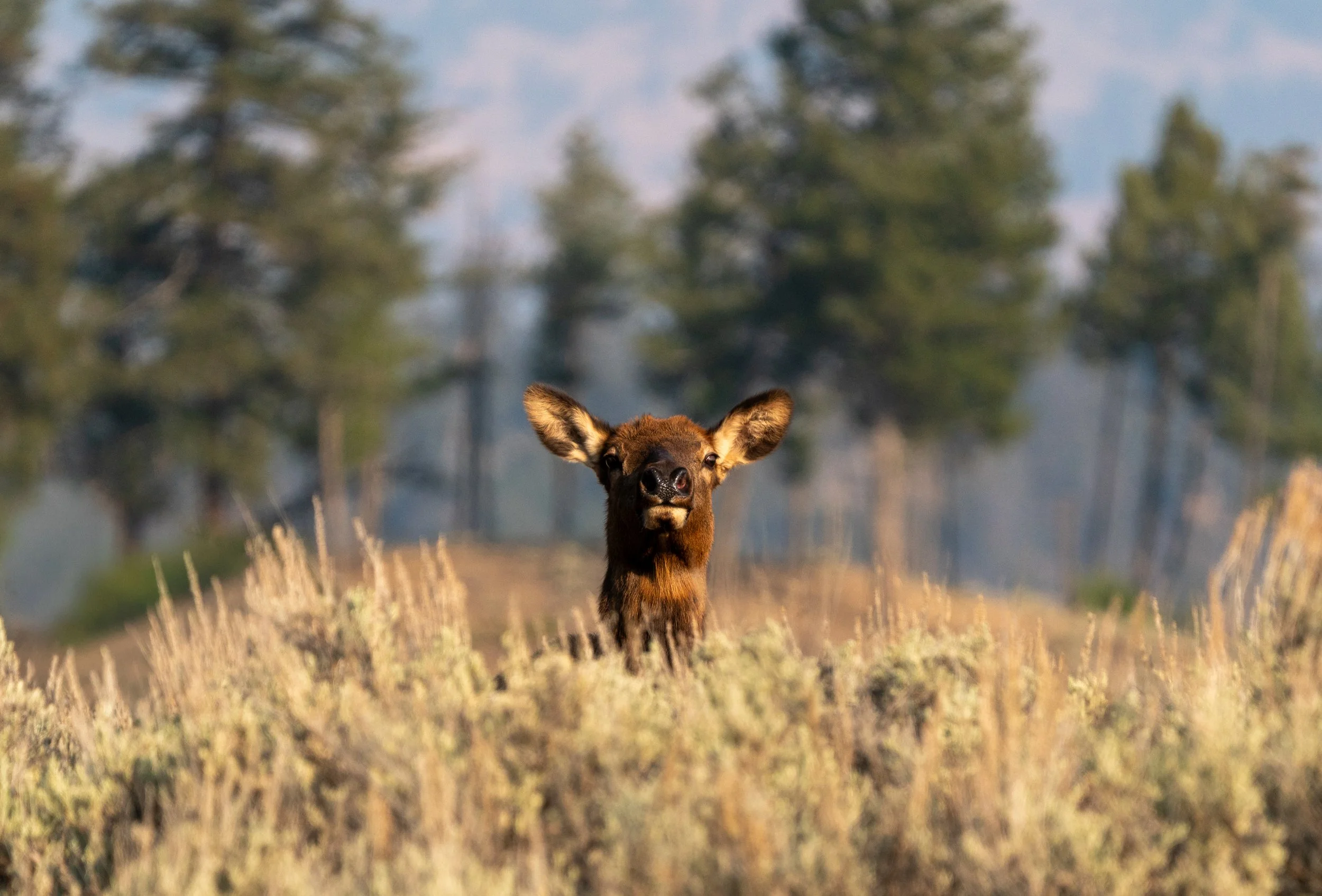
A Watchful Eye A female Elk pokes her head out of the brush. In the elk hierarchy, older cows act as sentinels, remaining alert for predators like wolves and mountain lions while the rest of the herd grazes. Their oversized ears can rotate independently to pinpoint sounds from deep within the forest.
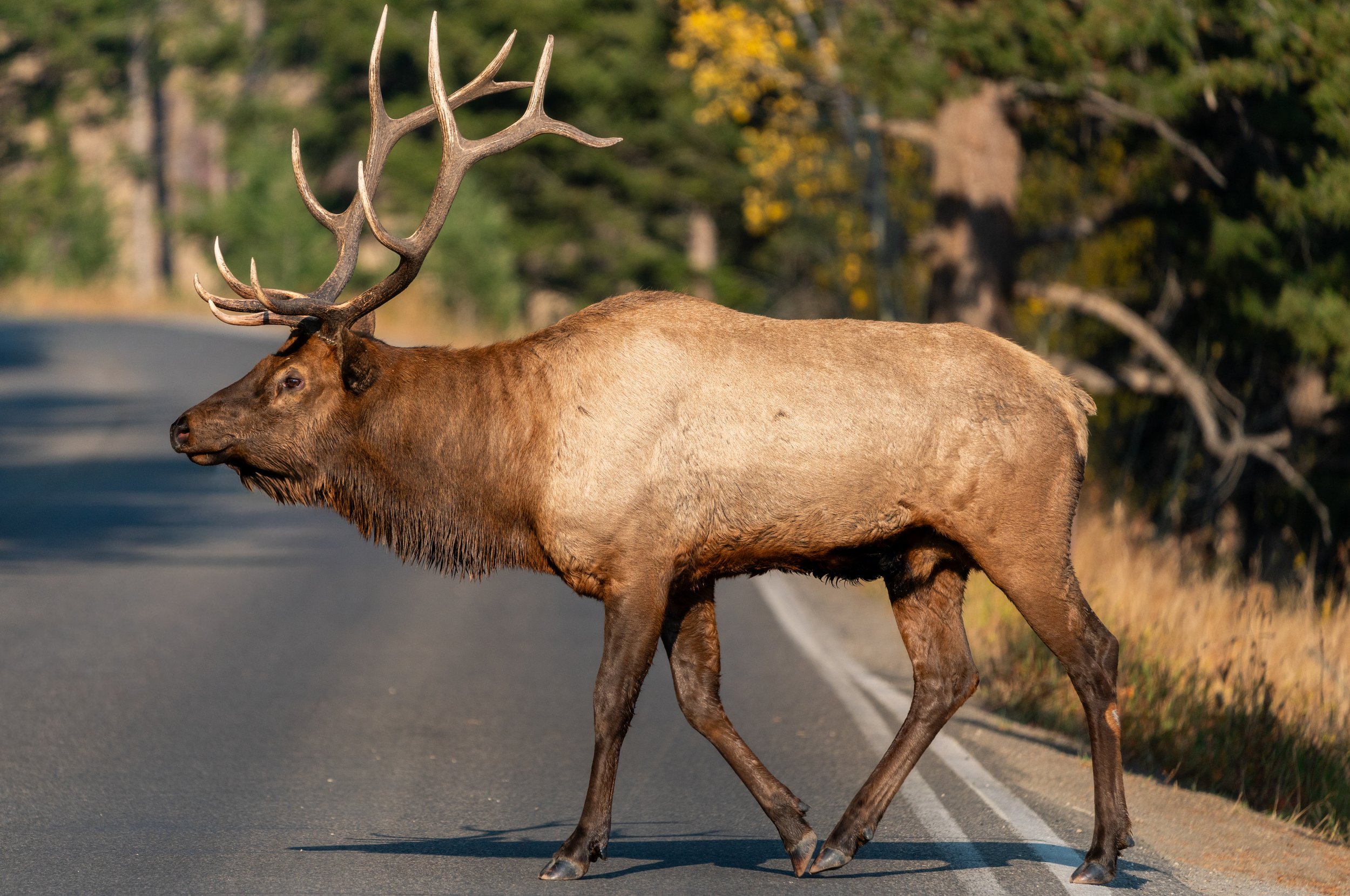
Summer Growth A magnificent bull showcasing his antlers in "velvet." This highly vascularized skin carries nutrients to the bone, allowing antlers to grow at an incredible rate of up to an inch per day during the summer months.
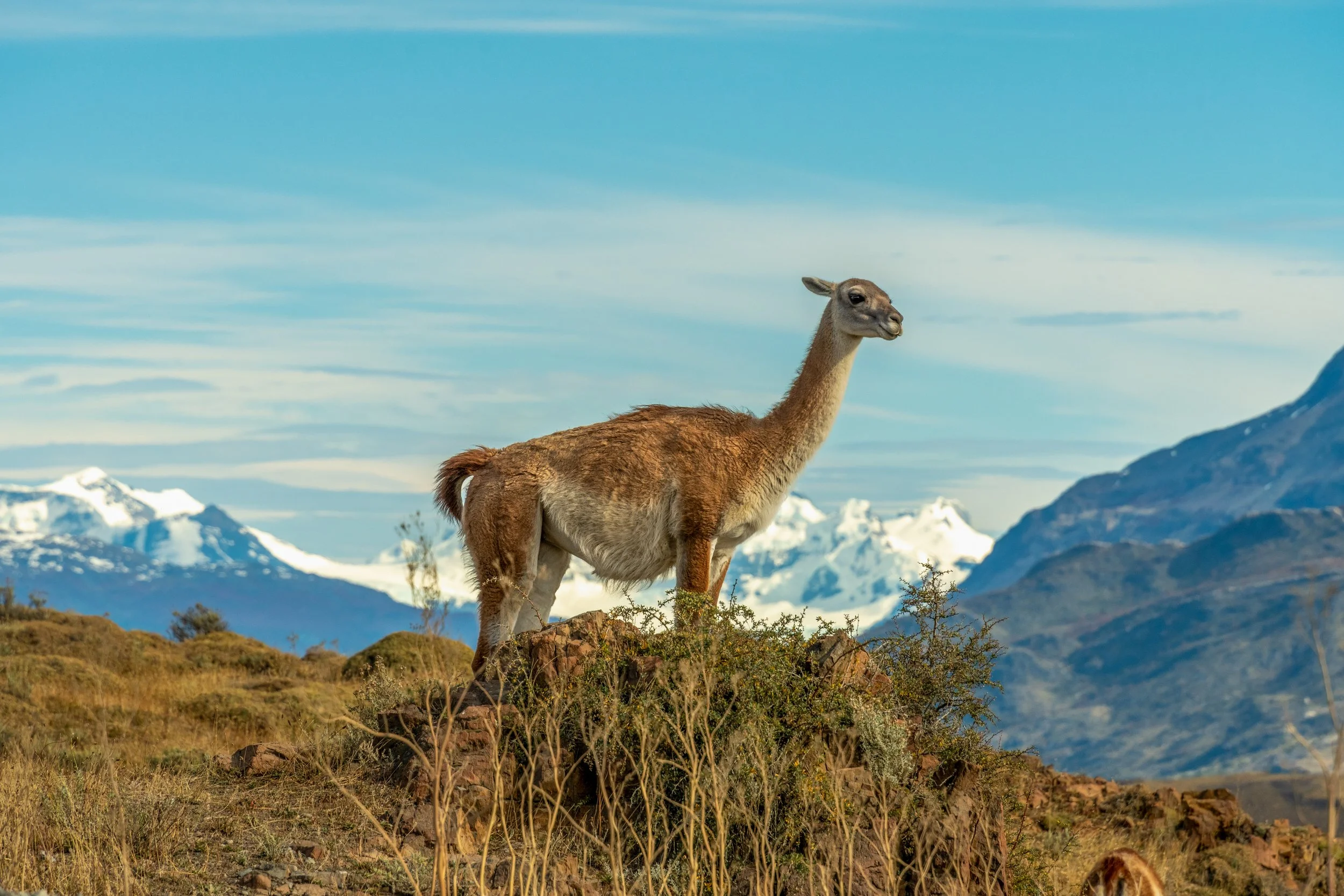
Guardian of the Andes Standing tall against the backdrop of the Southern Andes, a lone Guanaco showcases the elegance of the species. Unlike their domesticated cousins, the alpaca and llama, Guanacos have remained wild and resilient, possessing the ability to drink salty water and run at speeds of up to 35 mph. This portrait highlights their thick, cinnamon-colored wool and the calm, watchful presence they bring to the "End of the World."
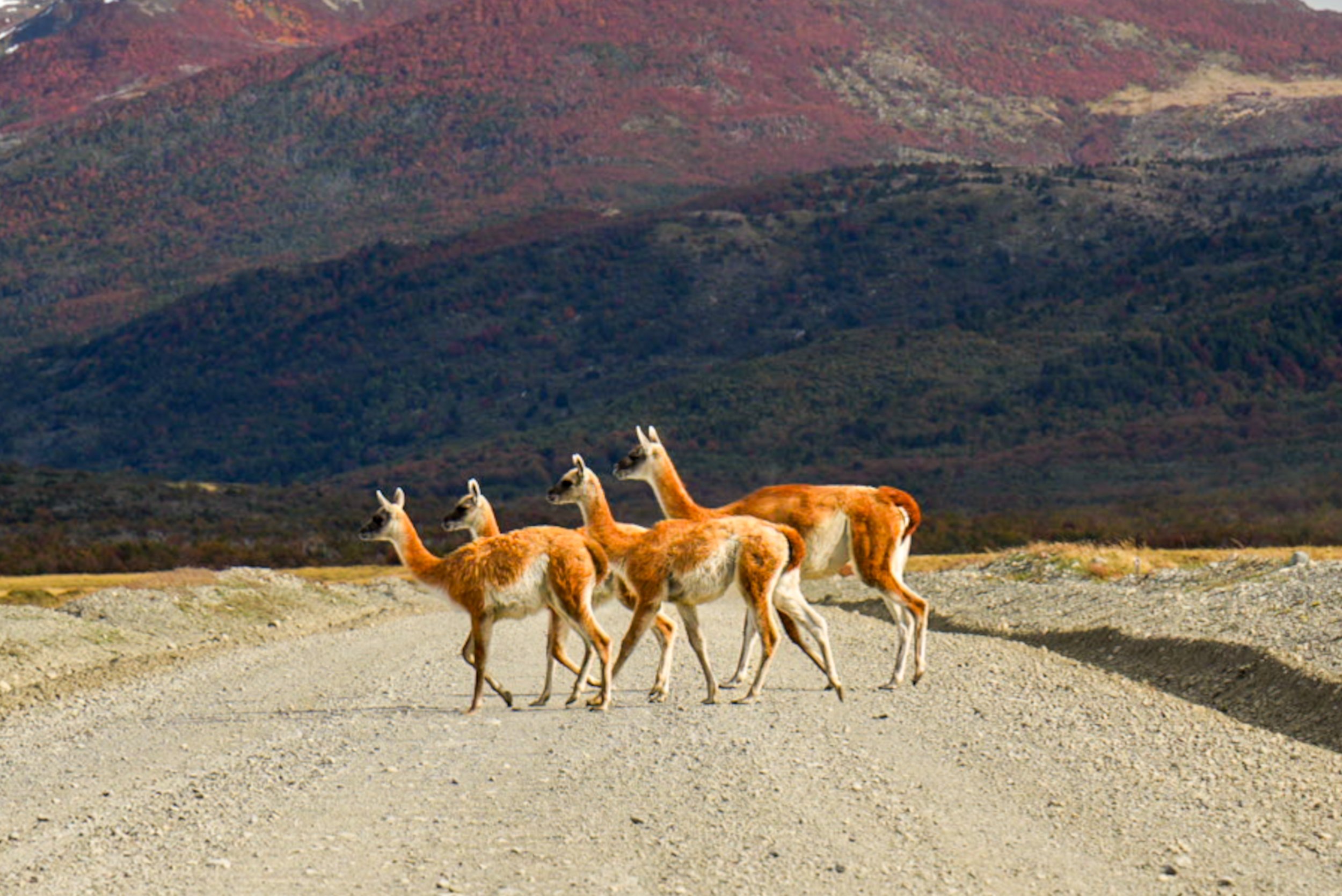
The High-Desert Trek A group of Guanacos navigates the gravel roads of Torres del Paine. These slender relatives of the llama are among the largest wild mammals in South America and are remarkably well-adapted to the harsh winds of the Patagonian Steppe. This shot captures their communal nature—they often travel in small family herds led by a dominant male, constantly scanning the horizon for their primary predator, the puma.
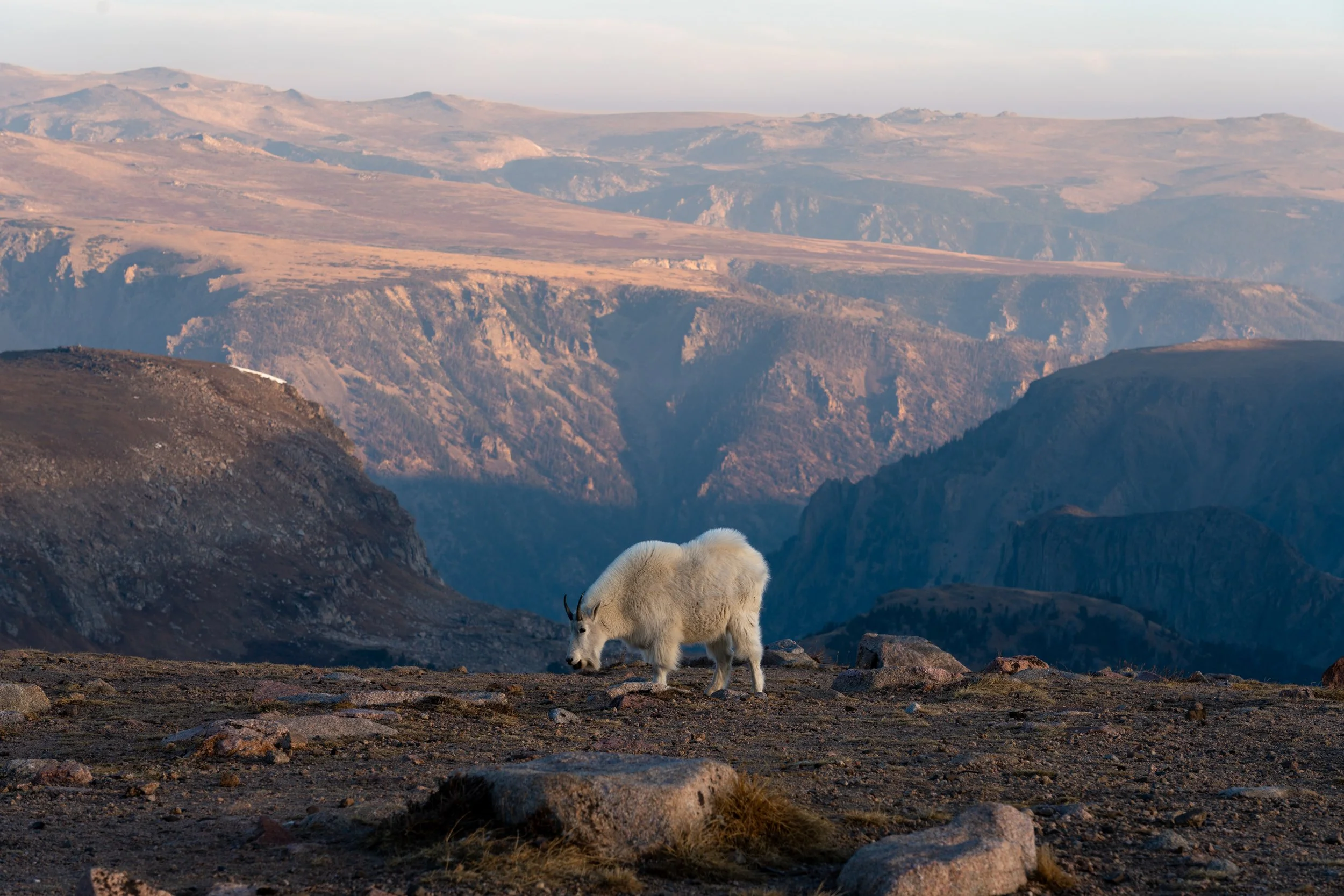
Mountain Goat Taking photos of the sunrise over the Beartooth Highway, at the edge of Yellowstone National Park, this mother nonchalantly walked over the cliff into the frame. Found on the steepest cliffs, these goats possess specialized hooves that act like suction cups, allowing them to navigate vertical terrain with ease.
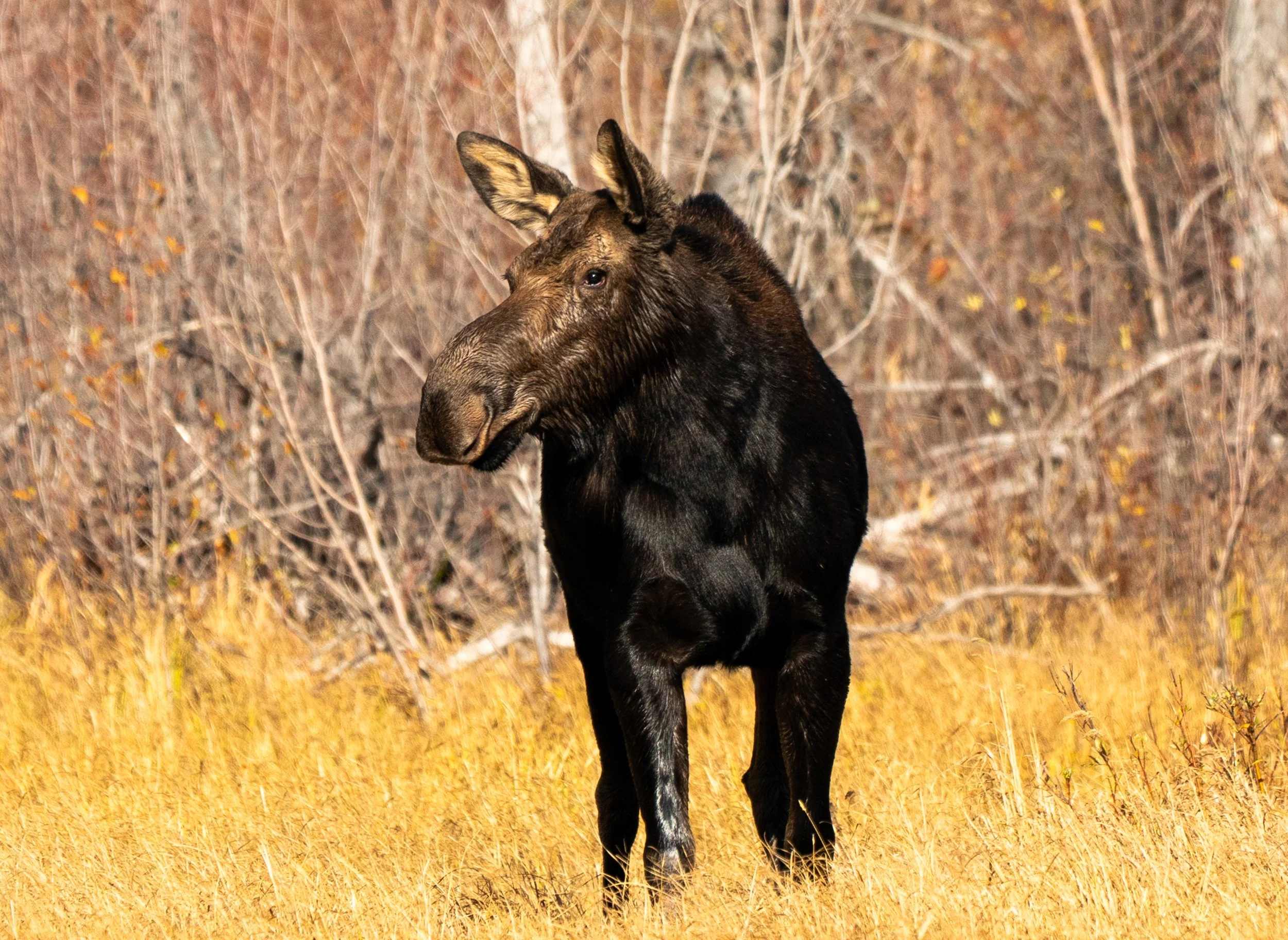
Moose The towering giant of the northern forests. This shot captures the imposing scale of the largest member of the deer family, perfectly at home in the marshy wetlands of the North.
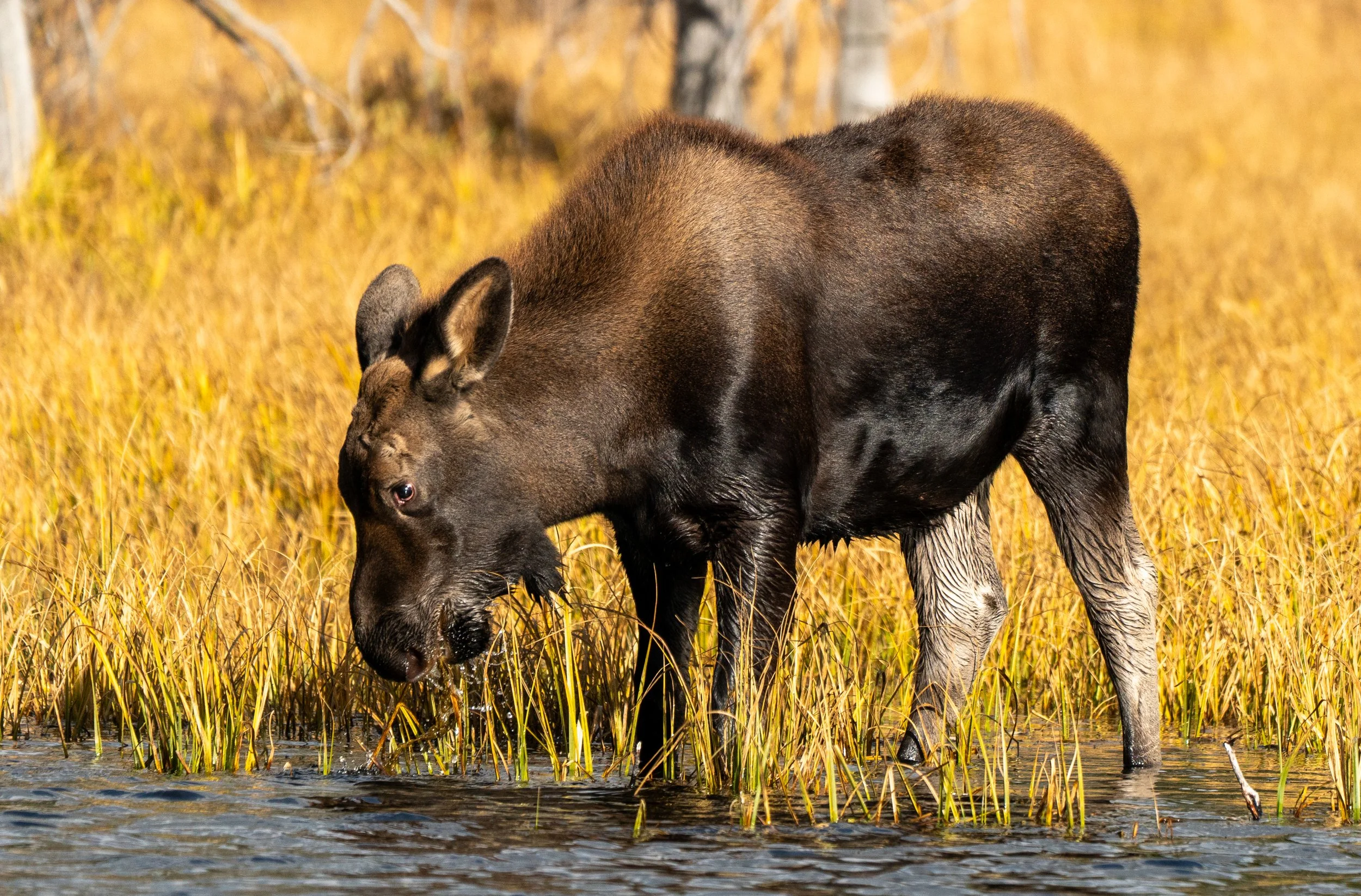
Newborn Calf Born with legs that seem almost too long for its body, a Moose calf is a marvel of rapid development. Within just a few days of birth, this calf can outrun a human, and within a few weeks, it will be a strong swimmer. This portrait captures the early days of a "twig-eater," as they navigate the marshy wetlands under the watchful eye of their mother.
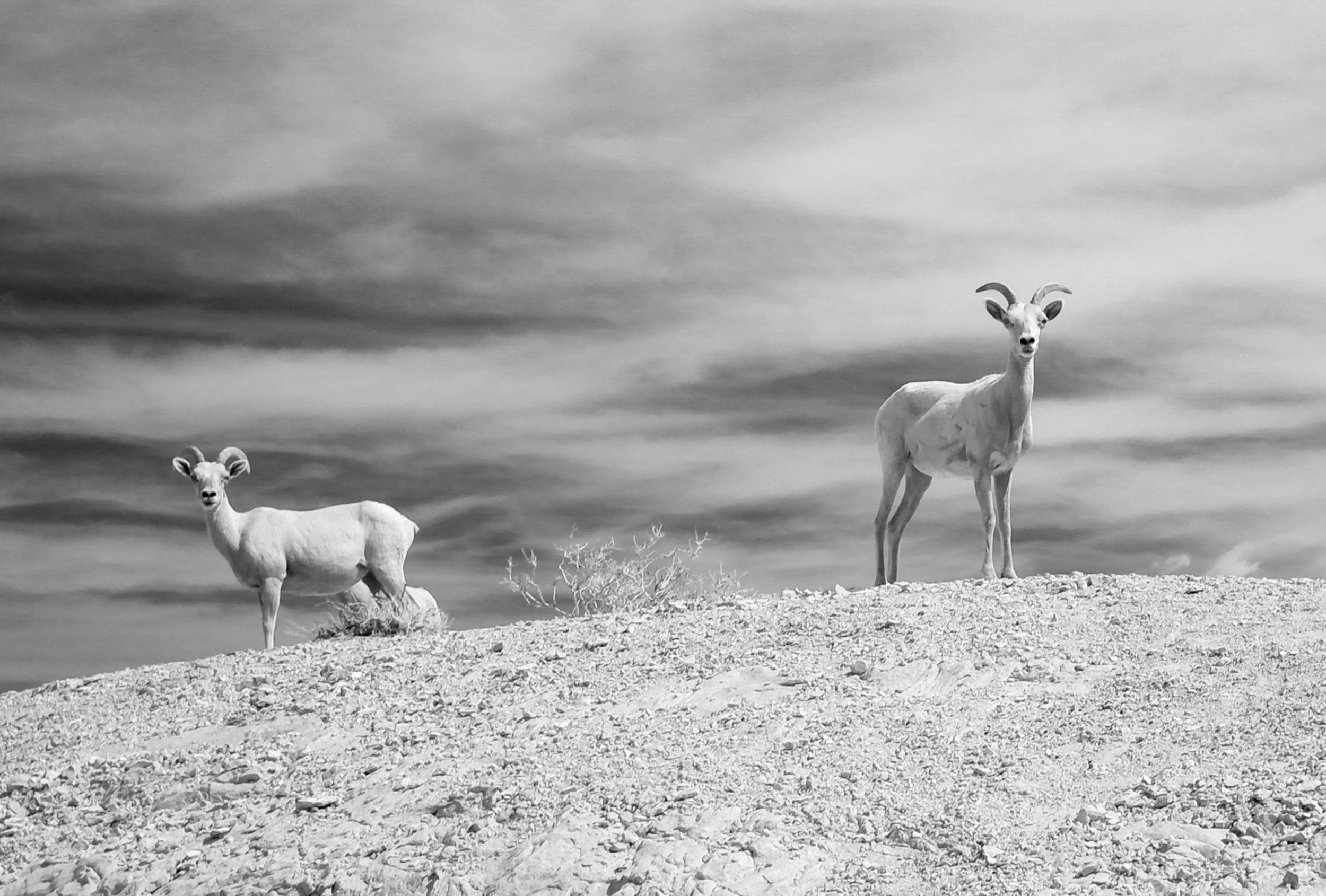
Desert Big Horn Sheep Masters of the arid crags. Unlike their mountain cousins, Desert Bighorn are adapted to go weeks without visiting a permanent water source, getting much of their hydration from succulent plants. This black-and-white shot emphasizes the stark beauty of their rugged habitat.
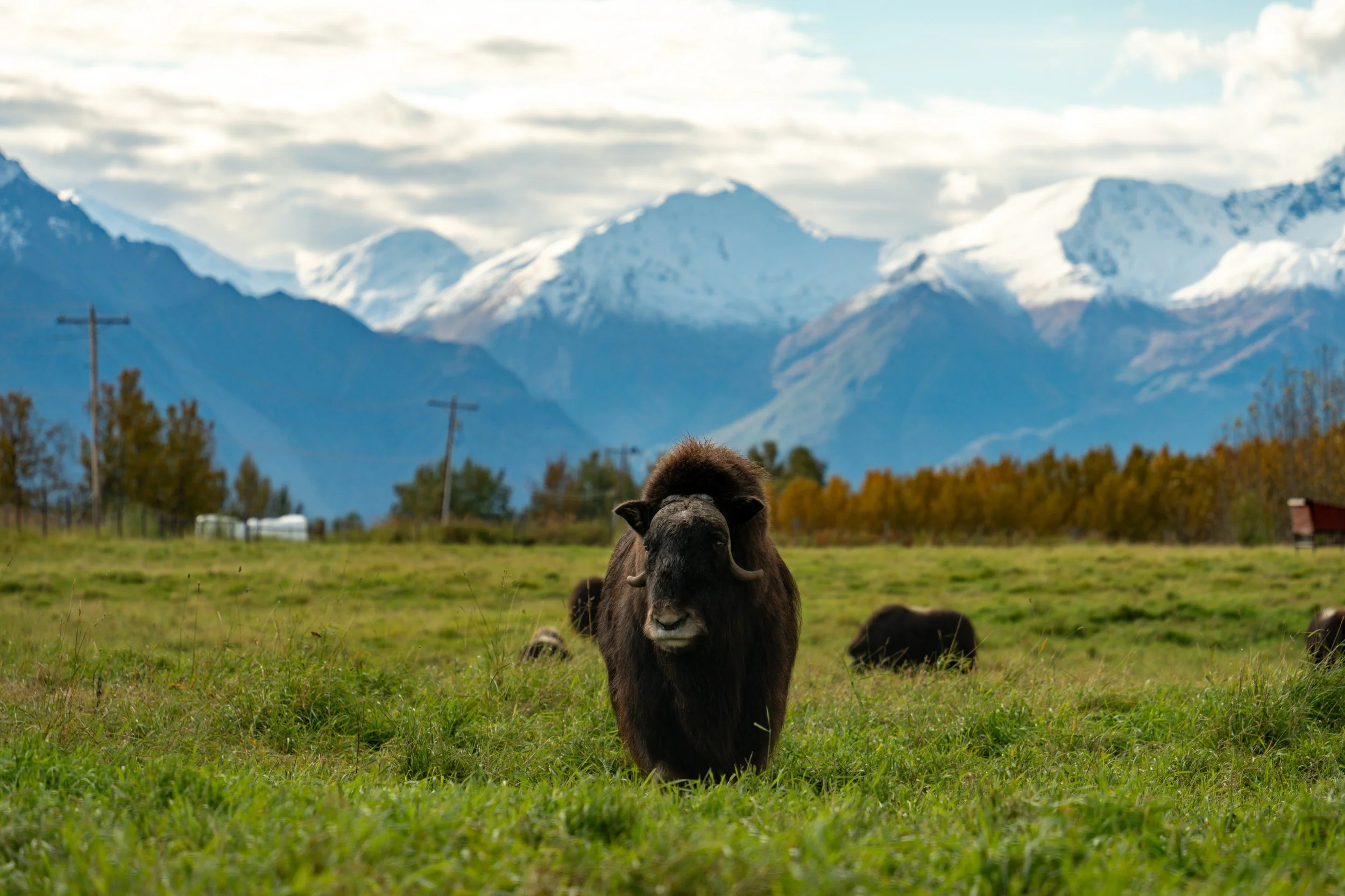
Alaskan Muskox A literal survivor of the Ice Age. These prehistoric-looking giants are famous for their "qiviut"—an under-layer of wool that is eight times warmer than sheep's wool. When threatened, they form a defensive circle around their young, facing outward with a wall of heavy, curved horns.
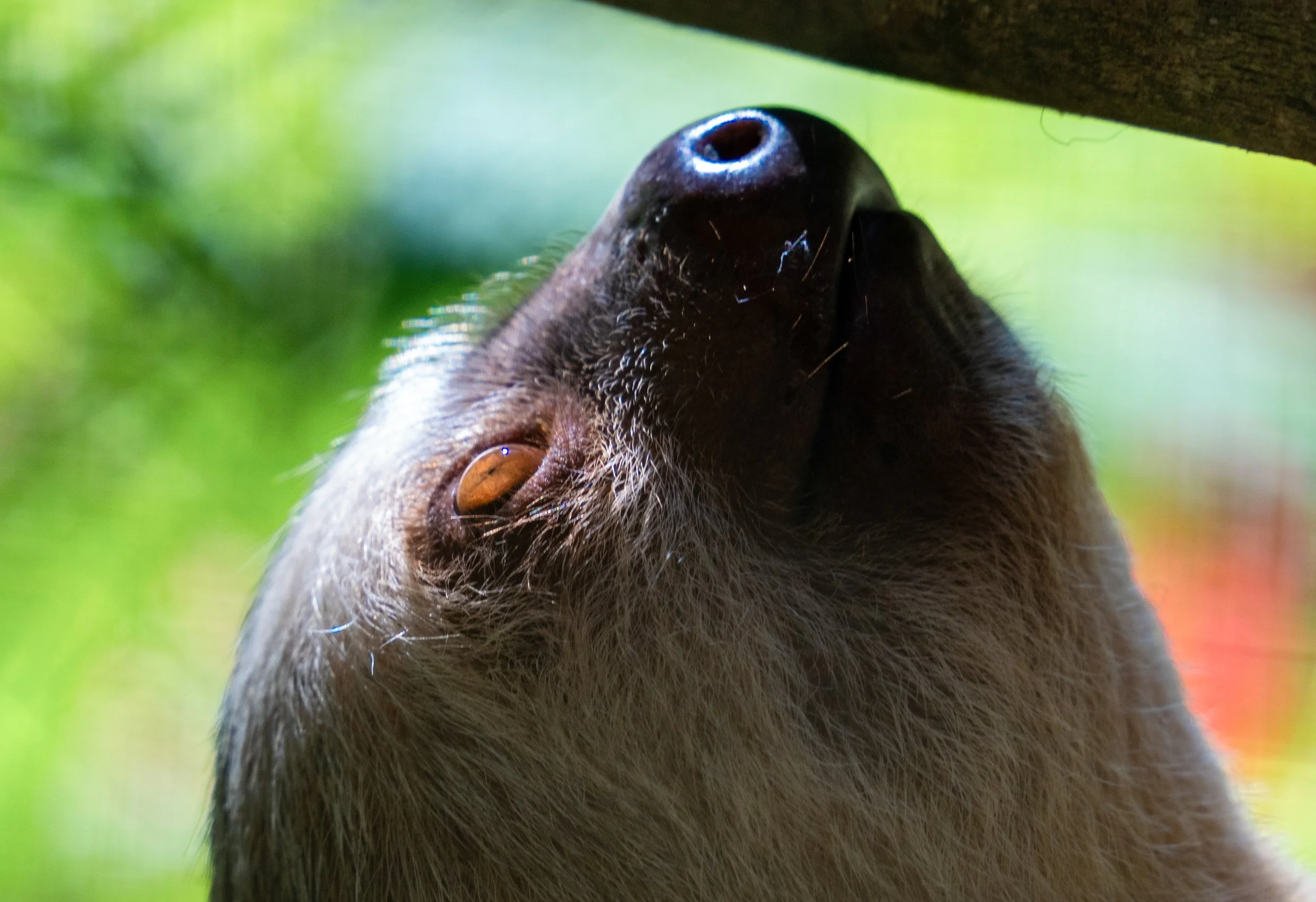
Three-Toed Sloth Moving at a deliberate, "slow-motion" pace, the sloth is a marvel of energy conservation. They spend nearly their entire lives hanging upside down in the tropical canopy.
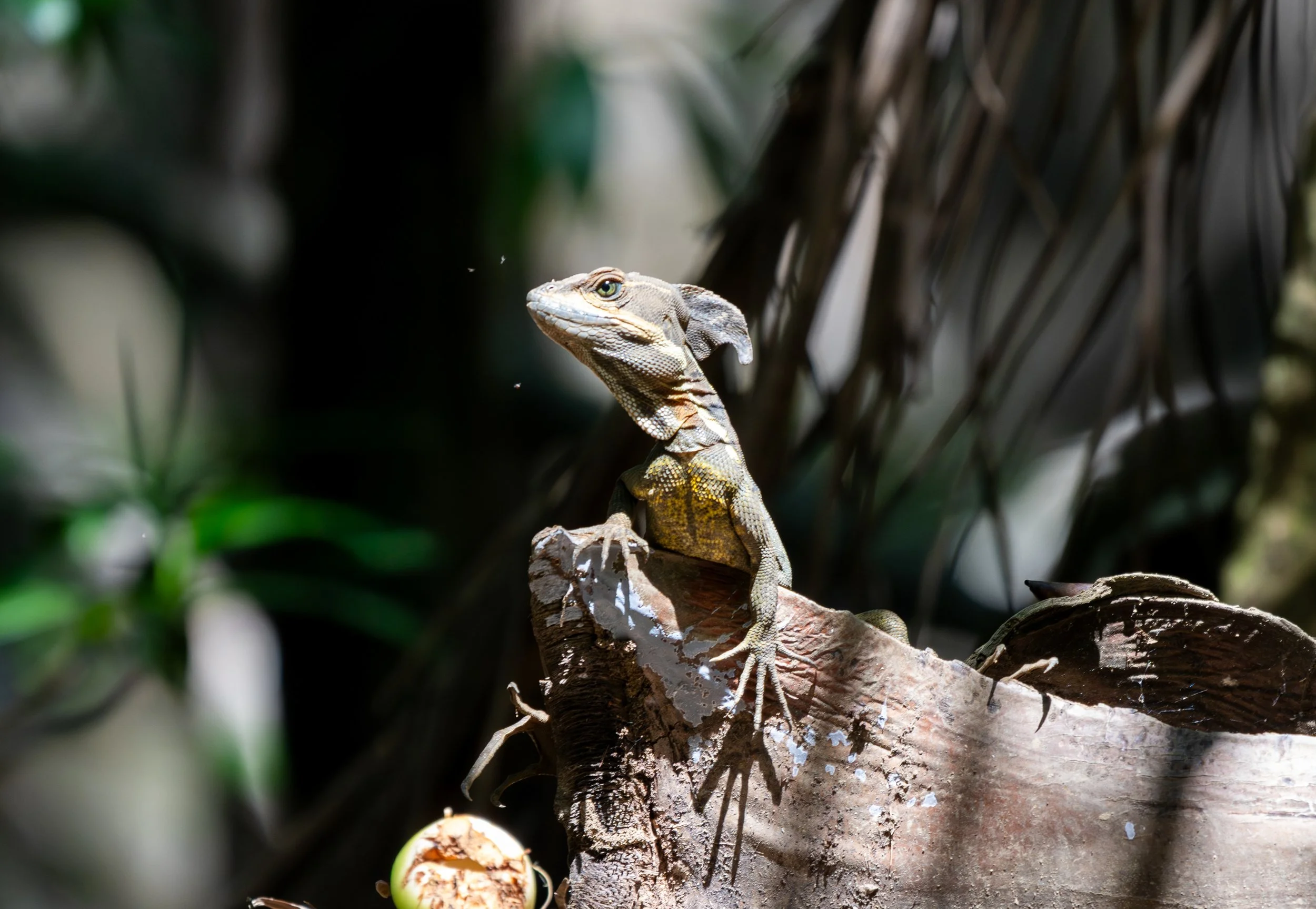
The Water Walker This Common Basilisk is famously known as the "Jesus Lizard" for its incredible ability to run across the surface of water to escape predators. Using specialized fringes on its toes, it creates tiny pockets of air that allow it to sprint upright at speeds of up to 5 feet per second before finally sinking and swimming away.
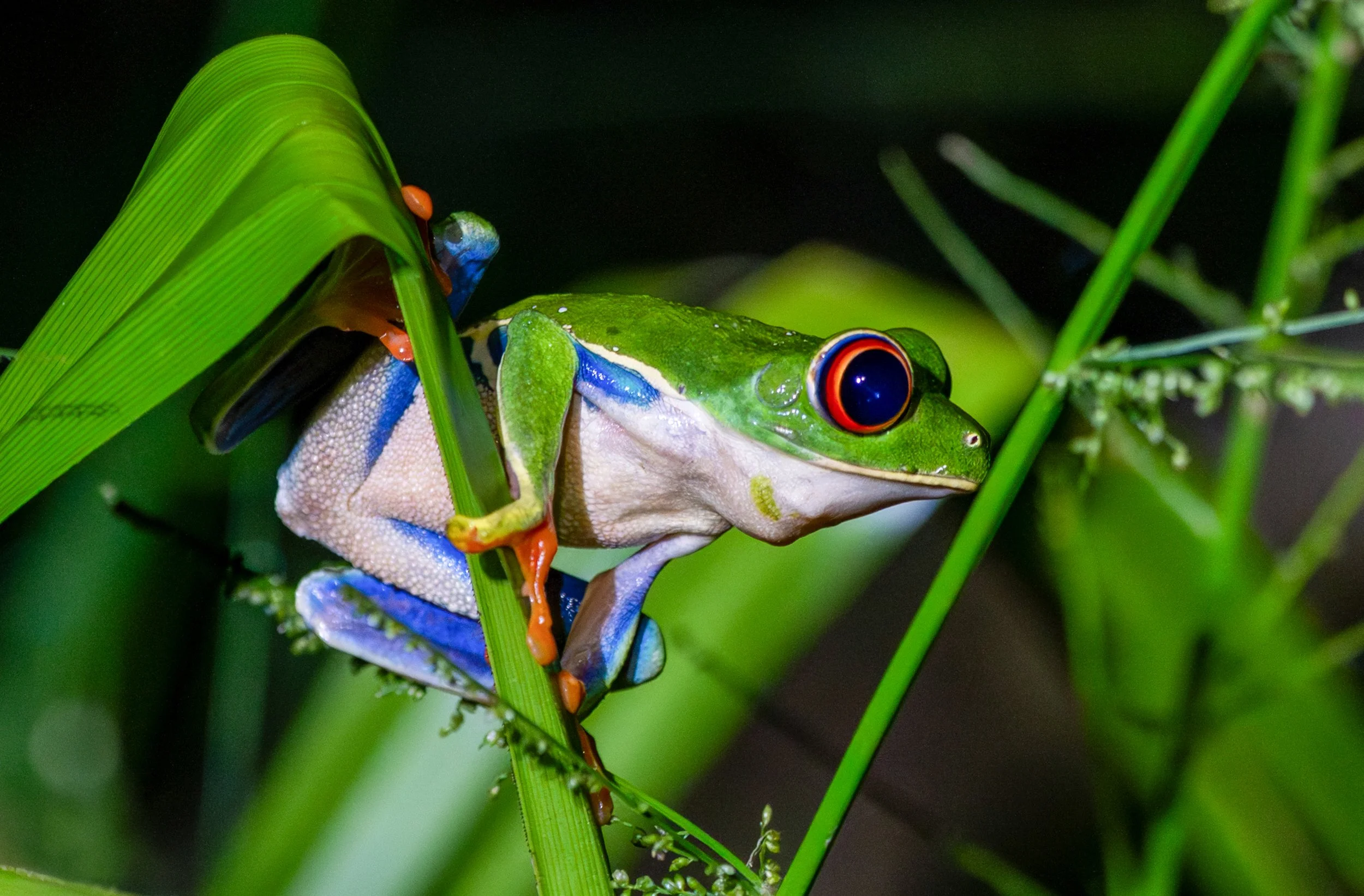
Red-Eyed Tree Frog The iconic ambassador of the rainforest. Their brilliant red eyes and blue-and-yellow flanks are actually a defense mechanism used to startle predators when the frog suddenly jumps.
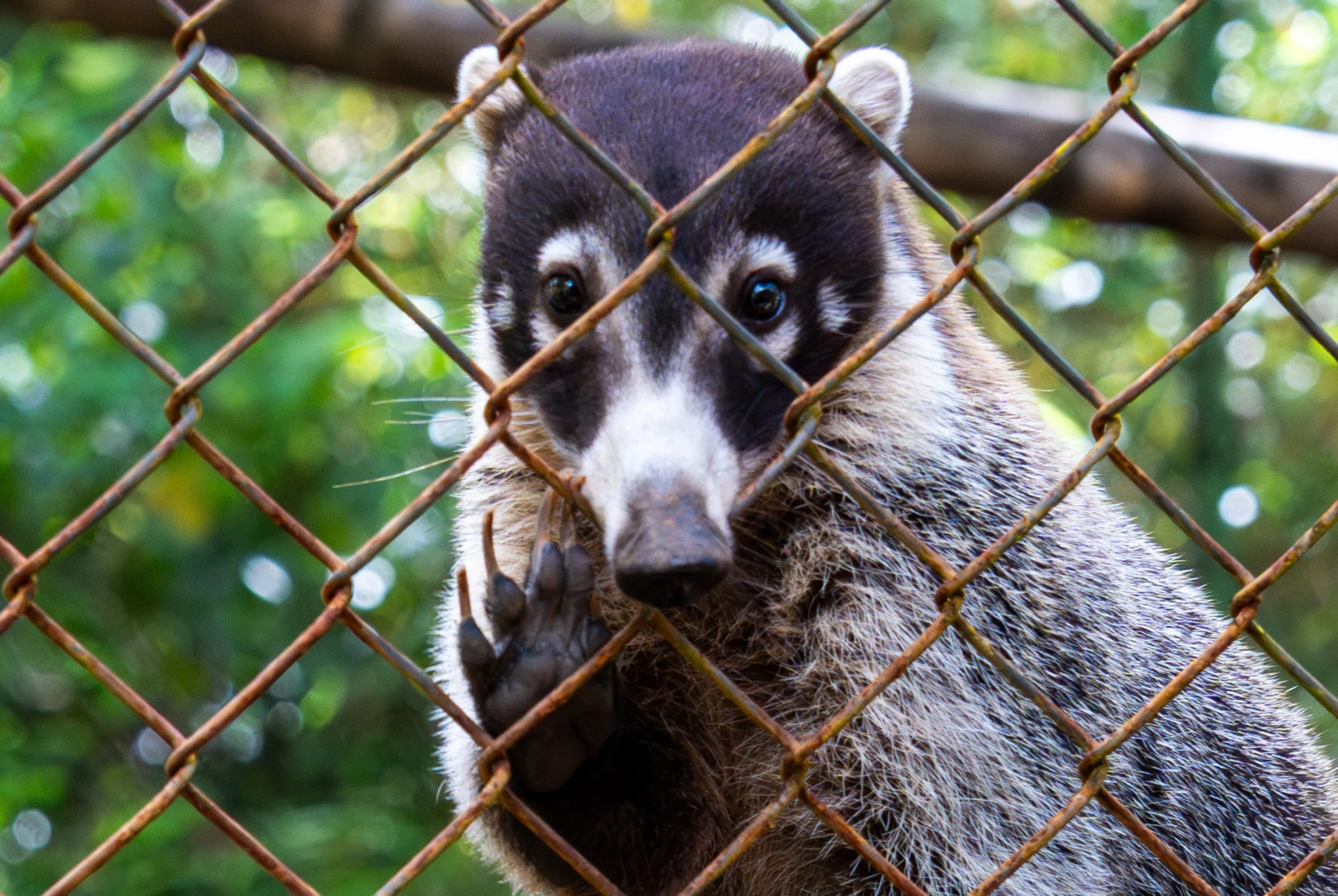
White-Nosed Coati Often mistaken for a cross between a raccoon and a lemur, the Coati is a highly social and intelligent carnivore native to Central and South America. They are famous for their incredibly flexible snouts, which can rotate 60 degrees in any direction to forage for insects and fruit in the leaf litter.
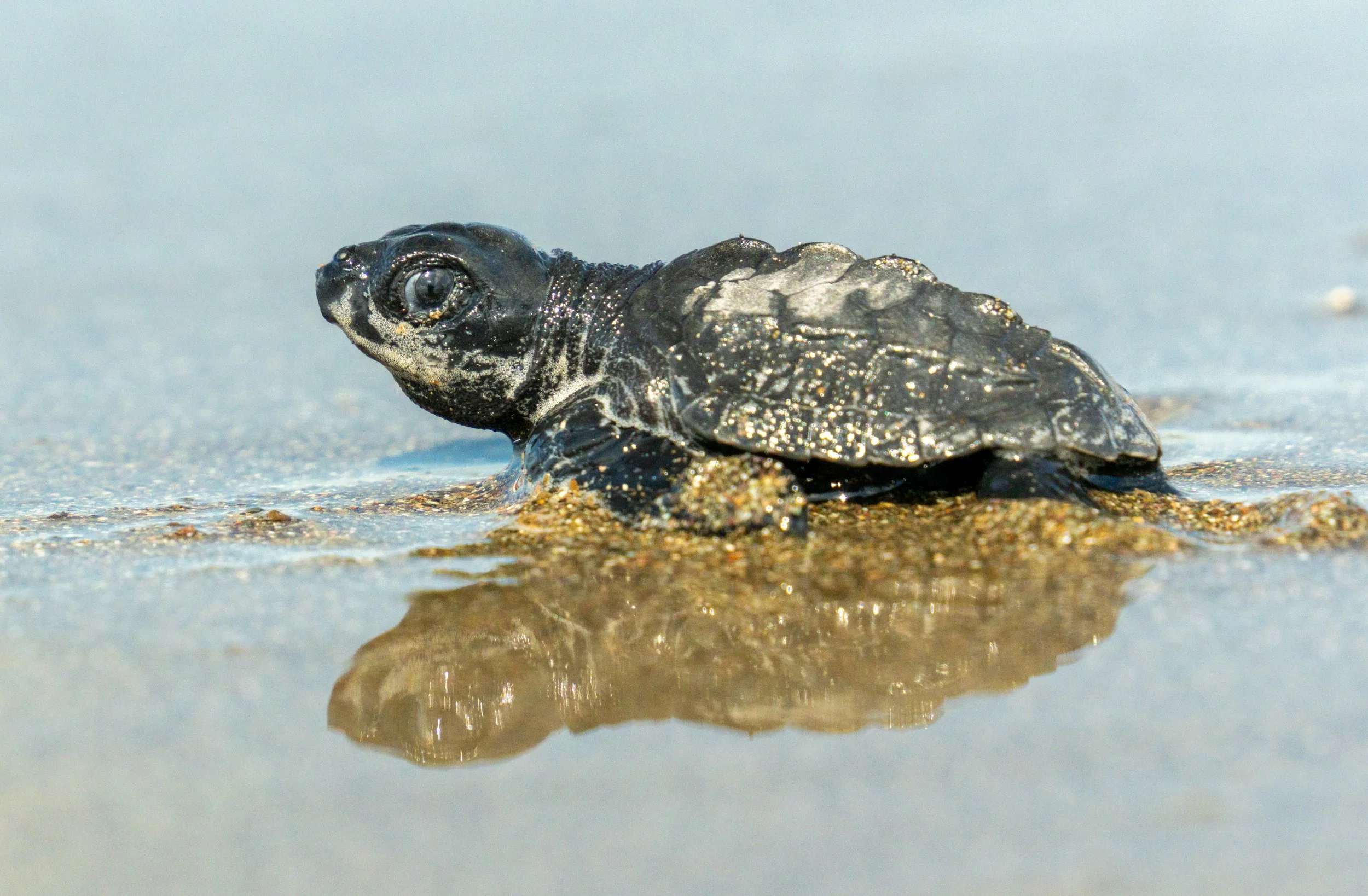
Olive Ridley Sea Turtle A tiny pioneer making its first trek to the ocean. These hatchlings face incredible odds, yet they possess an innate compass that will eventually lead them back to this same beach to nest decades later.
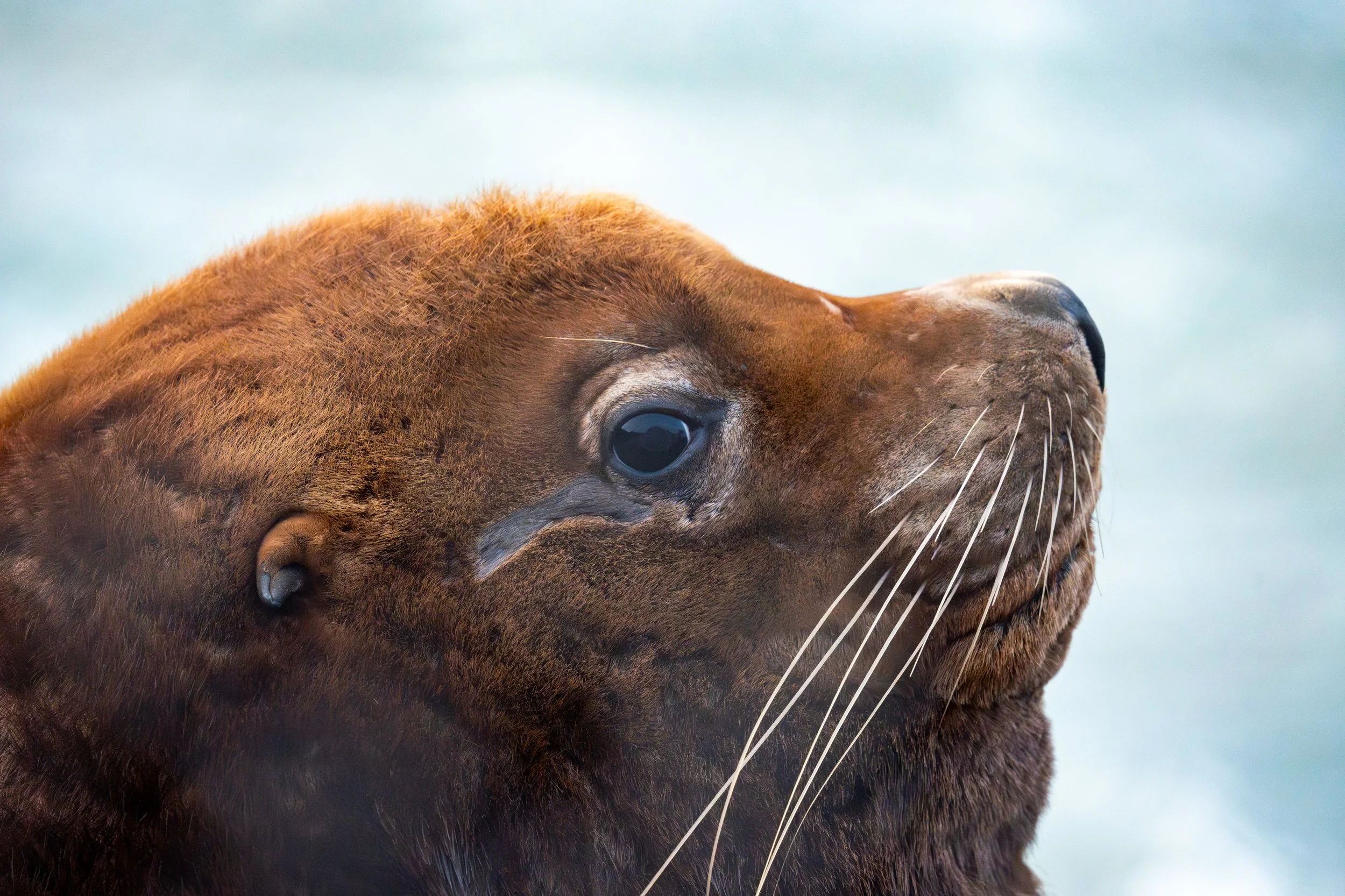
Steller Sea Lion The largest of the otariid (eared) seals. Often seen hauled out on rocky Alaskan outcroppings, these "sea lions" can grow to over 2,000 pounds.
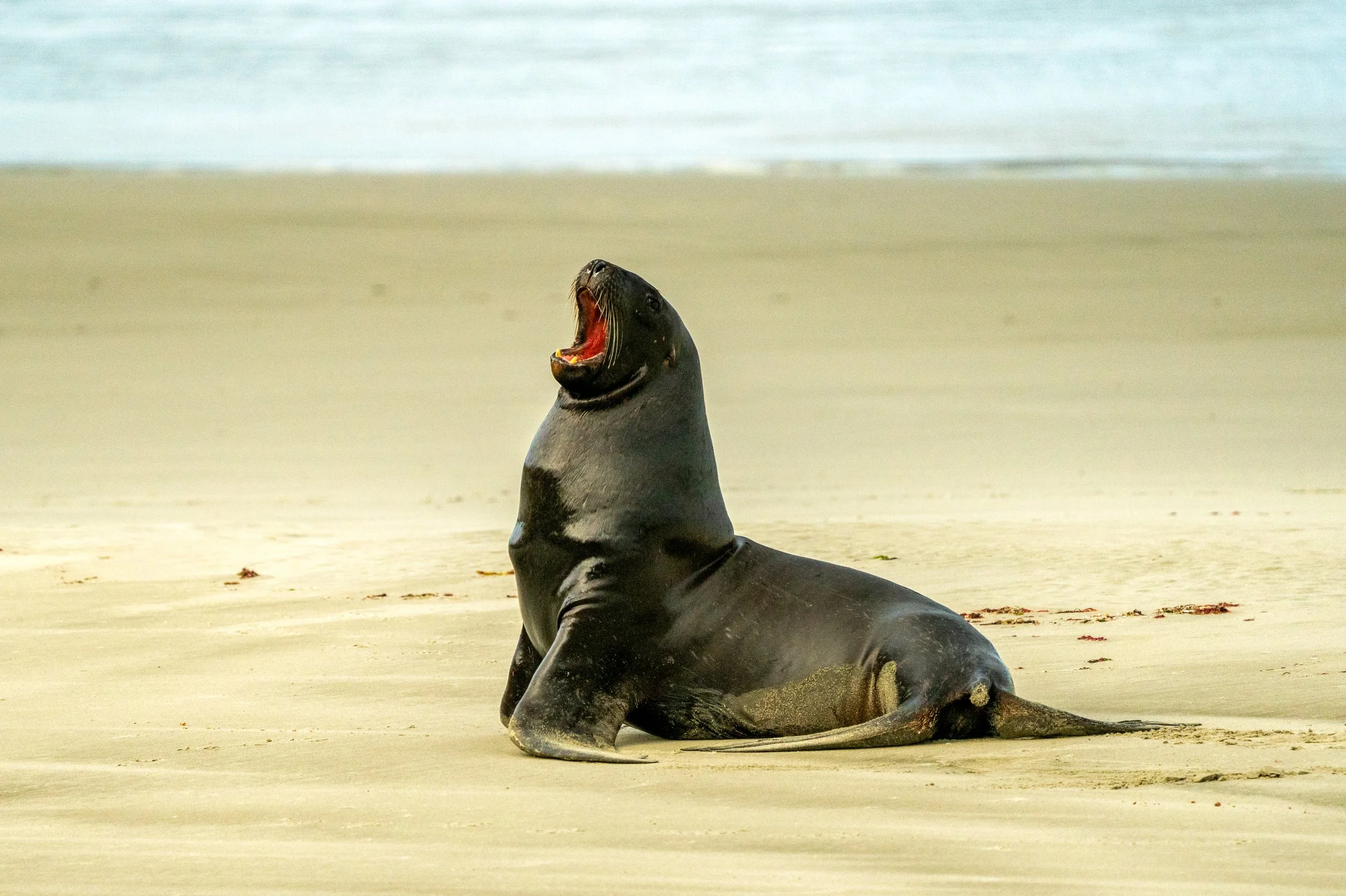
New Zealand Sea Lion One of the rarest sea lion species in the world. Found primarily on the sandy beaches of the Otago Peninsula and the Subantarctic Islands, these powerful pinnipeds are known for their deep vocalizations and surprising speed on land.
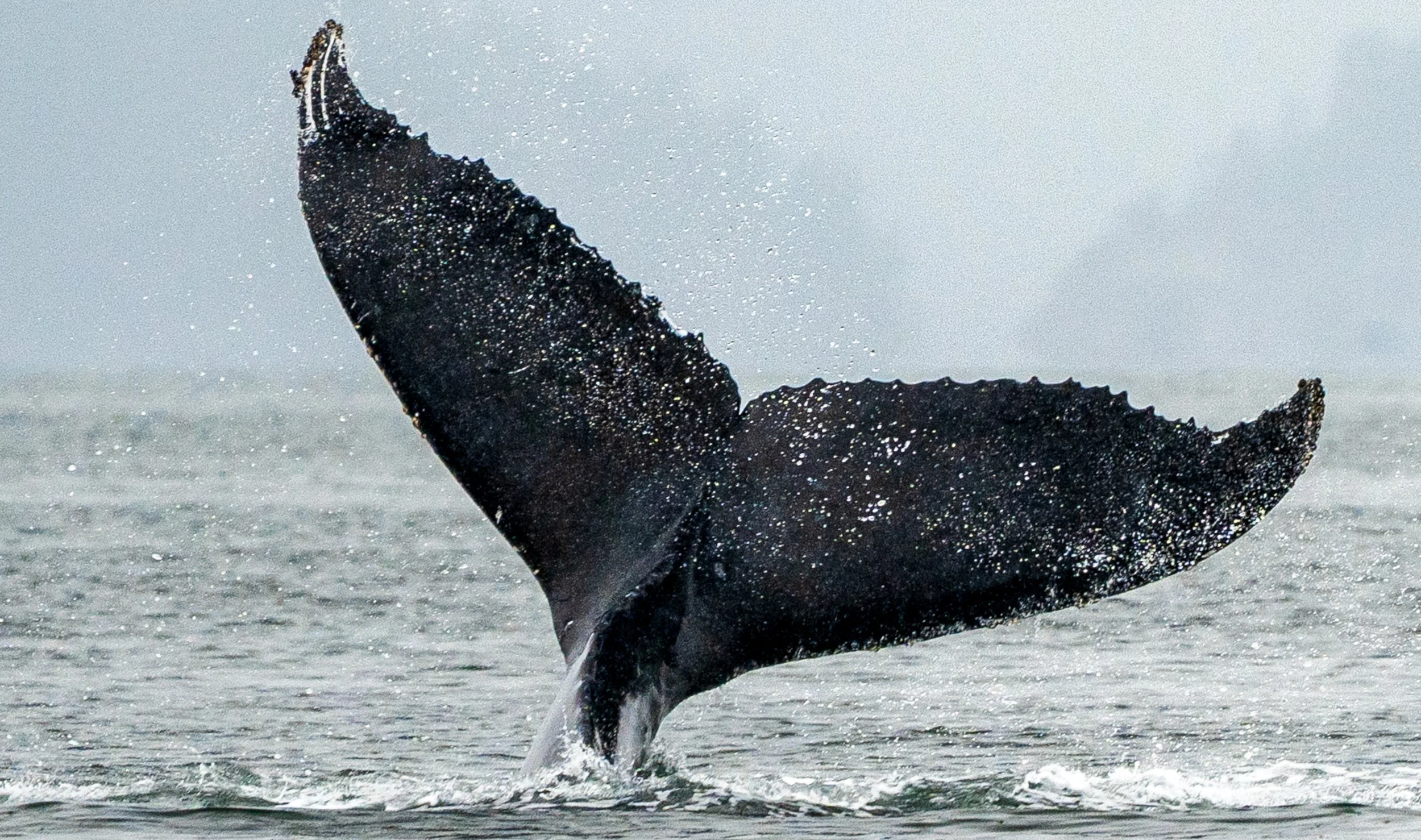
Ocean Giant Known for their complex "songs" and acrobatic breaches, Humpback Whales are the ultimate ambassadors of the ocean. Despite their massive size—growing up to 52 feet long—they are incredibly graceful. This shot captures the raw power of a species that was once pushed to the brink of extinction but has since become a global symbol of successful marine conservation.